
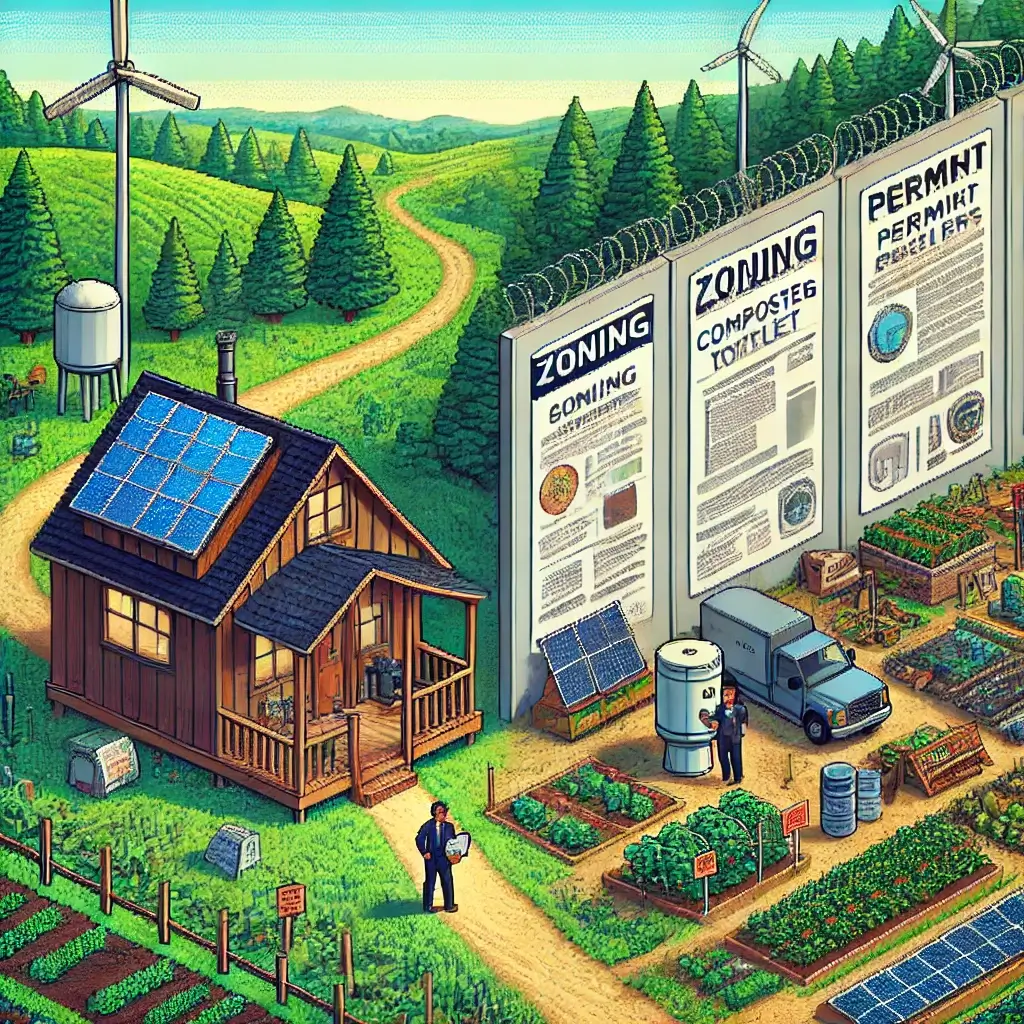
The 5 Biggest Legal Hurdles to Off-Grid Living: Don’t Get Caught Without a Plan!
Hey there, fellow dreamers and doers! Have you ever found yourself scrolling through picturesque images of remote cabins, solar panels glinting in the sun, and bountiful gardens, and thought, “That’s it! That’s the life for me!”?
You’re not alone. The allure of off-grid living, of self-sufficiency, of a simpler existence truly is powerful. It’s about more than just escaping the rat race; it’s about reclaiming autonomy, reducing your environmental footprint, and connecting with the land in a way that modern life often doesn’t allow.
I get it. I’ve been there, staring at spreadsheets, dreaming of composting toilets and rainwater catchment systems. It feels like freedom, right? But here’s the thing, and it’s a big one: freedom isn’t free, especially when it comes to ditching the grid and setting up your own little slice of paradise. There are some serious legal hurdles, and believe me, you do *not* want to be caught off guard.
Think of it like this: You wouldn’t build a house without a blueprint, right? Well, going off-grid without understanding the legal landscape is like trying to build that house blindfolded in a tornado. It’s a recipe for disaster, heartache, and potentially, a whole lot of fines.
I’ve seen firsthand how easily people can get tripped up. Folks invest their life savings, pour their sweat and tears into a piece of land, only to find out they’re violating a zoning ordinance they never even knew existed. It’s crushing. But here’s the good news: with a little foresight and a solid understanding of the rules, you can absolutely navigate these waters successfully. You just need to know what to look for.
So, let’s pull back the curtain on the legal maze that often confounds aspiring homesteaders. We’re going to dig deep into the five biggest legal hurdles you’re likely to face when pursuing off-grid self-sufficiency, and how to jump over them, or at least, build a ramp. —
Table of Contents
—
**1. Zoning Ordinances: The Grand Architects of Land Use**
Imagine buying a piece of land, dreaming of a tiny home, a few goats, and a flourishing permaculture garden. You start digging, planting, maybe even pouring a foundation, only for a stern-looking official to show up, clipboard in hand, and tell you to stop. Why? Because your land is zoned for “single-family residential” and your grand plans don’t quite fit their neat little box. Welcome to the world of **zoning ordinances**, my friend, and they are arguably the most common and often infuriating hurdle for off-gridders.
Zoning is essentially how local governments decide what kinds of activities can happen where. They carve up a map into different zones – residential, commercial, industrial, agricultural, and so on. The idea is to keep, say, a noisy factory from popping up next to a quiet neighborhood, or a bustling shopping mall from encroaching on prime farmland. Sounds reasonable, right?
But here’s where it gets tricky for us self-sufficiency enthusiasts. Many zoning laws were written decades ago, long before terms like “tiny home,” “rainwater harvesting,” or “composting toilet” were mainstream. They often make assumptions about how people live: connected to municipal water, sewer, and electricity; living in a certain square footage; and not, say, raising chickens in their backyard in a suburban zone. This isn’t just about what you *can* build, but also what you *can’t* do on your land.
For example, some areas have minimum dwelling sizes, effectively banning tiny homes, no matter how beautifully crafted or environmentally friendly. Others might restrict the number of unrelated people living on a property, which can throw a wrench into co-housing or intentional community plans. And don’t even get me started on accessory dwelling units (ADUs) or guest houses – often highly regulated.
The solution? **Do your homework, and then do some more.** Before you even look at properties, get intimately familiar with the zoning laws of the area you’re considering. Don’t just skim the surface; read the actual ordinances, not just summaries. These are typically available on your county or city planning department’s website. If you’re serious about a parcel of land, don’t be shy about calling the planning department directly and asking specific questions about your off-grid aspirations. Ask about minimum dwelling sizes, accessory structures, agricultural uses, and any specific off-grid technologies you plan to implement.
I once had a client who bought a gorgeous plot of land in what they thought was a rural area, perfect for a permaculture farm. Turns out, a new zoning overlay had been quietly introduced that limited the number of farm animals per acre. Their dream of a small herd of dairy cows evaporated overnight. It was a painful lesson, but one that highlights the critical need for due diligence. Don’t let that be you!
Sometimes, if you find a perfect piece of land with unfavorable zoning, there might be options like applying for a **variance** or a **special use permit**. These are essentially requests to deviate from the standard zoning rules, but they often involve public hearings, neighbor objections, and a significant amount of time and legal fees. It’s a gamble, but sometimes it’s the only path forward. Just remember, it’s never a guarantee. —
**2. Building Codes: Not Just Suggestions, But Mandates**
Alright, so you’ve navigated the zoning minefield and found a piece of land where your off-grid dreams seem feasible. Fantastic! Now, get ready for the next big boss level: **building codes**. These aren’t just polite suggestions; they are the literal rulebook for how structures are built, from the foundation to the roof, and everything in between.
Building codes exist for good reasons: safety. They ensure that buildings are structurally sound, resistant to fire, and provide healthy living conditions. We all want safe homes, right? But much like zoning, these codes were largely developed with conventional, grid-tied homes in mind. This means they can present significant challenges for non-traditional, self-sufficient structures.
Think about things like straw bale homes, earthships, cob houses, or even just tiny homes on wheels. Many standard building codes simply don’t have provisions for these types of constructions, making it difficult to get permits. Inspectors might not understand how to assess their safety, leading to rejection or requiring expensive engineering certifications.
Beyond the alternative building materials, off-grid specific systems often clash with conventional codes. For instance, composting toilets: while incredibly environmentally friendly and efficient, they are often prohibited by health and sanitation codes that mandate flush toilets connected to a septic system or municipal sewer. Rainwater harvesting systems, while gaining popularity, can still face hurdles related to potable water standards and cross-contamination risks.
So, what’s the play here? Again, **research is your superpower**. The International Residential Code (IRC) is a widely adopted model code, but individual states and local jurisdictions can (and often do) modify it. You need to find out exactly which version of the IRC your local authority follows, and what amendments they’ve made.
Before you even draw up plans, schedule a meeting with your local building department. Talk to the chief building official or an experienced inspector. Present your ideas, and be open to their feedback. Instead of asking “Can I build a straw bale house with a composting toilet?”, try framing it as “I’m looking into sustainable building methods like straw bale. What are the requirements for demonstrating structural integrity and fire resistance for such a build? And what are the local regulations for on-site waste management systems that don’t involve a septic tank?”
I once worked with a couple who wanted to build an earthship. The local building department had never seen anything like it. Instead of giving up, they meticulously documented every aspect of the build, hired an engineer specializing in alternative structures, and presented a comprehensive binder of data. It was a long, arduous process, but they eventually got their permits. The key was their proactive approach and willingness to educate the authorities, providing solid, verifiable information.
Another crucial tip: consider starting small, or with a hybrid approach. Sometimes, getting a permit for a shed or a detached workshop with some off-grid features can be a good stepping stone to demonstrating your intentions and building trust with local officials. It’s a marathon, not a sprint, when it comes to unconventional builds.
—
**3. Water Rights & Waste Management: The Lifeblood of Your Homestead**
Water: it’s the essence of life, and absolutely critical for any homesteader. But when you’re going off-grid, simply drilling a well or collecting rainwater isn’t always as straightforward as it sounds. And then there’s what you do with your waste – often less glamorous, but equally regulated.
Let’s talk **water rights**. In many Western states, water rights are complex, often based on historical usage (“first in time, first in right”). You might own the land, but not necessarily the water beneath it or flowing through it. Some states even regulate rainwater harvesting, viewing collected rainwater as part of the public water supply. This can seem utterly bonkers to an aspiring off-gridder, but these laws are often designed to manage scarce resources and prevent downstream users from being cut off.
So, before you start dreaming of that perfect well site or massive cistern, you need to understand your state and local water laws. Does your state allow rainwater harvesting without permits? Is there a limit on how much you can collect? What are the regulations for drilling a well, and are there restrictions on water usage, especially during droughts?
Then there’s **waste management**. This is where things can get really personal, really fast. We’re talking about human waste, greywater (water from sinks, showers, laundry), and blackwater (toilet water). The default for most codes is a septic system or connection to a municipal sewer. If you’re envisioning a composting toilet or a constructed wetland for greywater, you’re often swimming against a strong current.
Health departments are particularly vigilant when it comes to waste. They’re concerned about public health, groundwater contamination, and disease transmission. Rightfully so! But their regulations can be incredibly rigid. Many jurisdictions flat-out ban composting toilets, or only allow certain certified models with stringent inspection requirements. Greywater systems, while increasingly accepted, still face a patchwork of regulations that vary wildly from county to county, or even town to town. You might need separate permits for each component of your waste system.
I remember one family who spent months building an incredible greywater recycling system for their off-grid cabin. They’d done their research, or so they thought. But they missed a tiny, obscure county health ordinance that required a specific type of soil percolation test for any on-site water reuse system. They had to completely re-engineer their entire drain field, costing them thousands and delaying their move-in date by months. It was a gut punch.
The best approach here is to engage with your local **health department** early on. They are the gatekeepers for water and waste. Be prepared to present detailed plans, demonstrate how your systems will meet health and safety standards, and perhaps even educate them on the benefits of your chosen methods. Look for states or counties that have specific “alternative wastewater treatment” or “water reuse” programs – these are often more progressive and open to off-grid solutions.
Some states, like Arizona, are quite progressive with rainwater harvesting and greywater reuse. Others, not so much. It’s a prime example of why local knowledge is absolutely paramount.
—
**4. Energy Regulations: Powering Up Legally**
Ah, energy independence! The very heart of off-grid living for many. Solar panels shimmering on the roof, a whisper of a wind turbine, perhaps a micro-hydro system if you’re lucky enough to have a stream. It’s an empowering vision. But, just like everything else, there are regulations, especially when your off-grid energy system interacts even remotely with existing infrastructure, or if you’re installing complex electrical systems.
Most of the time, if you’re truly 100% off-grid and completely isolated from the main utility grid, your immediate concerns might seem minimal. However, local electrical codes still apply. Even if you’re generating your own power, you still need to ensure your wiring, inverters, batteries, and safety cut-offs meet established safety standards. An improperly installed solar system can be a fire hazard, and inspectors are well aware of this.
This means your electrical work, even if completely self-contained, often needs to be inspected and approved. Don’t think you can just string some wires together and call it a day. Many jurisdictions require licensed electricians to install or inspect such systems, even if you’re perfectly capable yourself. This is for consumer protection and public safety.
Where it gets particularly sticky is if you ever consider being “grid-tied with battery backup” or a “net-metering” system. This is a common setup where you generate your own power, use what you need, store excess in batteries, and then send any remaining surplus back to the grid (and get credit for it). While this offers excellent resilience and financial benefits, it triggers a whole new layer of regulations from your utility company and local electrical authorities. They need to ensure your system won’t backfeed power into the grid when their lines are down (a dangerous situation for utility workers) and that it meets their interconnection standards.
I know a guy who installed a fantastic solar array on his barn, intending to be completely off-grid. But a few years later, his family grew, and he decided he needed just a little more juice and wanted the peace of mind of grid backup. When he went to get the necessary permits to connect, he found out his original installation, while functional, didn’t meet current interconnection standards and required significant, expensive upgrades before the utility would even consider hooking him up. He essentially had to re-do a lot of his electrical work. A costly lesson!
Your best bet is to ensure any electrical work, off-grid or not, is done to current National Electrical Code (NEC) standards and is inspected by the relevant local authority. If you’re hiring professionals, make sure they are licensed and experienced with off-grid or hybrid systems. They will be your best resource for navigating these regulations.
Even for truly independent systems, many jurisdictions will require permits and inspections for the electrical work. Don’t try to sneak it past them. It’s not worth the risk to your safety or the potential fines and forced tear-downs.
—
**5. HOAs & Covenants: The Invisible Hand of Community Rules**
Okay, so far we’ve talked about government-imposed hurdles: zoning, building codes, and environmental regulations. But there’s another, often overlooked, layer of rules that can crush your off-grid dreams before they even begin: **Homeowners Associations (HOAs) and Covenants, Conditions, and Restrictions (CC&Rs).**
If you’re buying land within a planned community, a subdivision, or even some rural developments, there’s a very high chance it comes with an HOA or CC&Rs. These are private agreements that govern what you can and cannot do with your property, often far more restrictively than public zoning laws. Think of them as a miniature government for your neighborhood, run by your neighbors (or a management company).
And let me tell you, HOAs can be absolute tyrants for off-gridders. They often have strict rules about:
- **Aesthetics:** Solar panels visible from the street? Forget about it in some HOAs. Clotheslines? Not if they’re “unsightly.”
- **Outbuildings:** That shed for your tools, or a chicken coop? Might be prohibited or require specific architectural approval.
- **Utilities:** Many HOAs mandate connection to municipal utilities, making true off-grid living impossible.
- **Landscaping:** Permaculture food forests? Not if the HOA prefers manicured lawns.
- **Vehicles:** Parking an RV or a flatbed truck for your homestead supplies? Might be banned.
I once consulted with a couple who bought a beautiful lot in a seemingly rural-ish subdivision, excited to build a net-zero home. They had meticulously checked county zoning and building codes, which were surprisingly favorable. But they completely overlooked the CC&Rs. The HOA rules explicitly prohibited “visible solar arrays” (their main power source), “outdoor clothes drying” (they wanted to avoid a dryer), and “any structure not in keeping with the architectural style of the community” (which effectively banned their composting toilet shed). They were utterly devastated. They either had to abandon their off-grid dreams or sell the property at a loss. It was brutal.
The lesson here is simple but critical: **always, always, always obtain and thoroughly read the HOA documents and CC&Rs before you even think about putting down an offer on a piece of land.** Don’t rely on what the real estate agent tells you. They might not understand the nuances of off-grid living, or they might simply be trying to make a sale. Get the actual documents and read every single clause. Look for anything that limits your ability to generate your own power, manage your own waste, grow your own food, or build alternative structures.
If there’s an HOA, talk to current residents if possible. Ask them about the board, how strictly rules are enforced, and if there’s any flexibility. Sometimes, an HOA might be willing to grant exceptions, but it’s a long shot, and you shouldn’t bank on it. It’s far easier to find land without restrictive covenants than to fight them later.
For true off-grid freedom, often the best land is that which is outside of any HOA jurisdiction and has minimal, or very favorable, county zoning. —
**Navigating the Maze: Your Blueprint for Success**
So, after all this talk of hurdles and regulations, are you feeling a little overwhelmed? Don’t be! Think of it as a roadmap. Knowing where the obstacles are means you can plan your route, rather than just stumbling through the wilderness. The dream of off-grid living is absolutely achievable, but it requires diligent preparation, a thick skin, and a proactive approach.
Here are my final, hard-won pieces of advice, born from years of watching people succeed (and sometimes struggle) in their off-grid journeys:
**1. Knowledge is Power (and prevents heartache):** Before you even look at property, dive deep into research about states and counties known to be off-grid friendly. Websites like OffGridPermits.com (while not a government site, it compiles useful information on off-grid friendly areas) can give you a starting point. Once you narrow down an area, get to know their specific laws inside and out. Don’t assume anything.
**2. Talk to the Locals (and the Officials):** This is paramount. Visit the planning department, the building department, and the health department. Be polite, be prepared, and be persistent. They are the gatekeepers, and building a good relationship with them can make all the difference. Sometimes, just showing up with a well-thought-out plan and demonstrating your commitment to safety and environmental responsibility can open doors.
**3. Start Small, Learn, and Adapt:** You don’t have to go from zero to fully self-sufficient overnight. Consider starting with a legal temporary structure, or a smaller project to learn the ropes and build trust with local authorities. This can also give you time to understand the unique challenges of your specific property and climate.
**4. Budget for Bureaucracy:** Permits, inspections, and potentially even legal fees or engineering reports can add up. Factor these into your budget. It’s an investment in the legality and longevity of your homestead.
**5. Be Flexible and Creative:** Sometimes, the exact vision you have might not be feasible under current regulations. This doesn’t mean your dream is dead; it means you might need to adapt. Maybe you can’t have a composting toilet, but a low-flush system with a well-designed septic might still reduce your water footprint significantly. Maybe visible solar panels are out, but ground-mounted ones behind a fence are okay. There’s often more than one path to self-sufficiency.
**6. Connect with the Community:** Seek out other off-gridders or homesteaders in the area you’re considering. They are a wealth of practical information and can share their experiences navigating local regulations. Online forums, local meetups, and social media groups can be invaluable resources.
Remember, the goal isn’t to skirt the law, but to understand it and work within its framework to achieve your off-grid dreams safely and legally. It’s an adventure, certainly, but one that’s far more enjoyable when you’ve done your due diligence. Good luck, fellow self-sufficiency seekers! The world needs more people living intentionally, and with a little smart planning, you can absolutely make your off-grid vision a reality.
Off-grid living, Zoning laws, Homesteading, Self-sufficiency, Legal hurdles