
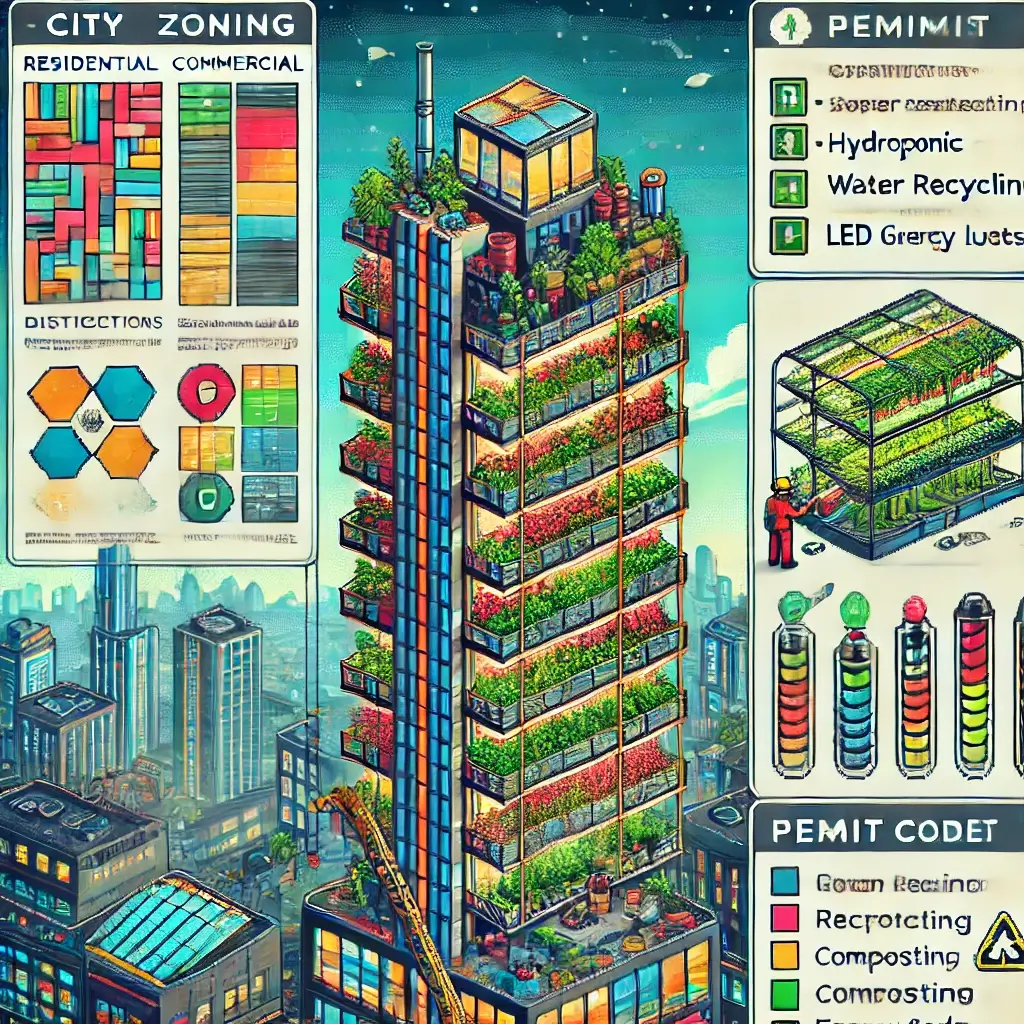
Unlocking 3 Key Regulations for Urban Vertical Farms: Don’t Get Caught Off Guard!
Hey there, fellow green thumbs and visionary entrepreneurs!
Are you dreaming of rows of lush, vibrant produce growing stacked high in the heart of the city?
Do you envision a future where fresh, locally grown food is available just around the corner, no matter the season?
If you’re nodding your head, then you’re probably as excited about **urban vertical farming** as I am.
It’s not just a trend; it’s a revolution in how we produce our food, bringing agriculture closer to our plates and reducing our environmental footprint.
But hold your horses for a second!
Before you start ordering your hydroponic systems and LED lights, there’s a crucial, often overlooked, aspect of **urban vertical farming** that you absolutely *must* wrap your head around:
The regulations!
Yeah, I know, “regulations” sounds about as exciting as watching paint dry, right?
But trust me, understanding the **zoning laws, building codes, and environmental regulations** for indoor farms isn’t just a bureaucratic hurdle; it’s the very foundation upon which your thriving **urban vertical farming** business will either soar or stumble.
Think of it like this: You wouldn’t build a skyscraper without first checking if the ground can support it, would you?
The same logic applies here.
Ignorance of these rules isn’t bliss; it’s a recipe for costly delays, fines, and even the complete shutdown of your dream project.
I’ve seen it happen, and it’s heartbreaking.
The good news?
You’re here, reading this, which means you’re already one step ahead!
In this comprehensive guide, we’re going to demystify the regulatory landscape of **urban vertical farming**.
We’ll break down the jargon, share real-world insights, and equip you with the knowledge you need to navigate these waters like a seasoned pro.
So, grab a coffee (or a freshly brewed herbal tea from your mini-indoor garden, perhaps?), and let’s dive in!
Table of Contents
The Zoning Maze: Where Can Your Urban Vertical Farm Grow?
Ah, **zoning laws**. These are, hands down, one of the first and most critical hurdles you’ll face when planning your **urban vertical farm**.
Think of zoning laws as the city’s master plan, dictating what kind of activities can take place in different areas.
It’s essentially the municipal government telling you, “You can build a house here, a factory there, and a shop over yonder.”
But where does an indoor farm fit into this traditional puzzle?
That’s the million-dollar question!
Understanding Zoning Classifications for Urban Vertical Farming
Traditionally, land is zoned for residential, commercial, industrial, or agricultural use.
The tricky part for **urban vertical farming** is that it often blurs these lines.
Is it industrial because it’s a manufacturing process?
Is it commercial because you’re selling produce?
Or is it agricultural because, well, you’re farming?
The answer largely depends on your local municipality and how progressive (or not) their zoning ordinances are.
Here’s a breakdown of how **urban vertical farms** typically interact with common zoning classifications:
1. Industrial Zones: Many **urban vertical farms** find a comfortable home here.
Industrial zones are often characterized by large, vacant warehouses and factories – perfect spaces for a multi-story indoor farm!
These zones typically allow for manufacturing, processing, and distribution, which aligns well with the operational aspects of a vertical farm.
The good news is that industrial zones are often less restrictive regarding noise, traffic, and aesthetic impact, which can be a plus.
2. Commercial Zones: If your **urban vertical farm** includes a retail component, like a farm stand or a café, a commercial zone might be a viable option.
However, pure commercial zoning might be too restrictive for the “farming” aspect, particularly if it involves significant water usage, waste management, or power consumption that goes beyond typical retail operations.
You might need to seek a special permit or a variance to operate your farm in such a zone.
3. Agricultural Zones: While **urban vertical farms** are, by definition, agricultural, traditional agricultural zones are usually located outside city limits and are designed for large-scale, outdoor farming.
Bringing an indoor, high-tech farm into a rural agricultural zone might actually be more complicated than you think, as it may conflict with the zone’s intent of preserving open space and traditional farming practices.
That said, some forward-thinking jurisdictions are starting to create sub-classifications or overlay zones that specifically accommodate **urban agriculture**.
4. Mixed-Use Zones: These are the unicorns of urban planning!
Mixed-use zones are designed to blend residential, commercial, and sometimes even light industrial uses into a single area.
If your city has progressive mixed-use zoning, this could be an ideal spot for an **urban vertical farm**, especially if you envision it as a community hub with educational programs or a direct-to-consumer sales model.
It’s a fantastic way to integrate food production seamlessly into the urban fabric.
Navigating the Zoning Labyrinth
So, how do you figure out where your **urban vertical farm** fits?
It starts with a simple, yet crucial, step: Contact your local planning or zoning department.
Seriously, this isn’t a task for Google alone. You need to talk to the people who write and enforce these rules.
Don’t be shy!
Go in with a clear description of your project: what you’ll grow, your technology, water usage, energy demands, and how you plan to manage waste.
Be prepared for a conversation, not just a quick answer.
Many municipalities are still catching up to the concept of **urban vertical farming**, so you might be educating them as much as they’re informing you.
Look for Special Permits and Variances: Even if a particular zone doesn’t explicitly allow **urban vertical farming**, you might be able to apply for a special use permit or a variance.
A special use permit allows a land use that is not typically permitted in a particular zone but is considered compatible with the overall character of the area.
A variance is a request to deviate from the literal interpretation of a zoning ordinance.
These processes can be lengthy and require public hearings, but they’re often the path to getting your **urban vertical farm** approved.
Advocate for Change: If your local zoning laws are truly antiquated, don’t just throw in the towel!
Consider becoming an advocate for change.
Many cities are actively looking for ways to foster **urban agriculture**, and your well-researched proposal could be the catalyst for updating their ordinances.
Connect with local urban farming groups, environmental organizations, and city council members.
Collective action can move mountains (or at least zoning maps!).
Here’s a fantastic resource from the National Agricultural Law Center that discusses various legal aspects, including zoning, for **urban agriculture**:
Explore Urban Agriculture Law Resources
Building Codes: Constructing Your Green Oasis Legally and Safely
Once you’ve navigated the zoning labyrinth and found a suitable location, the next big hurdle for your **urban vertical farm** is **building codes**.
These aren’t just suggestions; they are the bedrock of safety in construction.
Think of them as the comprehensive rulebook that ensures your structure is sound, safe for occupants, and can withstand various challenges, from fires to earthquakes.
For an **indoor farm**, where you’re dealing with water, electricity, specialized equipment, and potentially heavy shelving systems, understanding and adhering to **building codes** is absolutely non-negotiable.
Key Building Code Considerations for Urban Vertical Farms
While the specifics vary by jurisdiction (often based on the International Building Code, or IBC, with local amendments), here are some critical areas you’ll need to focus on:
1. Structural Integrity: This is huge for **urban vertical farms**.
You’re not just putting a few potted plants on a shelf.
You’re potentially stacking multiple layers of growing systems, each filled with water, growing media, and plants.
That adds up to a significant amount of weight!
Your building’s floors and structural elements must be able to support this immense load.
This is where a structural engineer becomes your best friend.
They’ll assess the existing structure (if you’re repurposing a building) or design a new one to safely accommodate the weight of your **vertical farming** systems.
Don’t skimp here; a collapse isn’t just costly, it can be catastrophic.
2. Electrical Systems: **Urban vertical farms** are energy hogs, plain and simple.
LED grow lights, pumps, fans, climate control systems – they all demand significant power.
Your electrical system needs to be robust enough to handle the load without overheating or causing fires.
This means proper wiring, circuit breakers, grounding, and potentially a complete overhaul of the existing electrical infrastructure in an older building.
The National Electrical Code (NEC) is the standard in the U.S., and you’ll need a licensed electrician to ensure compliance.
3. Plumbing and Water Management: Water is life for your plants, but it can be a nightmare for your building if not managed correctly.
Whether you’re using hydroponics, aquaponics, or aeroponics, you’ll have water flowing through pipes, tanks, and reservoirs.
Building codes will dictate pipe materials, drainage systems, backflow prevention (to avoid contaminating the public water supply), and even emergency shut-off valves.
Leak detection systems are also a smart investment, preventing water damage that can lead to mold and structural issues.
4. HVAC and Ventilation: Controlling temperature, humidity, and airflow is crucial for plant health in an **indoor farm**.
It’s also vital for preventing mold, ensuring air quality, and maintaining comfortable conditions for workers.
Building codes will have requirements for ventilation rates, exhaust systems, and fire dampers within ductwork.
Proper HVAC design isn’t just about plant growth; it’s about occupant health and building integrity.
5. Fire Safety: With all the electrical equipment, grow lights, and potentially flammable materials (like growing media), fire safety is paramount for an **urban vertical farm**.
Building codes will cover fire suppression systems (sprinklers!), fire alarms, emergency exits, fire-rated construction materials, and egress pathways.
You’ll need clear paths to exits, adequate signage, and potentially a robust sprinkler system designed for the specific hazards of your operation.
6. Accessibility (ADA Compliance): If your **urban vertical farm** will have public access (e.g., for tours, retail, or educational programs) or employees, you’ll need to comply with the Americans with Disabilities Act (ADA).
This includes ramps, elevators, accessible restrooms, and clear pathways to ensure everyone can safely and easily navigate your facility.
Working with Professionals and the Building Department
This isn’t a DIY project, folks!
For your **urban vertical farm**, you’ll need a team of qualified professionals:
Architect: To design the layout, space utilization, and ensure overall compliance with codes.
Structural Engineer: To assess load-bearing capacity and design structural elements.
Mechanical, Electrical, and Plumbing (MEP) Engineers: To design the intricate systems that power, water, and climate-control your farm.
Licensed Contractors: To execute the construction work according to approved plans.
Before any construction begins, you’ll need to submit detailed plans to your local **building department** for review and approval.
This process can take time, so factor it into your project timeline.
Be prepared for questions, revisions, and inspections at various stages of construction.
It’s a pain, yes, but it’s there to protect you, your employees, and your investment.
For more detailed information on specific building codes, you can often find local amendments and resources on your city or county’s building department website.
The International Code Council (ICC) publishes the model codes that many jurisdictions adopt:
Visit the International Code Council
Environmental Regulations: Keeping Your Farm Green and Clean
So, you’ve got your zoning sorted, and your building plans are looking solid.
Now, let’s talk about the big picture: how your **urban vertical farm** interacts with the environment.
This isn’t just about being a good global citizen (though that’s a huge part of the appeal of **vertical farming**!), it’s about complying with **environmental regulations** that protect our air, water, and soil.
While **indoor farms** generally have a smaller environmental footprint compared to traditional agriculture, they still have specific considerations.
Key Environmental Considerations for Urban Vertical Farms
1. Water Discharge and Wastewater Management:
Even though **vertical farms** are renowned for their water efficiency, you’re still using water, and some of it will become wastewater.
This could be runoff from growing systems, water used for cleaning, or even condensate from HVAC systems.
Regulations will govern what you can discharge into municipal sewer systems.
This includes limits on pH, nutrient levels, and any potential contaminants (though a well-run **vertical farm** should have minimal contaminants).
If you’re using fertilizers, for example, you need to ensure that any excess nutrients in your wastewater don’t end up polluting local waterways.
Some cities might require pretreatment of your wastewater before it enters the public sewer system.
Consider closed-loop systems to minimize discharge and maximize water recycling – it’s good for the environment and your bottom line!
Pro-Tip: Talk to your local water utility or wastewater treatment plant early in your planning process.
They can provide specific guidelines and requirements for industrial discharge.
2. Waste Management and Recycling:
An **urban vertical farm** will generate various types of waste:
Plant Material: Spent plants, trimmings, etc. This is organic waste, and ideally, you’ll compost it or send it to an anaerobic digester.
Growing Media: Depending on what you use (rockwool, coco coir, etc.), you’ll need a plan for disposal or recycling.
Packaging: From nutrient solutions to plant trays, you’ll have packaging waste.
Electrical Waste: Old LED lights, pumps, and other electronics (e-waste) need proper disposal due to potential hazardous materials.
**Environmental regulations** will dictate proper waste segregation, disposal, and often encourage recycling programs.
Look into local composting facilities or partnerships that can take your organic waste.
3. Air Quality and Emissions:
While an **indoor farm** isn’t emitting smoke stacks, there are still air quality considerations.
This includes:
Fungal Spores and Allergens: Proper ventilation and filtration are key to minimizing these, not just for your plants but for employees and neighbors.
VOCs (Volatile Organic Compounds): Ensure that any cleaning agents, pesticides (if used, which is rare in most vertical farms), or building materials used inside your facility don’t off-gas harmful VOCs.
Odor Control: While generally not a huge issue for most leafy greens, some crops or nutrient solutions might produce odors that could be a nuisance to nearby residents.
Your ventilation system might need carbon filters or other odor-neutralizing technologies.
Depending on the scale and type of your **urban vertical farm**, you might need to comply with local air quality permits, especially if your ventilation system exhausts directly near residential areas.
4. Energy Consumption and Renewable Energy:
While not strictly a “regulation” in many places, energy consumption is a huge **environmental consideration** for **urban vertical farms**.
High energy use translates to a larger carbon footprint if your electricity comes from fossil fuels.
Many cities offer incentives or require compliance with energy efficiency standards for new or renovated buildings.
Consider integrating renewable energy sources like rooftop solar panels into your design.
Not only does it reduce your environmental impact, but it can also lead to significant long-term cost savings and enhance your brand’s sustainability image.
Some jurisdictions might even offer grants or tax credits for implementing green energy solutions.
5. Pesticide and Chemical Use (or lack thereof):
One of the beauties of **indoor farming** is the reduced need for pesticides.
However, if you do use any chemicals for pest control, disease management, or even specialized nutrient solutions, you must adhere to strict regulations regarding their storage, handling, application, and disposal.
This falls under hazardous waste regulations and worker safety guidelines.
Always prioritize integrated pest management (IPM) strategies and organic solutions to minimize chemical reliance.
The Environmental Protection Agency (EPA) is a great starting point for understanding broad environmental regulations in the U.S., though most specific regulations will be at the state and local levels:
Visit the U.S. Environmental Protection Agency (EPA)
Navigating the Paperwork: Tips for Success
Okay, so we’ve covered the big three: zoning, building codes, and environmental regulations.
Feeling a bit overwhelmed? That’s totally normal!
The key isn’t to memorize every single line of every code (that’s what professionals are for!).
The key is to understand the landscape and adopt a proactive, collaborative approach.
Here are some practical tips, gleaned from folks who’ve walked this path before, including myself through various projects over the years:
1. Start Early and Engage Often
I cannot stress this enough: **do not wait until the last minute** to consider regulations for your **urban vertical farm**.
Start your research and outreach to city departments as soon as you have a solid concept.
Schedule preliminary meetings with planning, zoning, building, and environmental officials.
Think of these initial conversations as fact-finding missions.
Go in with a list of questions, a simple site plan, and a general idea of your operations.
They might not have all the answers for “vertical farms” specifically, but they can point you to relevant sections of their code and connect you with the right people.
Building a relationship with these departments early on can save you massive headaches down the line.
A friendly, proactive approach often yields better results than showing up with fully developed plans that are already non-compliant.
2. Assemble Your Dream Team of Professionals
Unless you’re a licensed architect, structural engineer, and environmental consultant rolled into one (and if you are, hats off to you!), you’re going to need help.
Invest in experienced professionals who understand commercial projects and, ideally, have some familiarity with unique agricultural or industrial setups.
Your team should include:
A good lawyer: Especially one specializing in real estate or land use, who can help navigate complex permits and contracts.
An architect: To design your facility and ensure it meets building codes and aesthetic requirements.
Structural, Mechanical, Electrical, and Plumbing (MEP) engineers: Absolutely crucial for the technical heart of your farm.
Environmental consultant: If your project is large or has unique waste streams, they can help ensure compliance with environmental regulations.
Think of them as your guides through the regulatory jungle.
They know the shortcuts, the pitfalls, and exactly what paperwork needs to be filled out.
3. Document Everything!
I mean *everything*.
Keep meticulous records of every meeting, phone call, email, and conversation you have with city officials or consultants.
Note dates, times, names, and what was discussed or agreed upon.
This paper trail (or digital trail) is invaluable if there’s ever a misunderstanding or dispute.
It sounds tedious, but one day, you’ll thank yourself for that organized folder of emails and meeting notes.
4. Understand the “Why” Behind the Rules
Regulations aren’t just there to make your life difficult (though it often feels that way!).
They exist for a reason: public safety, environmental protection, and orderly development.
When you understand the “why,” it makes it easier to find compliant solutions.
For example, knowing that fire codes are about protecting lives and property helps you appreciate the need for expensive sprinkler systems, rather than just seeing them as an arbitrary cost.
This mindset can also help you articulate your project in a way that aligns with the city’s goals and addresses their concerns proactively.
5. Be Prepared for Delays and Costs
Permitting processes can take time – sometimes months, sometimes even longer, especially for novel projects like an **urban vertical farm**.
Factor this into your business plan and timeline.
And yes, there will be fees – permit fees, inspection fees, professional fees for your consultants.
Budget for these upfront.
It’s always better to overestimate regulatory costs and timelines than to be caught off guard.
Think of these as necessary investments in a solid, legally compliant foundation for your **urban vertical farm**.
6. Look for Supportive Programs and Initiatives
Many cities are actively promoting **urban agriculture** and sustainability.
Look for local government initiatives, grants, or expedited permitting processes for green businesses or food-related projects.
Some cities have dedicated **urban agriculture** coordinators who can be incredible resources.
Joining local **urban farming** associations or business development groups can also provide valuable insights and connections.
For example, some cities offer specific guidelines or even incentives for **urban vertical farming** projects.
The U.S. Department of Agriculture (USDA) offers various programs and resources that can be relevant to **urban and innovative agriculture**:
Explore USDA Urban Agriculture Resources
The Future of Urban Vertical Farming Regulations
The regulatory landscape for **urban vertical farming** isn’t static.
It’s a dynamic, evolving space, just like the technology itself.
As more **urban vertical farms** emerge, and as cities recognize their immense benefits (food security, local jobs, reduced environmental impact), we’re likely to see regulations become more defined, and hopefully, more streamlined.
What to Expect on the Regulatory Horizon
1. Specific Urban Agriculture Zoning: Some progressive cities are already creating specific zoning categories or overlay districts for **urban agriculture**, including **vertical farms**.
This makes the process much clearer and easier for entrepreneurs.
Expect this trend to continue as more cities update their master plans to include food systems.
2. Green Building Standards: There’s a growing push for “green building” codes that go beyond basic safety to encourage energy efficiency, water conservation, and sustainable materials.
**Urban vertical farms** naturally align with many of these goals, but future codes might set higher benchmarks for water recycling, renewable energy integration, and building materials.
3. Water Reuse Regulations: Given the massive water savings in **vertical farming**, regulations around the reuse of water (e.g., HVAC condensate, treated wastewater) for non-potable uses, like irrigation, might become more common and refined.
This would further enhance the sustainability of **vertical farms**.
4. Food Safety Specifics for Controlled Environment Agriculture: While current food safety regulations (like those from the FDA or local health departments) apply, there might be more specific guidelines developed for produce grown in controlled environments.
This could cover everything from nutrient solution safety to lighting spectrum impacts on produce quality.
5. Data and Reporting Requirements: As cities become more data-driven, there might be future requirements for **urban vertical farms** to report on water usage, energy consumption, and even yield, to help cities track their sustainability goals.
This isn’t necessarily a bad thing; it provides valuable data for the industry as a whole.
Your Role in Shaping the Future
You, as a pioneering **urban vertical farmer**, have a unique opportunity to help shape these future regulations.
By engaging with city officials, sharing your experiences, and demonstrating the positive impacts of your farm, you can be a powerful advocate for sensible, supportive policies.
Participate in public hearings, join advisory boards, and connect with industry associations.
Your practical insights are invaluable for policymakers trying to craft effective rules.
The controlled environment agriculture (CEA) industry is actively working on best practices and standards, which often inform future regulations:
Wrapping It Up: Your Vertical Farming Journey Awaits!
Phew! We’ve covered a lot of ground, haven’t we?
From the intricacies of **zoning laws** that determine *where* you can grow, to the crucial safety nets of **building codes** that dictate *how* you build, and finally to the vital **environmental regulations** that ensure your **urban vertical farm** is a responsible neighbor to our planet.
It might seem like a daunting mountain of paperwork and bureaucracy, but I promise you, it’s a climb worth making.
Understanding and proactively addressing these regulations isn’t just about avoiding fines or legal troubles.
It’s about building a robust, sustainable, and legitimate business that contributes positively to its community.
It’s about demonstrating that **urban vertical farming** isn’t just a niche hobby, but a vital component of our future food system.
Remember, every successful **urban vertical farm** out there has navigated these very same waters.
They started by asking questions, engaging with local authorities, and assembling a knowledgeable team.
You have the vision, the passion, and now, a solid understanding of the regulatory landscape.
So, take a deep breath, channel your inner urban farmer, and get ready to turn those concrete jungles into vibrant, productive green oases.
The world is hungry for what you’re growing, literally and figuratively.
Go forth and cultivate! And don’t forget to share your stories of success (and perhaps a few regulatory war stories too!).
Happy farming!
Urban Vertical Farming, Zoning Laws, Building Codes, Environmental Regulations, Indoor Farms