
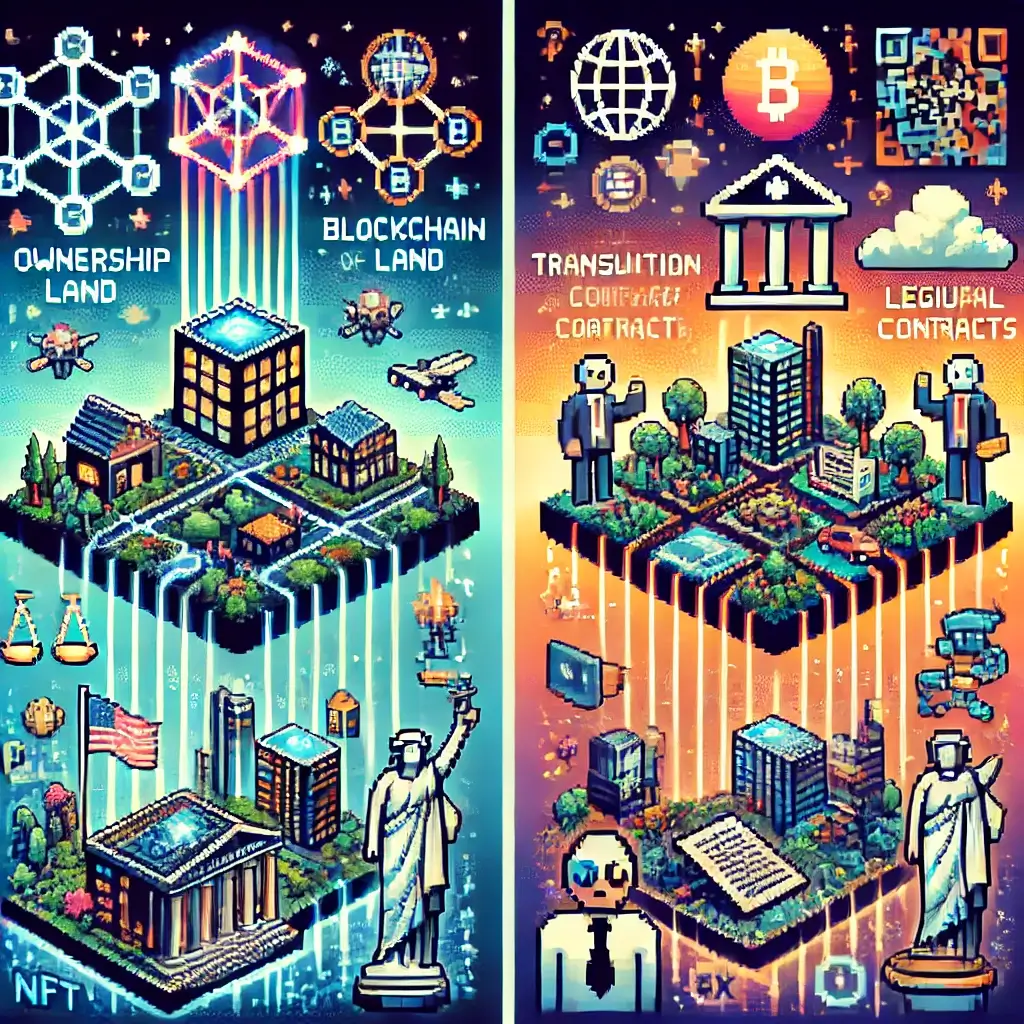
The Wild West of Virtual Land: 7 Shocking Legal Truths About Owning Metaverse Property!
Table of Contents
- Welcome to the Digital Frontier: Why Virtual Land Matters
- What Exactly IS Virtual Land, Anyway?
- Shocking Truth 1: How Do You Actually “Own” Virtual Land?
- Shocking Truth 2: Developing Your Digital Dreams – What’s Allowed?
- Shocking Truth 3: Whose Rules Apply in the Metaverse? The Jurisdiction Nightmare
- Shocking Truth 4: When Things Go Wrong – Resolving Virtual Land Disputes
- Shocking Truth 5: The Taxman Cometh, Even for Virtual Land!
- Shocking Truth 6: The Unwritten Rules – Future Regulations and Your Virtual Land Investment
- Shocking Truth 7: The Perils and Promises – Risks and Rewards of Virtual Land Ownership
- Final Thoughts: Navigating the Metaverse Property Maze
Welcome to the Digital Frontier: Why Virtual Land Matters
Hey there, digital pioneers!
Ever found yourself scrolling through news feeds, scratching your head at headlines about million-dollar plots of land… that don’t actually exist in the physical world?
Yeah, you’re not alone.
Welcome to the wild, woolly, and frankly, utterly fascinating world of virtual land in the metaverse!
It’s a place where digital real estate is hotter than a summer day in Busan, and everyone from celebrities to savvy investors is trying to stake their claim.
But here’s the thing: while the hype is real, the legalities of owning and developing virtual land are often as murky as a forgotten data stream.
It’s not like buying a house down the street; there’s no deed from the county recorder’s office, no traditional title insurance, and definitely no zoning board meetings (well, not yet, anyway!).
I’ve been elbow-deep in this digital dirt for a while now, seeing firsthand the excitement, the opportunities, and yes, the massive pitfalls that come with this new frontier.
Think of this as your friendly guide through the legal labyrinth of metaverse property.
We’re going to pull back the curtain and reveal 7 shocking truths about what it truly means to own and build on virtual land.
By the end of this, you’ll have a much clearer picture of the landscape, and hopefully, you’ll be better equipped to navigate it yourself, whether you’re looking to invest, build, or just understand this mind-blowing phenomenon.
Ready to dive in?
What Exactly IS Virtual Land, Anyway?
Before we get into the nitty-gritty legal stuff, let’s make sure we’re all on the same page about what we’re even talking about.
When I say “virtual land,” I’m not talking about a piece of code on a server that anyone can copy and paste.
Oh no, that’s far too simple for the metaverse!
We’re talking about unique, non-fungible digital assets – usually represented as **NFTs (Non-Fungible Tokens)** – that exist within a specific metaverse platform.
Think of platforms like Decentraland, The Sandbox, or Somnium Space.
Each of these is like a miniature digital country, with its own economy, its own rules (more on that later!), and its own finite supply of virtual land parcels.
These parcels are essentially unique plots of digital real estate.
And just like in the real world, their value can fluctuate wildly based on location (is it near a popular plaza?), scarcity (how much land is available?), and utility (what can you actually *do* on it?).
You “buy” them using cryptocurrency, and that NFT acts as your verifiable proof of ownership on a blockchain.
It’s a digital deed, if you will, but instead of being stored in a dusty government archive, it’s transparently recorded on a decentralized ledger.
Pretty cool, right?
Now, let’s explore those shocking truths!
Shocking Truth 1: How Do You Actually “Own” Virtual Land?
Alright, let’s kick things off with the most fundamental question: what does “ownership” even mean in a digital realm?
In the physical world, ownership of land is defined by a complex web of laws, deeds, and government registries.
You have a physical piece of paper, or a record in a public office, that says “this land belongs to you.”
In the metaverse, it’s a whole different ballgame.
Your ownership of virtual land is primarily established through an NFT.
When you purchase a parcel of land in, say, Decentraland, you’re not getting a traditional property deed.
What you’re acquiring is a unique Non-Fungible Token (NFT) that’s minted on a blockchain, usually Ethereum.
This NFT is a digital certificate of authenticity and ownership.
It contains a unique identifier and is linked to a specific parcel of virtual land within that particular metaverse platform.
The blockchain records the transaction and proves that you are the sole owner of that specific NFT.
This is where the concept of “verifiable scarcity” comes in.
Unlike a regular image on the internet that can be copied infinitely, an NFT proves you own the *original* or a *specific edition* of a digital asset.
The shocking part?
While the NFT proves you own *that token*, it doesn’t always automatically grant you the same legal rights that come with physical property.
For instance, if the platform itself shuts down, what happens to your “land”?
Are you protected by consumer laws?
These are the million-dollar questions that lawyers are scrambling to answer.
It’s a brave new world, and the legal frameworks are still catching up to the technology.
Shocking Truth 2: Developing Your Digital Dreams – What’s Allowed?
So, you’ve snagged your prime piece of virtual land.
Congratulations!
Now, what can you actually *do* with it?
This is where the development aspect comes into play, and it’s another area where the rules are still being written, often by the platforms themselves.
The “development rights” on your virtual land are often dictated by the platform’s terms of service and underlying code.
In many metaverse platforms, owning a parcel of land grants you the ability to build, create, and host experiences on it.
This could range from erecting a stunning virtual art gallery, setting up a digital storefront, hosting events, or even creating mini-games.
The tools and capabilities vary wildly from one platform to another.
Some offer robust drag-and-drop builders, while others require more complex coding or 3D modeling skills.
The shocking truth here is that while you “own” the land, the platform itself usually maintains significant control over what you can build and how you can use it.
Think of it like this: you own a house, but the city still has zoning laws and building codes you have to follow.
In the metaverse, these “zoning laws” are embedded in the platform’s code and terms.
For example, a platform might restrict certain types of content (e.g., adult content, hate speech), limit the number of objects you can place, or even impose aesthetic guidelines.
If you violate these terms, the platform could potentially remove your content, suspend your account, or even revoke your access to your virtual land.
This highlights the crucial distinction between owning the NFT and having absolute, unfettered control over your digital domain.
Always, always, *always* read the platform’s terms of service before you commit to a purchase!
Shocking Truth 3: Whose Rules Apply in the Metaverse? The Jurisdiction Nightmare
Okay, this is where things get really spicy, legally speaking.
In the real world, if you buy land in, say, Texas, then Texas law applies.
Simple, right?But what about virtual land that exists on servers spread across the globe, accessible by people from every corner of the planet?
The biggest head-scratcher with virtual land is determining which country’s laws apply when disputes arise.
Is it the country where the metaverse platform’s company is incorporated?
The country where the servers are located?
The country where the buyer or seller resides?
Or, heaven forbid, all of them?
The shocking truth is that there’s currently no clear, universally accepted legal framework for jurisdiction in the metaverse.
This creates a “jurisdiction nightmare,” as lawyers like to call it.
Imagine a scenario: you, living in South Korea, buy virtual land from someone in Germany on a platform based in the Cayman Islands, and a dispute arises.
Which court do you go to?
Which laws are used to resolve the issue?
This legal vacuum is a significant risk for anyone investing in virtual land.
Some platforms try to address this by including “choice of law” clauses in their terms of service, stating which jurisdiction’s laws will govern disputes.
But even these clauses can be challenged, especially if they are deemed unfair or if they conflict with mandatory consumer protection laws in a user’s home country.
It’s truly the wild west, and until international consensus or specific metaverse laws emerge, prepare for some potential legal acrobatics.
Understand Metaverse Jurisdiction Challenges
Shocking Truth 4: When Things Go Wrong – Resolving Virtual Land Disputes
So, what happens when your digital neighbor starts building something truly obnoxious next door, or worse, someone claims your virtual land was stolen?
In the real world, you’d call a lawyer, maybe file a complaint with the city, or even sue.
But in the metaverse, traditional legal avenues can be a bit like trying to catch smoke.
Traditional legal remedies are often ill-equipped to handle disputes arising in the metaverse.
The shocking truth is that resolving disputes over virtual land is largely uncharted territory.
Since there’s no clear jurisdiction (as we just discussed), getting a court to hear your case and enforce a judgment can be incredibly difficult, if not impossible.
Most metaverse platforms have their own internal dispute resolution mechanisms.
This might involve reporting a user, filing a ticket, or engaging in a platform-moderated mediation process.
However, these processes are often opaque, can be biased towards the platform’s interests, and may not provide the legal recourse or compensation you’d expect from a traditional court.
For example, if your NFT for a land parcel is stolen due to a security breach on a marketplace or in your own wallet, you’re usually out of luck.
Because blockchain transactions are immutable, once it’s gone, it’s gone.
There’s no “undo” button, and very little legal precedent for recovering stolen digital assets from a third party.
This is why personal security and choosing reputable platforms and marketplaces are paramount.
Until more robust legal frameworks and perhaps even “meta-courts” emerge, you’re largely relying on the goodwill and policies of the platform itself.
Shocking Truth 5: The Taxman Cometh, Even for Virtual Land!
Ah, taxes.
The one certainty in life, alongside death, now extends its long, shadowy reach into the digital ether!
Many people jump into the metaverse thinking they’re operating in some kind of tax-free zone, a digital paradise where the government can’t touch their earnings.
Prepare for a rude awakening: virtual land transactions and income are very much subject to real-world taxation.
The shocking truth here is that most tax authorities around the world are increasingly viewing virtual assets, including virtual land and NFTs, as property or capital assets for tax purposes.
This means:
Capital Gains Tax: If you buy virtual land and later sell it for a profit, that profit is likely subject to capital gains tax in your country of residence.
It’s treated much like selling real estate or stocks.
Income Tax: If you’re developing your virtual land and generating income from it – say, by charging for access to an experience, selling goods, or hosting ads – that income will likely be subject to income tax.
VAT/Sales Tax: In some jurisdictions, even the initial purchase of an NFT or virtual land might be subject to value-added tax (VAT) or sales tax, although this is still a highly debated and evolving area.
The complexity stems from the global nature of these transactions and the nascent stage of crypto taxation.
Keeping accurate records of your purchase price, sale price, and any associated fees in your local fiat currency is absolutely crucial.
Don’t get caught off guard!
Consult with a tax professional who specializes in cryptocurrency and digital assets.
Ignoring your tax obligations in the metaverse could lead to some very real, and very unpleasant, real-world consequences.
IRS Guidance on Digital Assets
Shocking Truth 6: The Unwritten Rules – Future Regulations and Your Virtual Land Investment
Remember how I mentioned the legal frameworks are still catching up?
Well, this isn’t just about interpretation; it’s about active development.
Governments around the world are very much aware of the metaverse and its economic potential, and with that awareness comes the inevitable march towards regulation.
Your virtual land investment is highly susceptible to future legislative and regulatory changes.
The shocking truth is that what might be perfectly permissible today on your virtual land could be restricted or outright prohibited tomorrow by new laws.
We’re talking about potential regulations concerning:
Data Privacy: As more personal data is collected and used in the metaverse, new privacy laws (like GDPR or CCPA) could extend to virtual environments, impacting how you can gather or use data from visitors to your land.
Intellectual Property: What if someone builds something on their virtual land that infringes on your real-world trademark or copyright?
Or vice-versa?
Clearer IP laws for the metaverse are sorely needed.
Consumer Protection: If you’re selling virtual goods or experiences on your land, what consumer protection laws apply?
Are there rules about refunds, fair advertising, or misleading claims?
Securities Laws: There’s an ongoing debate about whether certain NFTs or metaverse assets could be classified as securities, which would bring them under a much stricter regulatory regime.
Any of these potential regulations could drastically impact the value, utility, and legality of your virtual land.
Staying informed about legislative developments in your region and globally is crucial.
The future of virtual land ownership will heavily depend on how these “unwritten rules” eventually get written into law.
Pro Tip: Think of this like investing in a nascent industry.
Early adopters take on more risk, but also stand to gain the most if things go well.
Keep an eye on government announcements and legal news related to crypto and the metaverse!
Shocking Truth 7: The Perils and Promises – Risks and Rewards of Virtual Land Ownership
Alright, we’ve talked about the legal maze, the taxman, and the murky waters of jurisdiction.
It might sound like a minefield out there, and in some ways, it is!
But let’s not forget, there’s a reason so many people are diving headfirst into this.
While rife with legal uncertainties, virtual land ownership presents both significant risks and potentially enormous rewards.
The shocking truth is that the risk-reward profile for virtual land is extremely high.
The Perils (Risks):
Platform Dependence: Your virtual land’s value is intrinsically tied to the success and longevity of the metaverse platform it resides on.
If the platform loses popularity, faces technical issues, or even shuts down, your investment could become worthless.
It’s like owning a house in a town that suddenly becomes a ghost town.
Market Volatility: The crypto and NFT markets are notoriously volatile.
The price of virtual land can swing wildly based on hype, market sentiment, and broader economic factors.
What’s worth a fortune today might be pennies tomorrow.
Security Risks: NFTs and cryptocurrencies are susceptible to hacks, phishing scams, and other digital threats.
If your digital wallet is compromised, your virtual land (and other assets) could be stolen with little to no recourse.
Liquidity Issues: While some parcels of virtual land sell for millions, not all land is easily liquid.
Finding a buyer at your desired price can be challenging, especially for less desirable plots.
It’s not always a quick flip.
Regulatory Uncertainty: As discussed, future regulations could severely impact the usability, transferability, or even legality of virtual land.
The Promises (Rewards):
Potential for High Returns: Early investors in popular metaverse platforms have seen astronomical returns on their virtual land investments.
As the metaverse grows, so too could the value of prime digital real estate.
Creative Expression and Monetization: Owning virtual land gives you a canvas to create unique experiences, build businesses, host events, and generate income in innovative ways.
You can truly be a digital architect or entrepreneur.
Community and Networking: The metaverse is a social space.
Owning land can connect you with a vibrant community of builders, artists, and investors, opening doors to collaborations and opportunities.
Future of Digital Commerce: Many believe the metaverse is the next evolution of the internet, a persistent, immersive space for commerce, entertainment, and social interaction.
Being an early landowner is like buying domain names in the early days of the internet.
It’s a rollercoaster ride, folks.
But for those with a high tolerance for risk and a keen eye for innovation, the promise of the metaverse, and virtual land within it, is undeniably alluring.
Final Thoughts: Navigating the Metaverse Property Maze
Phew!
We’ve covered a lot of ground today, haven’t we?
From the basics of NFT ownership to the looming specter of taxation and the wild west of jurisdiction, the legal landscape of virtual land is complex, evolving, and frankly, fascinating.
The 7 shocking truths we’ve explored should give you a much more realistic understanding of what you’re getting into when you consider buying or developing virtual land.
It’s not just about clicking a button and owning a piece of the digital dream; it’s about navigating a nascent legal and technological ecosystem.
My biggest piece of advice, as someone who’s seen the triumphs and heartbreaks in this space, is to approach virtual land with a healthy dose of caution and a hunger for knowledge.
Do your due diligence, understand the platform’s terms inside and out, protect your digital assets like your life depends on it, and for goodness sake, talk to a professional (lawyer, tax advisor) if you’re making a significant investment.
The metaverse is an incredible frontier, brimming with innovation and potential.
But like any frontier, it comes with its own set of rules – some written, many still unwritten.
By understanding these truths, you’re not just buying a digital asset; you’re investing in the future of the internet, and that, my friends, is a journey worth preparing for.
What are your thoughts on virtual land?
Are you considering staking your claim, or are you happy to watch from the sidelines?
Let me know in the comments below!