
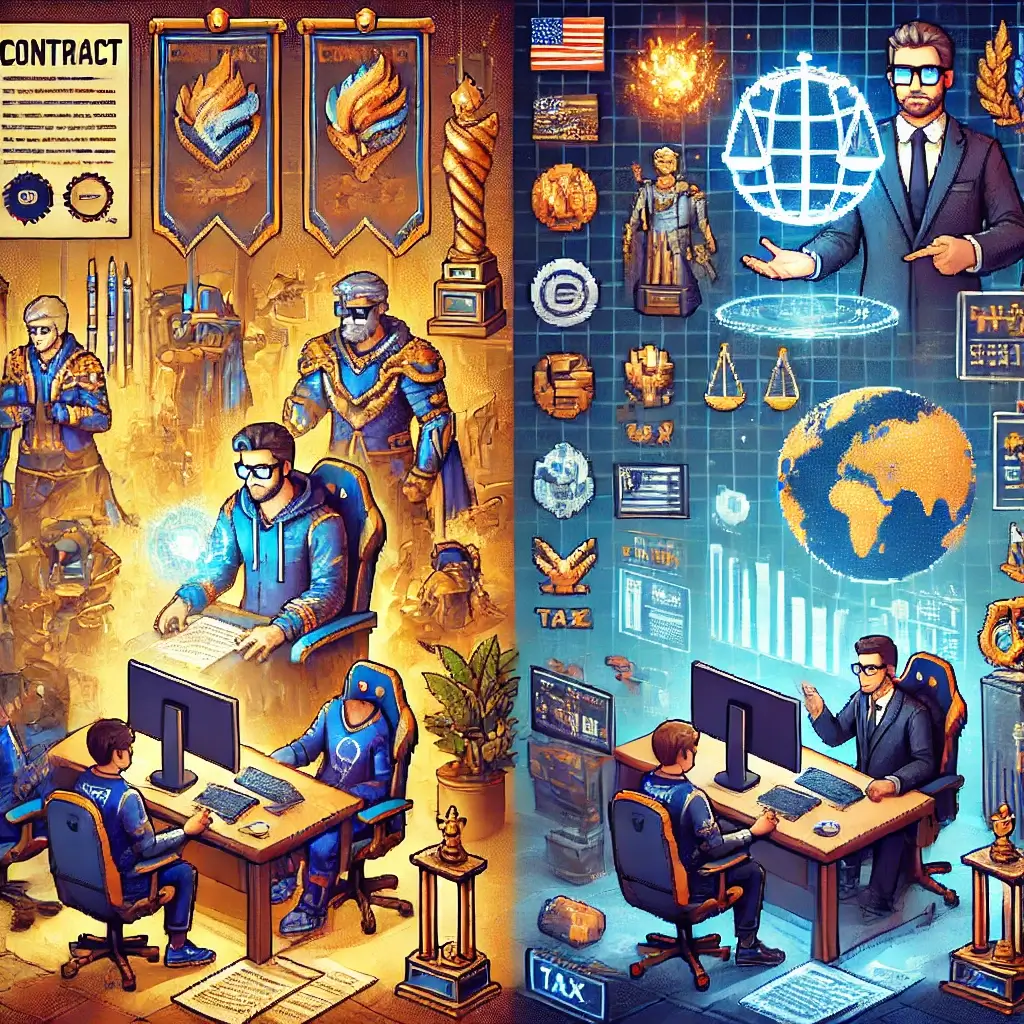
3 Critical Esports Contract Law Challenges You MUST Know!
Ever wonder what keeps the lights on in the dazzling, high-stakes world of competitive gaming? It’s not just the flashy sponsorships or the packed arenas (though those certainly help!). Beneath all that glitz and glory, there’s a bedrock of meticulously crafted legal agreements: **esports contracts**.
Seriously, folks, while we’re all busy marveling at pro players pulling off incredible clutch plays, there’s a whole army of legal eagles working behind the scenes, hammering out the intricate details that govern careers, livelihoods, and even entire organizations. It’s a wild west out there, but with more legal briefs than tumbleweeds, trust me.
Today, we’re going to pull back the curtain and dive deep into the fascinating, sometimes baffling, and always crucial realm of **esports contract law**. If you’re a player, a team owner, an aspiring sponsor, or just someone who loves the scene and wants to understand its inner workings, you’ve come to the right place. We’ll talk about player contracts, team agreements, and those sweet, sweet sponsorship deals. And hey, I’ll try to keep it light – no one wants to fall asleep reading about legalese, right?
Let’s face it, the esports industry is booming. We’re talking billions of dollars, millions of fans, and a growth trajectory that makes traditional sports look like they’re walking uphill in the snow. But rapid growth often means new challenges, especially on the legal front. It’s like building a skyscraper at lightning speed – you better have a rock-solid foundation, or the whole thing could come crashing down. And in esports, that foundation is built on contracts.
—Table of Contents
- The Unique Beast: What Makes Esports Contracts Different?
- Player Power: Unpacking Player Contracts
- Team Tactics: Navigating Team Agreements
- Sponsor Gold: Crafting Lucrative Sponsorship Deals
- The 3 Critical Legal Challenges in Esports Contracts
- Why You Can’t Afford to Skimp on Legal Counsel
- Concluding Thoughts: Play Smart, Play Safe
The Unique Beast: What Makes Esports Contracts Different?
Before we dissect the different types of **esports contracts**, let’s chat about why they’re not just your run-of-the-mill legal documents. Think about it: traditional sports have had decades, even centuries, to iron out their legal kinks. Baseball, basketball, football – they’ve got established player unions, collective bargaining agreements, and well-trodden legal precedents.
Esports? Not so much. We’re still in our legal infancy, bless our digital hearts. This means a few things:
1.
Lack of Uniformity: There isn’t one universal “esports contract” template. Every game, every league, every team can have wildly different terms. It’s like comparing apples to… well, enchanted golden apples.
2.
Rapid Evolution: The industry changes faster than a pro player switches mains. What was relevant last year might be obsolete today. This means contracts need to be flexible but also robust enough to withstand unforeseen shifts.
3.
Global Reach, Local Laws: Esports is inherently global. A team might have players from five different countries, competing in a league based in another, with sponsors from yet another. This creates a fascinating, albeit headache-inducing, tangle of international laws.
4.
Digital Assets & IP: A lot of the “value” in esports is digital – game assets, in-game characters, streaming content. Protecting intellectual property in this space is a whole different ballgame (pun intended).
So, yeah, it’s a bit like trying to build a legal skyscraper on quicksand while the blueprints are constantly being updated. Exciting, right?
—Player Power: Unpacking Player Contracts
Ah, the **player contract**. This is the bread and butter of any professional player’s career. It’s the document that formalizes the relationship between a player and their team, laying out everything from paychecks to responsibilities. If you’re a player, this is *your* golden ticket – or your gilded cage, depending on how well it’s negotiated.
Let’s break down the key components you’ll typically find in an **esports player contract**:
Salaries, Bonuses, and Prize Pool Splits: Show Me the Money!
This is usually the first thing everyone looks at, and for good reason. Players want to know how much they’re getting paid. It’s not just a flat salary; it often includes:
1.
Base Salary: Your regular paycheck, just like any other job.
2.
Performance Bonuses: Win a tournament? Hit a certain rank? There might be extra cash waiting. These are huge motivators.
3.
Prize Pool Splits: This is where it gets interesting. Tournament prize money is usually split between the players and the organization. The percentage can vary wildly, from 50/50 to a player-favorable 80/20. Always, always check this percentage. It’s often where the real money is for top-tier teams.
4.
Benefits: Some organizations offer health insurance, housing, food stipends, and even mental health support. These are often overlooked but can add significant value.
I’ve seen contracts where players practically give away their prize pool share, and others where they retain the lion’s share. It’s all about negotiation, my friends. Don’t be shy!
Player Obligations: More Than Just Playing Games
Being a pro gamer isn’t just about clicking heads and executing perfect rotations. Teams expect a lot from their players, and these obligations are clearly spelled out in the contract:
1.
Practice Schedules: How many hours a day? Which days? It’s often a grueling schedule, not just casual gaming.
2.
Team Representation: You’re an ambassador for the team and its brand. This means upholding professional conduct, both in-game and out. No toxic behavior, no controversial statements – your online persona is now part of your job.
3.
Streaming Requirements: Many contracts mandate a certain number of streaming hours, often under the team’s branding. This is crucial for building the team’s audience and attracting sponsors.
4.
Media Appearances & Content Creation: Interviews, social media posts, promotional videos – players are often expected to be public figures.
5.
Relocation: If the team has a gaming house, players might be required to live there. This can be a big adjustment, especially for young players.
Think of it this way: you’re not just a player; you’re a brand ambassador, a content creator, and a role model, all rolled into one. It’s a lot to juggle, and the contract makes sure you know exactly what’s expected.
Image Rights & Endorsements: Your Face, Your Fortune
This is a big one. Your image – your name, likeness, gamer tag, voice, signature – is valuable. Teams want to use it for marketing, merchandising, and attracting sponsors. The contract will detail how they can use it and often, for how long after you leave the team.
Crucially, pay attention to clauses regarding personal endorsements. Can you sign your own sponsorship deals with brands that aren’t team sponsors? Or does everything have to go through the team? This can be a major source of personal income for star players, so ensure it’s clearly defined and favorable to you. You don’t want to accidentally sign away your personal brand without realizing it.
Term and Termination: The Esports Exit Strategy
How long is the contract for? One year? Three years? And more importantly, under what conditions can it be terminated? This includes:
1.
Breach of Contract: If you don’t fulfill your obligations (e.g., you skip practice, break conduct rules), the team might have grounds to terminate.
2.
Mutual Agreement: Sometimes, it just doesn’t work out, and both parties agree to part ways.
3.
“No-Fault” Termination: Some contracts allow either party to terminate with a certain notice period, or upon payment of a buyout. This is more common in traditional sports but gaining traction in esports.
4.
Buyouts: This is huge. If another team wants to poach a player mid-contract, they usually have to pay a buyout fee to the current organization. This can be a massive sum and is a key asset for teams. Players should understand how this impacts their future mobility.
It’s vital to understand the termination clauses. You don’t want to find yourself stuck in a bad situation with no clear way out, or conversely, be blindsided by a team letting you go without cause.
—Team Tactics: Navigating Team Agreements
Beyond player contracts, **team agreements** are the blueprints for how an entire organization operates. These are the intricate legal documents that govern relationships between team owners, investors, coaches, staff, and even the league itself. It’s the backbone of the organization, ensuring everyone is on the same page and knows their role.
Team Ownership Structures: Who’s the Boss?
Just like any startup, esports organizations can have various ownership structures: sole proprietorships, partnerships, LLCs, corporations. This dictates liability, how profits are shared, and how decisions are made. For investors, understanding this is paramount. You want to know who’s steering the ship and if they’re actually licensed to drive it.
Intellectual Property: Protecting Your Brand’s Playbook
A team’s brand is its most valuable asset. This includes its name, logo, team colors, slogans, and even proprietary strategies or training methods. **Intellectual property (IP)** clauses in team agreements are critical for protecting these assets. This involves:
1.
Trademarks: Registering the team name and logo to prevent others from using them.
2.
Copyright: Protecting original content created by the team, like videos, graphics, and even unique game strategies.
3.
Confidentiality & Non-Disclosure Agreements (NDAs): Essential for keeping sensitive information (like unreleased rosters, strategies, or financial data) under wraps, especially with staff and even players.
Imagine a scenario where a former coach starts a new team and immediately uses your secret strat. Without strong IP protection, you’re essentially left screaming into the void. Not a good look.
Revenue Sharing: Dividing the Digital Pie
Teams generate revenue from a multitude of sources: prize winnings, sponsorships, merchandise sales, media rights, streaming income, and even franchise fees in franchised leagues. Team agreements outline how this revenue is distributed among owners, investors, and sometimes even players beyond their salaries. Transparency here is key to avoiding internal disputes.
Dispute Resolution: When Things Go Sideways
No one likes to think about things going wrong, but they do. This section outlines how disagreements will be resolved. Common methods include:
1.
Mediation: A neutral third party helps the disputing parties find a solution.
2.
Arbitration: A neutral third party hears both sides and makes a binding decision. This is often preferred over litigation as it’s typically faster and less public.
3.
Litigation: Going to court. This is usually a last resort due to its cost, time, and public nature.
Having a clear dispute resolution mechanism in place can save an organization from spiraling into costly and reputation-damaging legal battles. It’s the team’s emergency brake, if you will.
—Sponsor Gold: Crafting Lucrative Sponsorship Deals
Sponsorships are the financial lifeblood of most **esports** organizations. They’re how teams pay salaries, travel to tournaments, and build flashy gaming houses. A good **sponsorship deal** can elevate a team from obscurity to global recognition. A bad one? Well, it can be a financial black hole.
Types of Sponsorships: From Jerseys to Naming Rights
Sponsorships come in all shapes and sizes:
1.
Kit Sponsorships: The classic – a brand’s logo on jerseys and merchandise.
2.
Equipment Sponsorships: Teams using specific brands of keyboards, mice, headsets, or PCs.
3.
Content Sponsorships: A brand sponsoring a team’s YouTube series, Twitch stream, or social media campaign.
4.
Naming Rights: A big one – a brand’s name attached to a team (e.g., “Team Liquid presented by Dell Alienware”) or even an entire esports arena.
5.
Event Sponsorships: Brands sponsoring specific tournaments or leagues.
Each type has different implications for exposure, deliverables, and, of course, financial compensation.
Deliverables and Performance Metrics: What Do They Get?
Sponsors aren’t just handing out money for fun. They want a return on their investment. The contract will explicitly detail the “deliverables” – what the team (or player) promises to provide in exchange for the sponsorship fee. This can include:
1.
Logo Placement: On jerseys, websites, streaming overlays.
2.
Social Media Posts: A certain number of tweets, Instagram posts, or TikToks promoting the brand.
3.
Brand Mentions: Shout-outs during streams, interviews, or event appearances.
4.
Activations: Participation in sponsor-led events, fan meet-and-greets, or product launches.
5.
Content Integration: Seamlessly incorporating the brand into video content or streams.
There will also be **performance metrics** – how the effectiveness of the sponsorship will be measured (e.g., impressions, engagement rates, click-throughs). This is vital for both parties to assess the value generated.
Exclusivity and Competing Brands: The Loyalty Clause
Sponsors almost always demand some level of exclusivity. A tech company sponsoring your team probably doesn’t want you simultaneously promoting their direct competitor. These clauses specify which other brands, if any, the team (or player) cannot partner with. This is incredibly important to clarify, as violating an exclusivity clause can lead to hefty penalties and even contract termination.
It’s like dating, but with brands. You can’t be seen holding hands with your current sponsor’s rival. It just complicates things.
Termination Clauses: The Breakup Plan
Just like player contracts, sponsorship deals need clear termination clauses. What happens if the team underperforms drastically? What if the sponsor has a PR crisis? What if the team engages in conduct that harms the sponsor’s brand image? These clauses protect both parties and outline the conditions under which the agreement can be ended, including any penalties or refunds.
It’s the “in case of emergency, break glass” part of the contract.
—The 3 Critical Legal Challenges in Esports Contracts
Alright, so we’ve covered the basics. Now let’s get into the nitty-gritty, the really interesting (and sometimes frustrating) challenges that make **esports contract law** such a dynamic field. These aren’t just minor hiccups; these are significant hurdles that often require innovative legal thinking.
1. Minors and Guardianship: When Young Talent Meets Old Laws
Here’s a head-scratcher: esports is rife with prodigies. We’re talking about players as young as 15 or 16 making hundreds of thousands, sometimes millions, of dollars. But guess what? In most jurisdictions, a minor (someone under 18) can’t legally enter into a contract. So, what happens?
Typically, the contract needs to be co-signed by a parent or legal guardian. Sounds simple, right? Not always. Guardians might not understand the complexities of the esports industry, or worse, they might have conflicting interests (think stage parents, but for gaming). This opens up a whole can of worms regarding enforceability, undue influence, and potential conflicts of interest.
Imagine a 16-year-old superstar signing away 90% of his prize money because his well-meaning but clueless parent didn’t understand the terms. It’s a real concern and one that needs careful legal navigation to protect these young talents from exploitation.
Some states and countries have specific laws protecting child entertainers or athletes, but these often aren’t tailored for the unique demands of esports. It’s a legal tightrope walk, ensuring that the contract is enforceable while protecting the minor’s best interests.
2. Rapid Industry Evolution vs. Static Law: A Perpetual Game of Catch-Up
Remember how I said the industry changes faster than a ping in a bad internet connection? Well, legal frameworks are notoriously slow to adapt. Laws are often reactive, designed to address issues that have *already* occurred, not predict future innovations.
This means **esports contracts** often have to account for technologies or industry practices that don’t yet have clear legal precedents. Think about NFTs, blockchain in gaming, the metaverse, or entirely new streaming platforms that pop up overnight. How do you draft a contract today that adequately covers technologies that might emerge in five years?
It’s like trying to write rules for a sport that hasn’t even been invented yet. Lawyers in this space often have to be incredibly forward-thinking, using broad language where necessary, and relying on clauses that allow for future amendments or interpretations as the landscape evolves. It requires a lot of flexibility and a keen understanding of both legal principles and technological trends. It’s definitely not for those who like their laws neatly filed and unchanging.
3. International Jurisdiction & Governing Law: The Global Game, Global Problems
Esports is inherently borderless. A team based in South Korea might have players from Europe, North America, and China, competing in a tournament hosted in Germany, broadcast globally, and sponsored by a Japanese corporation. So, whose laws apply when a dispute arises?
This is where clauses for **governing law** and **dispute resolution forums** become incredibly important. Will the contract be governed by the laws of California, where the league is based? Or South Korea, where the team is registered? Or the player’s home country?
Choosing the right jurisdiction can significantly impact the outcome of a dispute. For instance, some countries have more player-friendly labor laws, while others might favor organizations. Enforcing judgments across international borders can also be a logistical nightmare.
And what about taxes? Players often have to deal with income tax in multiple countries, depending on where they reside, where they compete, and where their prize money originates. It’s a complex web, and without expert legal guidance, players and organizations can easily find themselves in hot water with international tax authorities.
This challenge alone is why having legal counsel with international experience in **esports contract law** isn’t just a luxury; it’s a necessity.
—Why You Can’t Afford to Skimp on Legal Counsel
If there’s one takeaway from all this, it’s this: **DO NOT GO IT ALONE.** Whether you’re a player, a team owner, or a brand looking to dip your toes into **esports sponsorships**, engaging with experienced legal counsel is non-negotiable. I can’t stress this enough.
I’ve seen too many horror stories: players locked into unfair contracts, teams losing valuable IP, sponsors getting zero ROI because of poorly drafted agreements. The money saved on legal fees upfront is often dwarfed by the costs of litigation or lost opportunities down the line.
An experienced **esports lawyer** doesn’t just understand the legal jargon; they understand the industry’s unique nuances, its culture, its pace, and its potential pitfalls. They can spot red flags you didn’t even know existed and help you negotiate terms that truly protect your interests.
Think of it as investing in armor before heading into battle. You wouldn’t send your star carry into a pro match with a potato for a graphics card, would you? Don’t enter a multi-year, multi-million-dollar commitment without top-tier legal support.
Here are a few reputable resources where you can start looking for legal expertise:
Sports Business Journal – Esports Section
Georgetown Law – Esports & Gaming Law Initiative
Lexology – Gaming & Esports Law
—Concluding Thoughts: Play Smart, Play Safe
The world of **esports** is undeniably exciting, dynamic, and full of incredible opportunities. But like any rapidly evolving industry, it comes with its own set of complexities, especially on the legal front. From intricate **player contracts** to comprehensive **team agreements** and lucrative **sponsorship deals**, understanding the legal landscape is no longer just a luxury – it’s a necessity for sustained success.
By understanding the nuances of these **esports contracts** and the unique legal challenges they present, you can navigate this thrilling ecosystem with confidence. Always remember: in the game of **esports**, knowing your legal moves is just as important as knowing your in-game mechanics.
So, whether you’re aiming to be the next big star, build a championship-winning organization, or invest in the future of competitive gaming, play smart, play safe, and make sure your contracts are as strong as your top laner!
Esports Contract Law, Player Contracts, Team Agreements, Sponsorship Deals, Competitive Gaming