
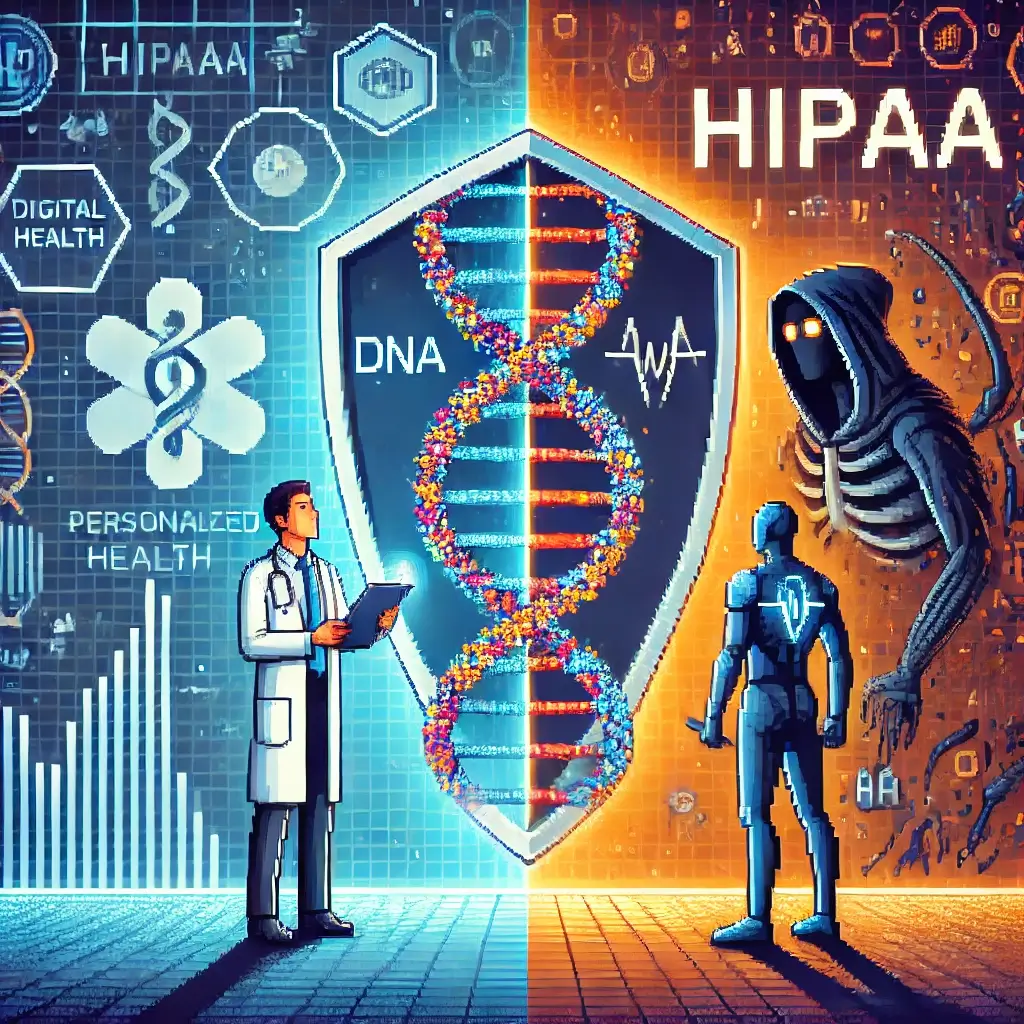
3 HUGE HIPAA Hurdles for Personalized Medicine: Your Genetic Data on the Line!
Alright, let’s get real for a moment. Have you ever wondered about the incredible, almost sci-fi future of medicine where treatments are tailor-made just for YOU? Not some one-size-fits-all drug, but something designed to work with your unique body, your unique genetic makeup? That, my friends, is the promise of personalized medicine. It’s groundbreaking, it’s exciting, and it’s already happening.
But here’s the kicker: this revolutionary approach relies heavily on something incredibly intimate and sensitive – your genetic data. And anytime we talk about sensitive personal information, especially in healthcare, one big, hairy acronym inevitably pops its head up: HIPAA. Yes, the Health Insurance Portability and Accountability Act. Sounds dry, I know, but trust me, it’s the bodyguard standing between your most private medical details and, well, everyone else.
Now, you might think, “Great, personalized medicine is here, and HIPAA is there to protect me. What’s the big deal?” Ah, if only it were that simple! The truth is, the marriage of personalized medicine and data privacy, particularly concerning genetic data, is a complex beast with some gnarly challenges. We’re talking about a whole new level of complexity that even the sharpest legal minds are still grappling with. And today, we’re diving deep into the 3 biggest HIPAA hurdles that are shaping this brave new world.
—Table of Contents
- What’s the Buzz About Personalized Medicine and Why Does Genetic Data Matter SO Much?
- HIPAA 101: Your Privacy Shield (But Is It Enough for Genetic Data?)
- Hurdle 1: The De-identification Dilemma – Can Genetic Data EVER Be Truly Anonymous?
- Hurdle 2: The Consent Conundrum – Who Owns Your Genes, Anyway?
- Hurdle 3: The Research Revelation – Balancing Innovation with Ironclad Privacy
- Beyond HIPAA: New Frontiers for Genetic Data Protection
- So, What’s Next for Your Genetic Blueprint?
- Useful Resources and Where to Learn More!
What’s the Buzz About Personalized Medicine and Why Does Genetic Data Matter SO Much?
Let’s paint a picture. Imagine you’re diagnosed with a certain condition. Instead of your doctor prescribing a standard drug that works for, say, 60% of people, they could look at your unique genetic code. They could see if you have specific markers that indicate you’d respond brilliantly to Drug A, or terribly to Drug B. That’s personalized medicine in a nutshell – tailoring prevention, diagnosis, and treatment to each individual’s genetic, environmental, and lifestyle factors.
And the cornerstone of this revolution? You guessed it: genetic data. Your DNA is like your body’s instruction manual. It contains the blueprint for everything from your eye color to your predisposition to certain diseases. When doctors can read this manual, they can make incredibly precise decisions. For example, some cancers are now treated with drugs specifically designed to target mutations found in a patient’s tumor cells. That’s personalized medicine at its finest, driven directly by genetic data.
It’s not just about treatment, either. It’s about predicting risks, preventing diseases before they even start, and even figuring out which diet or exercise routine might be best for you based on your unique biology. The potential is mind-blowing, but with great power comes great responsibility, especially when we’re talking about something as foundational as your genetic code. Because unlike other medical data, your genes aren’t just about you; they tell a story about your family, too.
—HIPAA 101: Your Privacy Shield (But Is It Enough for Genetic Data?)
Okay, before we dive into the nitty-gritty, let’s have a quick refresher on HIPAA. Passed in 1996, it’s designed to protect patient health information from being disclosed without the patient’s consent or knowledge. It sets national standards for the security of electronic protected health information (ePHI) and dictates who can access your medical records and under what circumstances. Think of it as the digital fortress around your health data.
Under HIPAA, your “protected health information” (PHI) includes pretty much anything that ties you to your health records – your name, address, birth date, medical record number, diagnoses, treatments, etc. Healthcare providers, health plans, and healthcare clearinghouses (called “covered entities”) have to abide by its rules, and so do their business associates (like billing companies or IT providers).
So, does genetic data fall under HIPAA’s umbrella? Absolutely! If your genetic test results are part of your medical record and can be linked back to you, they’re considered PHI. This means they’re subject to HIPAA’s privacy and security rules, limiting how they can be used and disclosed. On paper, it sounds like a perfect fit, right? Genetic data is personal, medical, and needs protection. But as with all things bleeding edge, the reality is a bit more nuanced. And that’s where our hurdles come in.
—Hurdle 1: The De-identification Dilemma – Can Genetic Data EVER Be Truly Anonymous?
Imagine a world where your genetic data could be used for incredible research, helping to find cures for diseases, without anyone ever knowing it came from YOU. That’s the dream of “de-identification” or “anonymization.” Under HIPAA, if data is properly de-identified, it’s no longer considered PHI and can be used for research without individual authorization. It’s a fantastic tool for scientific progress.
But here’s the catch when it comes to genetic data: can it truly be de-identified? Think about it. Your entire unique genetic code is like a super-fingerprint. While other medical data might be easy to strip of identifying information (remove names, dates, etc.), your genome is, by its very nature, incredibly unique to you. It’s like trying to anonymize a snowflake. Each one is different, and even if you remove the “name” of the snowflake, its unique pattern might still be traceable back to its origin if enough other snowflakes are also available.
Researchers have already shown that it’s possible, in some cases, to re-identify individuals from supposedly “anonymized” genomic data, especially when combined with other publicly available information. For example, if a researcher has an “anonymized” genetic sequence and can cross-reference it with a publicly available genealogy database or even a direct-to-consumer genetic testing service, the jig might be up. This is a massive headache for personalized medicine because if data can’t be truly anonymized, then every piece of genetic information shared for research or drug development needs explicit consent, which can be a huge bottleneck for scientific advancement.
This challenge means we need more robust methods for protecting genetic privacy, possibly even rethinking what “de-identification” means in the age of big data and advanced computational power. It’s a bit like playing a never-ending game of cat and mouse, where the “mouse” is your unique genetic code, and the “cat” is sophisticated re-identification techniques. And frankly, the cat seems to be getting smarter every day!
—Hurdle 2: The Consent Conundrum – Who Owns Your Genes, Anyway?
Consent under HIPAA is pretty clear for standard medical treatments and data sharing. You generally sign a form, give your permission, and off we go. But with genetic data, it gets incredibly messy, incredibly fast. This isn’t just about your blood pressure readings; this is about your genetic destiny, and crucially, the genetic destiny of your relatives. Remember, your DNA is shared with your family members.
So, if you consent to have your genetic data used for research, what about your siblings, parents, or even future children who share significant portions of that same genetic information? Do they also need to consent? HIPAA doesn’t explicitly address this “familial” aspect of genetic privacy. It’s designed around individual patient consent, not family units. This creates a huge ethical and practical challenge for large-scale genetic research, which thrives on access to vast datasets.
Furthermore, consent for genetic data can be incredibly broad. When you get a genetic test, are you consenting for its use in just that specific diagnostic purpose, or for future research that might not even be conceived of yet? The concept of “dynamic consent,” where individuals can continually update their preferences for how their data is used, is gaining traction. But implementing such a system is incredibly complex for healthcare providers and researchers.
And let’s not forget the “incidental findings.” Sometimes, when your genes are analyzed for one purpose (say, cancer risk), a finding totally unrelated to the initial reason might pop up (like a predisposition to a different, rare condition). What’s the obligation to inform you of these findings? What if you don’t want to know? These are all thorny questions that HIPAA, in its current form, doesn’t fully answer, making the landscape of personalized medicine a minefield for consent.
Learn More About HIPAA Privacy Rules Explore Genetic Data Privacy —Hurdle 3: The Research Revelation – Balancing Innovation with Ironclad Privacy
The entire promise of personalized medicine hinges on research. We need to analyze massive amounts of genetic data, link it to health outcomes, and discover new therapies. But here’s the rub: HIPAA’s strong privacy protections, while vital, can sometimes feel like they’re putting the brakes on rapid scientific discovery.
For research purposes, HIPAA allows for the use of PHI under specific conditions, often requiring institutional review board (IRB) approval, waiver of consent, or de-identification. However, the complexities of genetic data, as we’ve discussed with re-identification risks and the consent conundrum, mean that researchers often face an uphill battle. They need to navigate stringent rules to access data that could literally save lives.
Imagine a scenario: a rare disease affects only a few hundred people worldwide. To understand it, researchers need to pool genetic and medical data from these scattered patients. Getting individual consent from everyone, ensuring proper de-identification that truly protects their unique genomes, and navigating different international privacy laws (HIPAA is U.S.-specific, remember!) becomes an enormous, often impossible, logistical hurdle. This isn’t just an academic problem; it’s a real barrier to finding cures and developing targeted therapies for conditions that desperately need them.
Striking the right balance between protecting individual privacy and fostering groundbreaking research is one of the grand challenges of our time. It requires innovative legal interpretations, new technological solutions for data protection, and a whole lot of trust between patients, researchers, and healthcare providers. It’s a tightrope walk, and the stakes couldn’t be higher for the future of personalized medicine.
Read About Genomic Data Sharing & Privacy CDC on Genetic Privacy —Beyond HIPAA: New Frontiers for Genetic Data Protection
Given these challenges, it’s clear that HIPAA alone, while foundational, isn’t a silver bullet for the unique complexities of genetic data in personalized medicine. So, what else is being done? A lot, actually! Governments, research institutions, and even tech companies are exploring new frameworks and technologies.
One promising area is **federated learning** or **privacy-preserving artificial intelligence**. Instead of centralizing all genetic data in one place (a huge target for hackers), these technologies allow AI models to be trained on decentralized datasets. The data never leaves its original secure location, and only the “learnings” or aggregated patterns are shared. This significantly reduces the risk of individual re-identification while still allowing for powerful analyses. It’s like having many separate libraries, and instead of taking all the books to one central building, a librarian visits each library, reads the books there, and only reports back the general themes without ever revealing the specific titles or patrons.
Another crucial development is the push for stronger **ethical guidelines** and **best practices** within the scientific community. Organizations are working on creating standardized consent forms that are clearer and more comprehensive for genetic research. There’s also increasing emphasis on robust **data governance models** that involve patient advocates in the decision-making process for how genetic data is used and shared. This isn’t just about legal compliance; it’s about building trust and ensuring that the incredible power of genetic information is wielded responsibly and ethically.
Furthermore, some states in the U.S. and countries globally are enacting more specific laws concerning genetic privacy, often going beyond HIPAA’s general provisions. This patchwork of regulations can be complicated for researchers, but it reflects a growing societal awareness of the unique sensitivity of our genetic blueprint. The future of genetic data protection isn’t just about one law; it’s about a multi-layered approach combining legal frameworks, technological innovation, and strong ethical commitments.
—So, What’s Next for Your Genetic Blueprint?
Navigating the world of personalized medicine and genetic data can feel a bit like exploring uncharted territory. On one hand, the potential for vastly improved health outcomes is breathtaking. Imagine treatments that truly target your specific disease, preventative measures tailored to your unique risks, and a deeper understanding of your own body. It’s a future filled with hope.
On the other hand, the privacy implications of sharing your most fundamental biological information – your genetic code – are undeniably complex and, frankly, a little daunting. The challenges with de-identification, the complexities of consent, and the tension between privacy and research innovation are real, and they demand our attention. HIPAA is a crucial foundation, but it’s becoming increasingly clear that it needs companions – new technologies, updated regulations, and evolving ethical guidelines – to truly safeguard our genetic data in the age of personalized medicine.
As patients and consumers, it’s more important than ever to be informed. Ask questions. Understand the consent forms you’re signing. Be aware of how your genetic data is being collected, stored, and used, whether by your healthcare provider or a direct-to-consumer genetic testing company. Your genetic blueprint is yours, and advocating for its responsible use is key to unlocking the full, safe potential of this medical revolution. The journey of personalized medicine is just beginning, and with careful attention to privacy, we can ensure it benefits everyone, safely and securely.
—Useful Resources and Where to Learn More!
Want to dig deeper into the fascinating world of personalized medicine, genetic data, and privacy? Check out these trusted resources:
NIH: All About Precision Medicine FDA: Genomic Sequencing & Precision Medicine Center for Genetics and Society