How 3 Simple Steps Can Revolutionize Your Ethical Fashion Supply Chain Audits and Save Your Brand!
I get it.
The fashion industry moves at lightning speed.
From chasing the latest trends to getting products on the shelves, it can feel like a nonstop race.
But what if I told you there’s a part of this race you absolutely cannot afford to lose?
I’m talking about the ethical fashion supply chain.
It’s the hidden engine that powers your brand, and if it’s not running ethically, you’re not just risking bad press—you’re risking your entire business.
As someone who’s spent years consulting with brands, big and small, on their supply chain woes, I’ve seen it all.
I’ve seen the panic when a major news outlet breaks a story about a brand’s sketchy factory conditions.
I’ve sat in rooms with CEOs trying to figure out how to regain consumer trust after a PR nightmare.
And trust me, it’s a million times harder to fix a broken reputation than it is to build an ethical foundation from the start.
This isn’t about being perfect; it’s about being proactive.
It’s about understanding that ethical labor isn’t a “nice-to-have”—it’s a fundamental obligation.
It’s about having a system in place that protects both the workers who make your clothes and the brand you’ve worked so hard to build.
This guide isn’t just a dry list of regulations.
Think of it as a playbook from a seasoned coach.
We’ll walk through the legal minefield, the best practices that actually work, and the three crucial steps you need to take right now to secure your supply chain and your brand’s future.
Ready?
Let’s dive in.
Table of Contents
The Wake-Up Call: Why Ethical Audits Are No Longer Optional
Let’s be brutally honest.
For a long time, the fashion industry operated under a “don’t ask, don’t tell” policy.
We all knew the clothes were cheap because labor was cheap, but we collectively looked the other way.
Then came the tragedies.
The most infamous, of course, being the Rana Plaza collapse in 2013.
That horrific event wasn’t just a tragedy; it was a global wake-up call that sent shockwaves through the industry.
It pulled back the curtain on the grim reality of fast fashion and forced brands and consumers alike to confront the human cost of cheap clothing.
Suddenly, “Made in Bangladesh” wasn’t just a label; it was a question.
And that question was, “At what cost?”
That’s when the conversation shifted.
Ethical fashion supply chain audits went from being a niche, “hippie” concern to a mainstream business necessity.
Consumers started demanding more.
They want transparency.
They want to know that the clothes they buy aren’t steeped in exploitation.
And with the rise of social media, a single viral post about a labor violation can tank a brand’s reputation faster than you can say “sweatshop.”
But it’s not just about public opinion.
Governments around the world are getting serious about this, too.
We’re seeing a flood of new laws and regulations, from the UK to Australia, that put the burden of proof squarely on the brands.
The old excuse, “we didn’t know,” simply doesn’t fly anymore.
So, if you’re a brand owner, a designer, or just someone in the industry, you have to look at this not as a chore, but as an opportunity.
An opportunity to build a brand that’s not just profitable, but also principled.
A brand that people can trust.
The Legal Gauntlet: Navigating Your Obligations in Ethical Fashion
So, what exactly are these laws I’m talking about?
The landscape is complex and constantly evolving, but you can think of it in a few key buckets.
First, you have modern slavery acts.
The UK Modern Slavery Act 2015 and the Australian Modern Slavery Act 2018 are two of the biggest players.
These aren’t just about the worst-case scenarios of forced labor; they’re about transparency.
They require large businesses to publish an annual statement outlining the steps they’ve taken to ensure there’s no modern slavery in their operations and supply chains.
It’s a “show your work” kind of law, and the public is watching.
Then you have due diligence laws.
These are even more hands-on.
Countries like France and Germany have passed laws that require companies to actively identify, prevent, and mitigate human rights and environmental risks in their supply chains.
Failure to do so can result in hefty fines and legal action.
These laws are a game-changer.
They mean you can’t just slap a “no forced labor” clause in a contract and call it a day.
You have to prove you’ve done your homework.
And let’s not forget about the United States.
The U.S. Customs and Border Protection (CBP) has the authority to issue Withhold Release Orders (WROs), which stop goods suspected of being made with forced labor from entering the country.
This can effectively shut down your import business overnight.
I saw a small brand get hit with a WRO a few years ago.
They had no idea their supplier was using forced labor; they just thought they had a great deal.
The legal battle, the seized inventory, the reputational damage—it was a devastating lesson.
The moral of the story?
Ignorance is not bliss.
It’s a liability.
These laws are not going away.
They’re becoming more common, more stringent, and more global.
The only way to stay ahead is to integrate ethical practices into the very fabric of your business.
The Gold Standard: Best Practices for Ethical Fashion Supply Chain Audits
Alright, so you know the risks.
Now, let’s talk about the solution.
Building a truly ethical fashion supply chain isn’t just about avoiding a lawsuit; it’s about creating a positive and lasting impact.
It’s about having a system that’s not just about ticking boxes, but about fostering genuine partnership and respect.
Here are some of the best practices that the most respected brands in the industry are adopting.
1. Don’t Just Audit, Partner.
A traditional audit is like a surprise pop quiz.
You show up, ask a bunch of questions, and leave.
This approach often leads to “audit fatigue” and can even incentivize suppliers to hide issues.
A better approach is to see your suppliers as partners.
Work with them to identify and solve problems.
Instead of just saying, “You have a fire safety issue,” try saying, “Let’s work together to get this fixed. What resources do you need?”
This builds trust and creates a collaborative environment where real change can happen.
2. Go Beyond Tier 1.
Most brands only focus on their Tier 1 suppliers—the factories that cut and sew the final product.
But the real risks often lurk further down the chain, in the Tier 2 (fabric mills) and Tier 3 (raw material production, like cotton farms) suppliers.
This is where the most egregious labor violations and environmental damage often occur.
The best brands are mapping their entire supply chain, from the cotton field to the final garment.
It’s a massive undertaking, but it’s the only way to be truly confident in your ethical claims.
3. Be Radically Transparent.
Consumers are hungry for information.
They want to know where their clothes came from.
Brands that are winning are the ones that are opening up.
They’re sharing their factory lists, their audit results, and their progress—even the parts they’re still struggling with.
Patagonia is the classic example here.
They’ve been transparent for years, and it’s built a level of brand loyalty that’s almost unmatched.
Transparency isn’t a weakness; it’s a superpower.
It shows your customers that you’re not hiding anything and that you’re committed to doing the right thing.
4. Empower Workers.
An audit is only a snapshot in time.
The best way to ensure ongoing ethical conduct is to empower the workers themselves.
This means having grievance mechanisms in place, like anonymous hotlines or a trusted third-party ombudsman, where workers can safely report issues without fear of retaliation.
It means providing training on their rights and responsibilities.
When workers feel safe and empowered, they become your most effective ethical monitors.
Step 1: The Foundation – Know Your Supply Chain Inside and Out
So, let’s get practical.
Where do you even begin?
The first and most critical step is mapping your supply chain.
You cannot manage what you do not know.
I’ve seen so many brands get bogged down by this, but it doesn’t have to be overwhelming.
Start with a simple spreadsheet.
List every single supplier you work with, no matter how small.
Go beyond the final assembly factory.
Who supplies your fabric?
Your buttons?
Your zippers?
Your thread?
Once you have your list, start gathering information on each one.
Ask for their certifications, their own supplier lists, and their policies on labor and environmental standards.
If they refuse to share this information, that’s a massive red flag.
It’s like dating someone who won’t introduce you to their friends—you know something is up.
This is where technology can be a huge help.
There are a number of software platforms now that can help you map and manage your supply chain data.
Even a simple Google Sheet can be a game-changer if you use it consistently.
The goal here isn’t to be a detective; it’s to build a clear, comprehensive map of where your products come from.
This map will be your most important tool for the next two steps.
Step 2: The Audit – Going Beyond the Checklist
Once you have your supply chain mapped out, it’s time to start the audits.
And I can’t stress this enough: a good audit is about more than just a checklist.
It’s about digging deeper.
Think of it like a doctor’s visit.
A good doctor doesn’t just check your blood pressure; they ask about your diet, your sleep, your stress levels.
They look at the whole picture.
That’s what you need to do with your audits.
Here’s how you make your audits more effective:
1. Use Reputable Third-Party Auditors.
Don’t try to do this yourself.
Hire a professional, third-party firm that specializes in social and ethical audits.
Look for firms that are members of organizations like the Sedex or the amfori BSCI.
These are the gold standards in the industry.
They have trained auditors who know what to look for—both the obvious and the subtle.
2. Conduct Unannounced Audits.
A scheduled audit is like a party you know is coming—everyone cleans up for the guests.
An unannounced audit, on the other hand, gives you a much more accurate picture of daily life in the factory.
This is where you’ll see the real working conditions, not the “show” they put on for the auditors.
3. Interview Workers. Privately.
The most valuable information in an audit comes from the workers themselves.
The best auditors will conduct private interviews, away from management.
They’ll ask about working hours, pay, health and safety, and whether the workers feel safe and respected.
This is the human element that no checklist can capture.
Step 3: The Follow-Through – Making It Stick
You’ve mapped your supply chain.
You’ve conducted your audits.
Now what?
This is where many brands drop the ball.
They get a report, file it away, and hope for the best.
But a one-time audit is not a solution; it’s a starting point.
The final and most crucial step is to create a plan for continuous improvement.
Every audit report will come with a Corrective Action Plan (CAP).
This is your to-do list.
You need to work with your suppliers to address every single finding, from minor health and safety issues to more serious labor violations.
Set clear deadlines.
Follow up.
And don’t be afraid to walk away if a supplier is unwilling to change.
That’s the ultimate show of commitment.
Remember, this is a marathon, not a sprint.
The world of fashion is always changing, and so are the ethical challenges.
But by committing to these three steps—knowing your chain, auditing it effectively, and following through—you can build a brand that’s not just successful, but also a force for good.
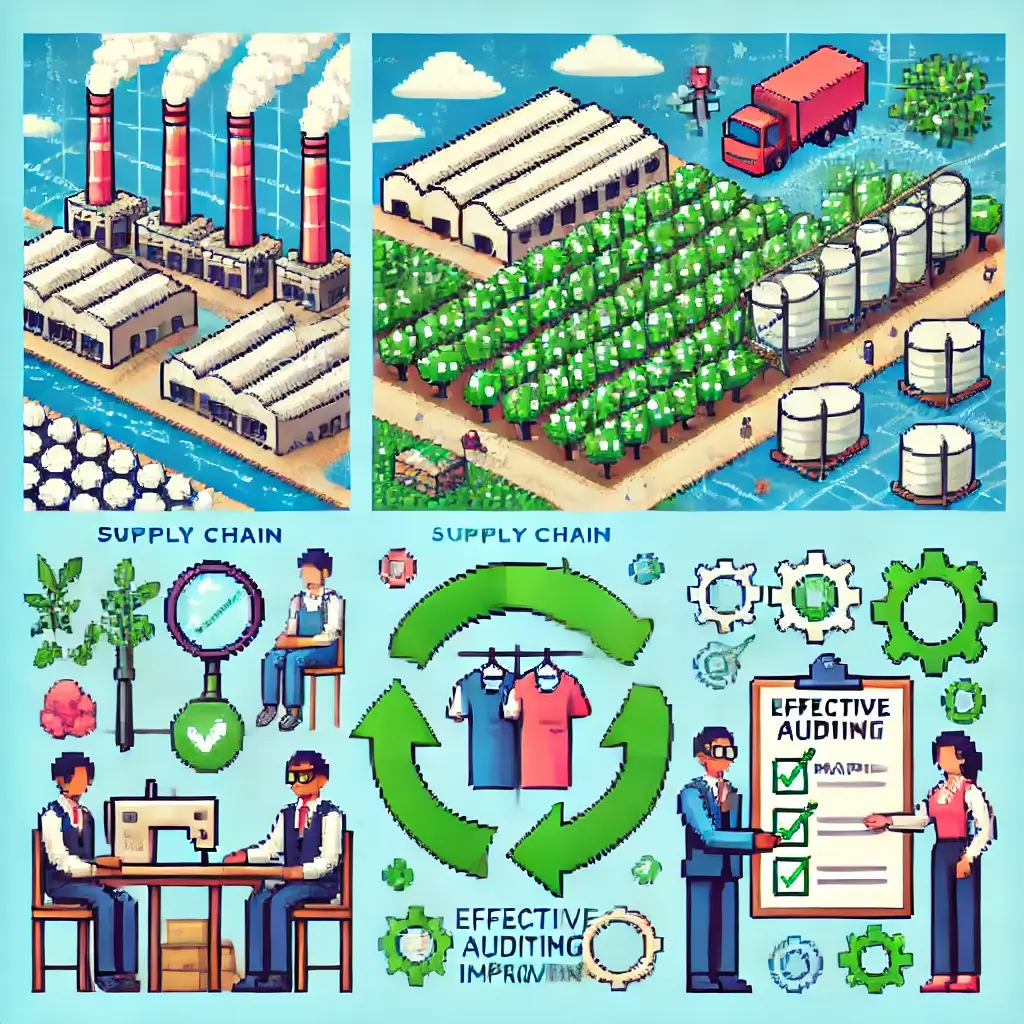
INFOGRAPHIC: The 3-Step Ethical Fashion Supply Chain Audit Cycle
The Ethical Supply Chain Triad
Step 1: Mapping & Transparency
Know your entire supply chain, from raw materials to finished goods. Build a detailed map of all your suppliers, including Tier 2 and Tier 3. Ask for certifications and policies.
Key Action: Supply Chain Mapping
Step 2: Effective Auditing
Go beyond basic checklists. Use reputable third-party auditors and consider unannounced visits. Crucially, conduct private interviews with workers to get a real picture of the conditions.
Key Action: Third-Party Audits & Worker Interviews
Step 3: Continuous Improvement
An audit is just the beginning. Create and implement Corrective Action Plans (CAPs) with your suppliers. Follow up regularly and be prepared to disengage from suppliers who are unwilling to improve.
Key Action: Corrective Action Plan & Follow-Up
Don’t Wait for a Crisis: Your Call to Action
I want to end this by sharing a story.
I once worked with a small, up-and-coming streetwear brand.
They were on the cusp of a major deal with a huge retailer, and everything was going great.
Then, one of their social media followers, a student activist, started asking questions about where their t-shirts were made.
The brand, to their credit, didn’t dodge the question.
They admitted they only knew their final assembly factory and were just beginning to look into the rest of the chain.
Instead of a PR crisis, it became a moment of radical transparency.
They posted a public statement saying, “We’re on a journey, and we want you to come with us.”
They shared their first-ever audit report, highlighted the issues they found, and created a public, live-updating spreadsheet of their progress.
They were honest.
They were vulnerable.
And you know what happened?
Their community didn’t abandon them; they rallied around them.
They gained more followers, more brand loyalty, and more sales than ever before.
The big retailer went ahead with the deal, citing the brand’s proactive and transparent approach as a major factor.
That’s the power of doing the right thing.
It’s not about being perfect from day one.
It’s about having the guts to be honest and the commitment to improve.
So, don’t wait for a crisis to force your hand.
Start today.
Map your supply chain.
Conduct a thorough audit.
And make a public commitment to continuous improvement.
Your brand, your customers, and the workers who make your clothes will thank you for it.
Essential Resources and Links
ethical fashion supply chain, ethical labor, supply chain audits, legal obligations, best practices
🔗 Online Course Copyright Posted 2025-08-11 07:22 UTC 🔗 Microbrewery & Distillery Licensing Posted 2025-08-12 03:21 UTC 🔗 Space Tourism Liability Waiver Posted 2025-08-13 06:31 UTC 🔗 Gene Editing War 3: CRISPR Patent Posted 2025-08-14 06:50 UTC 🔗 Digital Nomad Visa Traps Posted 2025-08-15 (no exact time provided) 🔗 11 Shocking Truths About Digital Nomad Posted 2025-08-15