
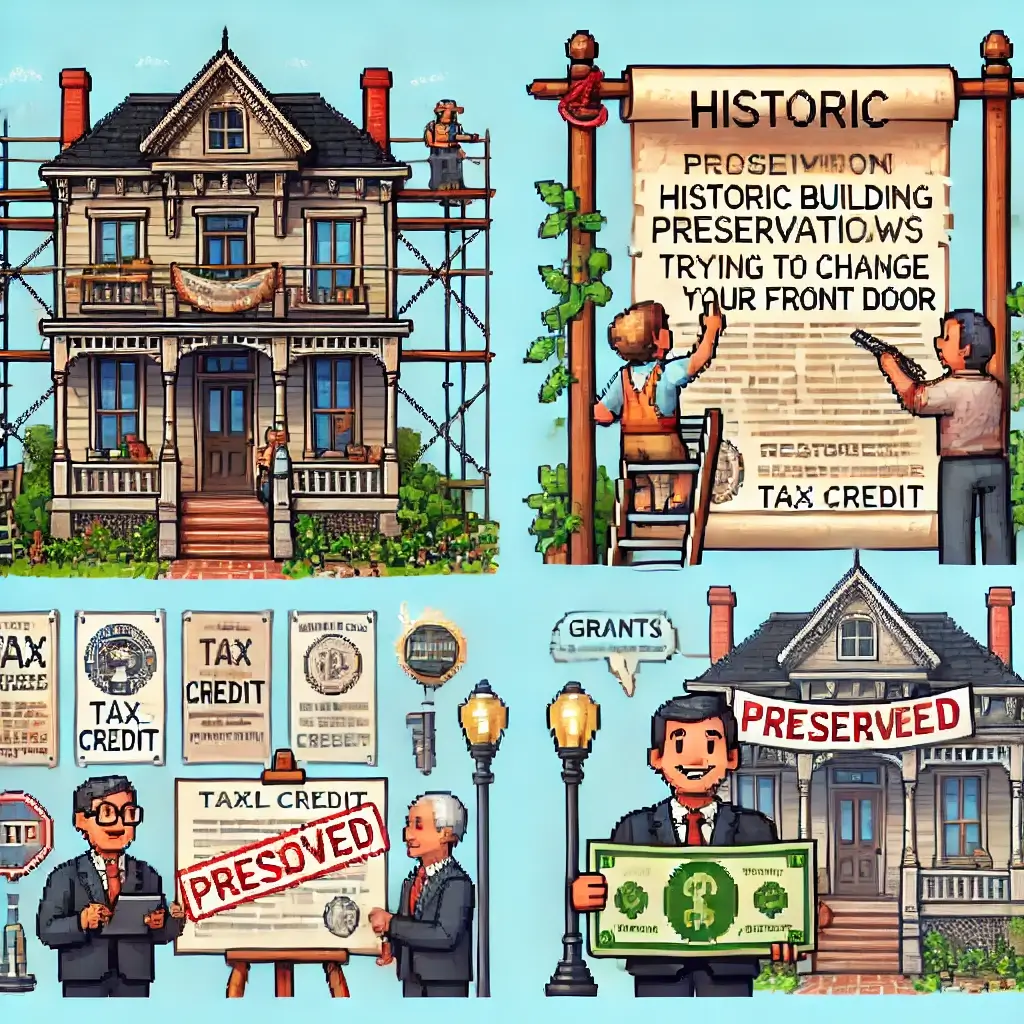
Historic Building Preservation Law: 3 Things You Must Know Before You Buy
Ever dreamed of owning a piece of history?
The kind of place with creaky floorboards, high ceilings, and a story behind every single brick?
I know I have.
There’s something magical about stepping into a home that has stood the test of time, a place where generations have lived, loved, and left their mark.
But let me tell you, that dream can quickly turn into a legal and financial nightmare if you don’t know what you’re getting into.
We’re not just talking about the usual headaches of old homes, like leaky roofs or outdated wiring.
We’re talking about the big one: historic building preservation law.
This is the invisible contract you sign the moment you take the keys to a historically designated property.
It’s a world filled with both incredible benefits and some of the most frustrating restrictions you could ever imagine.
I’ve helped so many people navigate this maze, and trust me, the stories are wild.
From the couple who couldn’t paint their front door a different shade of blue without a committee meeting, to the owner who discovered they couldn’t replace a single window without a long, drawn-out battle with the local historical society.
It’s a whole different ballgame.
The purpose of this post is to give you the honest, no-holds-barred truth about what it’s really like to own a historic property.
We’ll cover the core legal protections and restrictions, the surprising benefits, and the reality checks you need to make before you sign on the dotted line.
So, if you’re thinking about becoming a steward of history, or you already own a piece of it and are feeling a bit lost, grab a cup of coffee and let’s dive in. —
Table of Contents
—
What is a Historic Building and Why Does it Matter?
Okay, let’s start with the basics.
What exactly qualifies a building as “historic”?
It’s more than just being old.
A lot of people think their 100-year-old farmhouse automatically falls under historic preservation laws, but that’s not always the case.
For a property to be legally protected, it has to be officially designated at the local, state, or federal level.
The most common designation in the United States is the **National Register of Historic Places**.
Think of it like the VIP list for old buildings.
But here’s the thing: being on the National Register doesn’t automatically mean you have a ton of restrictions.
It’s often a prerequisite for other, more restrictive local or state designations.
The real teeth of historic building preservation law usually come from your city or county’s regulations.
They’ll have their own local historic district or landmark designation, and that’s where the real fun—and the real frustration—begins.
Why do we even have these laws?
The main reason is to protect the architectural, historical, and cultural integrity of our communities.
It’s about making sure that unique character isn’t bulldozed in the name of progress.
It’s about preserving a tangible link to our past.
But from a homeowner’s perspective, it can feel less like preservation and more like an overbearing neighbor who has a say in every single design choice you make.
I remember a client, let’s call her Jane, who bought this gorgeous Victorian home.
She was so excited to put her own stamp on it.
First thing she wanted to do was replace the front door, which was a beautiful but very drafty old thing.
She figured she’d just get a new one that looked similar but had modern insulation.
Simple, right?
Wrong.
Because her home was in a local historic district, she had to go through a lengthy application process, submit architectural drawings, and get approval from the historic review board.
It took months.
And you know what the kicker was?
They told her she couldn’t replace the door at all.
They said the original door was a “character-defining feature” and had to be repaired, not replaced.
It was a huge blow for her, and a lesson learned the hard way.
This isn’t to scare you off, but to give you a realistic picture.
When you buy a historic home, you’re not just buying a property; you’re inheriting a responsibility.
And that responsibility comes with rules.
It’s like being the curator of your own mini-museum.
You have to follow the guidelines to ensure the collection remains intact for future generations.
So before you fall in love with that charming old house, make sure you know exactly what legal designations it has.
It will save you a lot of grief—and money—down the road.
historic building preservation law, historic property, National Register of Historic Places, historic district, renovation restrictions —
The Shocking Legal Restrictions for Owners of Historic Properties
Alright, let’s get into the nitty-gritty.
This is the part that makes a lot of people reconsider their dream of owning a historic home.
The restrictions can be intense, and they often apply to things you’d never think twice about in a regular home.
The core principle behind these laws is simple: do no harm to the historic character of the building.
The execution, however, is anything but simple.
The most common restrictions fall into a few key areas:
- Exterior Changes: This is the big one. We’re talking about everything from the color of your paint to the type of siding you can use. You can’t just decide to add a modern bay window or change the entire facade. Even something as small as replacing a gutter might require approval. It’s about maintaining the “streetscape” and ensuring the building looks as it did in its period of significance.
- Windows and Doors: This is a huge point of contention for many historic homeowners. Original windows are often single-pane, drafty, and inefficient. While you might be dreaming of energy-efficient double-paned windows, the historic review board might insist you repair the original ones. Replacement windows, if they’re even allowed, often have to be custom-made to match the original design, which can be incredibly expensive.
- Additions and New Construction: Thinking of adding a new garage or a sunroom? You’ll have to get it approved, and it will likely have to be designed in a way that is “compatible” with the historic character of the house and the neighborhood. This often means using similar materials, scale, and design elements, and avoiding anything that looks too modern or out of place.
- Demolition: This is the most serious restriction. In most cases, you cannot demolish a historically designated building, even if it’s falling apart. You’ll have to prove the building is a complete loss and that no other reasonable options exist. I’ve seen cases where owners have tried to let a building fall into disrepair just so they could get a demolition permit. It rarely works and can lead to hefty fines.
I once worked with a family who bought a beautiful but neglected Queen Anne style home.
The roof was shot, and the front porch was crumbling.
They thought it would be a straightforward restoration project.
But when they went to get a permit to replace the roof, they were told they had to use historically accurate materials and methods.
This meant using a specific type of slate that was incredibly expensive and difficult to find.
The porch was even worse.
They couldn’t just use standard pressure-treated lumber.
They had to have the balusters and railings custom milled to match the original profile, a cost that was ten times what they had budgeted.
It was a harsh wake-up call for them, and it almost broke their budget.
The key takeaway here is that you’re not in full control of your property.
You are a custodian.
You have to get approval for almost any exterior change, and often for interior changes that affect the “character-defining features” of the home.
The process can be slow, bureaucratic, and maddening.
But it’s a necessary evil to protect these irreplaceable structures.
historic building preservation law, historic property restrictions, renovation laws, historic home ownership, property restrictions —
The Unexpected Perks: Tax Credits, Grants, and Other Financial Incentives
I know, I know.
So far, this all sounds like a big pain.
But it’s not all bad news.
In fact, there are some pretty incredible benefits to owning a historic property, especially when it comes to your wallet.
This is where the government and various non-profit organizations step in to say “thank you” for being a good steward.
The most well-known incentive is the **Federal Historic Preservation Tax Incentives program**.
This program offers a 20% income tax credit for the substantial rehabilitation of income-producing historic properties.
So, if you’re rehabilitating a historic apartment building or a commercial property, you can get a huge chunk of your money back.
This can be a game-changer for big projects.
But what about homeowners?
That’s where state and local programs come in.
Many states have their own historic preservation tax credit programs, and some of them apply to private residences.
These credits can be a lifesaver when you’re facing a massive repair bill for that slate roof or those custom windows.
I’ve seen some programs that offer a 10-25% tax credit on qualified rehabilitation expenses.
It’s like the government is giving you a high-five and some cash for doing the right thing.
And it doesn’t stop there.
There are also grants available.
While grants for private homeowners can be a bit harder to come by, they do exist.
Organizations like the **National Trust for Historic Preservation** offer grants and loans for various preservation projects.
These are often competitive, but they are definitely worth looking into.
I had a client in Boston who was able to secure a grant to restore the incredibly ornate plaster ceiling in their living room.
Without the grant, the project would have been completely out of reach.
The financial incentives don’t end with tax credits and grants.
Some historic homes, especially those in designated historic districts, can also qualify for property tax abatement programs.
This means that for a certain period, your property taxes are based on the pre-rehabilitation value, which can save you a significant amount of money each year.
It’s a powerful incentive to do the right thing and restore your home properly.
So, while the restrictions can be a headache, the financial benefits can be a huge upside.
The key is to do your homework and find out what programs are available in your area.
Talk to your local historic preservation office, check out state and federal resources, and see what you might be eligible for.
It might just be the thing that makes your historic home dream financially viable.
historic building preservation law, tax credits, financial incentives, grants for historic homes, National Trust for Historic Preservation —
Navigating the Bureaucracy: Tips from a Real-Life Historic Homeowner
Let’s get real for a moment.
The regulations and incentives are one thing, but dealing with the bureaucracy is a whole other beast.
It can be a long, drawn-out, and often frustrating process.
But it doesn’t have to be a total nightmare.
I’ve learned a few things from my own experiences and from helping countless others navigate this system.
My biggest piece of advice is this: **don’t go rogue**.
Seriously.
I know it’s tempting to just put in new windows or paint your house without asking for permission.
But trust me, it’s not worth the risk.
Historic preservation offices have eyes everywhere.
A neighbor might report you, or an inspector might drive by and notice the change.
The fines can be huge, and you might even be forced to reverse the changes, which means paying for the project twice.
So, what should you do instead?
1. Be Proactive and Get to Know the Rules: Before you even think about starting a project, find out exactly what the rules are. Get a copy of the design guidelines for your historic district. Read them thoroughly. Understand what you can and can’t do. Knowledge is power here.
2. Build a Relationship with the Preservation Office: This is probably the most important tip. The people who work in these offices aren’t your enemies. They’re usually passionate about old buildings, and they can be a huge help if you treat them with respect. Go in and talk to them before you submit any plans. Show them your ideas, ask for their feedback, and work with them to find a solution that works for both of you. They can help you navigate the process, and they might even have suggestions for materials or contractors you didn’t know about.
3. Hire an Experienced Contractor: Don’t just hire any contractor. Find one who has experience working with historic properties and is familiar with the local historic preservation office. They’ll know the rules, they’ll have the right contacts, and they’ll be able to help you submit the correct paperwork. It’s an investment that will save you a ton of time and stress.
4. Document Everything: Take photos before, during, and after your project. Keep all your correspondence with the preservation office. Document every meeting and every conversation. This will protect you if there are any disagreements or misunderstandings down the road.
I had a client who wanted to replace a sagging wood fence on their property.
It seemed like a simple fix.
But because it was in a historic district, they had to get approval for the height, style, and material of the new fence.
They went to the preservation office with an open mind, and the planner they worked with was fantastic.
She pointed them to a local lumber yard that specialized in historically accurate materials and even helped them find a copy of an old photograph that showed what the original fence looked like.
It was a collaborative process, and it resulted in a beautiful, historically accurate fence that they were proud of.
They didn’t just replace a fence; they restored a part of their home’s history.
So, while the bureaucracy can be tough, it’s not unbeatable.
With a little patience, a good attitude, and the right approach, you can work with the system instead of against it.
historic building preservation law, historic home renovation, historic preservation office, tips for historic homeowners, navigating bureaucracy —
The Bottom Line: Is a Historic Property Right for You?
So, after all of this, what’s the final verdict?
Is owning a historic home a dream worth chasing, or is it a headache you should avoid at all costs?
The truth is, it’s both.
It’s a huge commitment.
It’s not for everyone.
You have to be prepared for the restrictions, the bureaucratic process, and the unexpected costs that will inevitably pop up.
But if you go into it with your eyes wide open, and with a genuine love and respect for the history you’re taking on, the rewards can be immense.
There’s an incredible sense of pride that comes from being a part of a building’s story, of being the person who ensures it will stand for another century.
You’re not just an owner; you’re a steward.
You’re a curator.
And that’s a pretty amazing legacy to be a part of.
My advice to you is this: before you make an offer, do your research.
Find out if the property is historically designated.
If it is, get a copy of the local design guidelines.
Talk to the local historic preservation office.
And most importantly, talk to other historic homeowners in the area.
They’ll be the ones who can give you the real, unfiltered truth about what it’s like to live under historic building preservation law.
They’ll tell you about the sleepless nights, the frustrating meetings, and the sheer joy of seeing a piece of history come back to life.
It’s a journey, not just a transaction.
And for the right person, it’s the most rewarding journey you could ever take.
And remember, the world of historic preservation is full of resources to help you along the way.
I’ve included some links to trusted sites that can help you with your research.
historic building preservation law, historic home ownership, historic property restrictions, renovation, tax credits