
Unlocking Your Glamping Dreams: 3 Legal Secrets to Launching a Profitable Site!
Hey there, future glamping mogul! If you’re anything like me, you’ve probably spent countless hours scrolling through stunning Instagram feeds, imagining your own slice of paradise filled with luxurious tents, cozy yurts, and happy guests.
The allure of the great outdoors, combined with the comfort of a five-star hotel, is a powerful mix.
And let’s be honest, the business potential is just as attractive.
But before you get swept away in the romance of it all, let’s have a real talk.
I’ve seen so many passionate entrepreneurs get tripped up by the same thing: the legal stuff.
It’s not the fun part, I know, but it’s the foundation of a successful, stress-free business.
Ignoring it is like trying to build a magnificent treehouse on a single, flimsy branch.
Eventually, it’s all going to come crashing down.
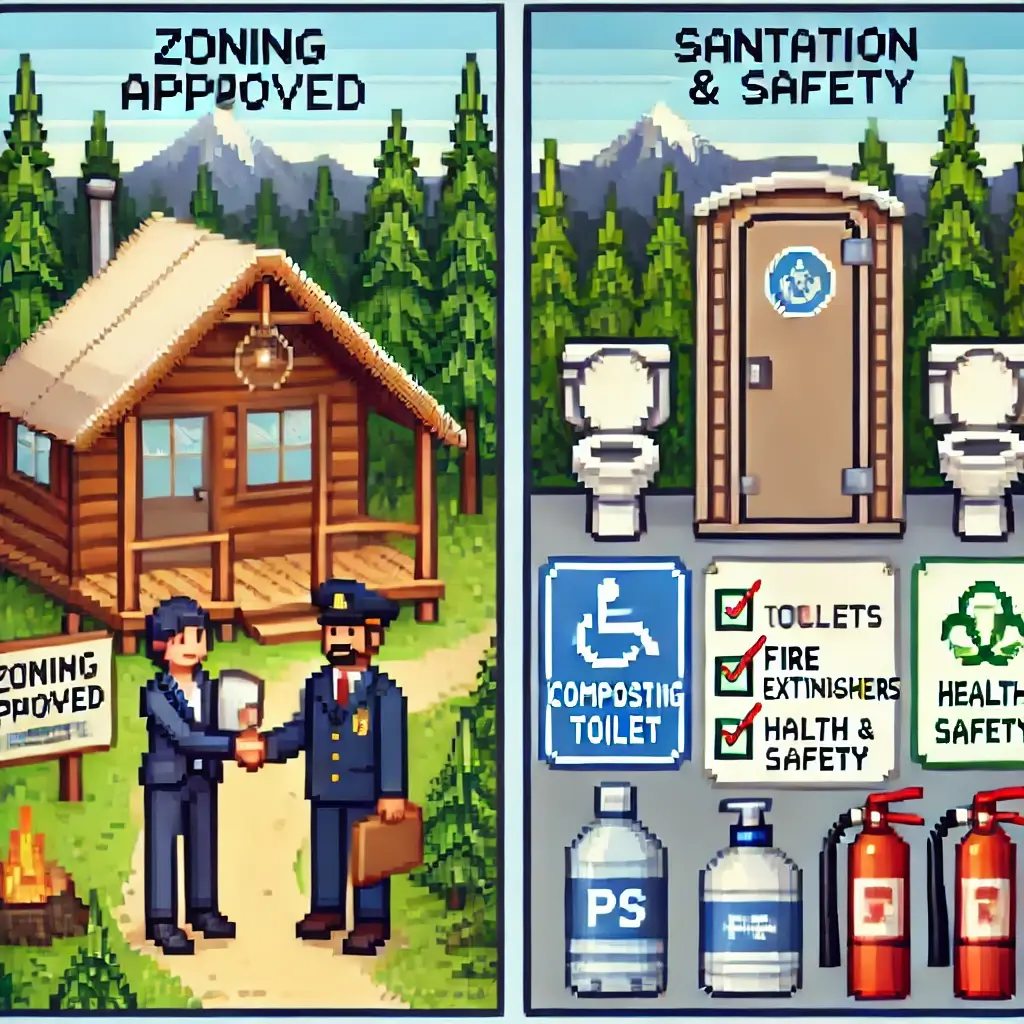
So, let’s roll up our sleeves and tackle the three biggest legal hurdles you’ll face when starting a luxury camping business: zoning, health, and safety regulations.
Trust me, understanding these now will save you a fortune in headaches and fines down the road.
1. The Zoning Maze: How to Find Your Way to Legal Glamping
Ah, zoning.
The word itself sounds like a bureaucratic nightmare, right?
Well, I’m not going to lie, it can be a bit of a maze, but it’s one you absolutely have to navigate.
Zoning laws are the rules that dictate how land can be used in a particular area.
They’re put in place by local governments to separate different types of land use, like residential, commercial, industrial, and agricultural.
The big question for you is: where does glamping fit?
This is where it gets tricky, and why you can’t just assume your property is ready for business.
Some municipalities might classify glamping as “commercial lodging,” similar to a hotel or bed and breakfast.
Others might see it as “recreational camping,” which could have different rules.
And then there are those who might not have any specific classification for it at all, which can be both a blessing and a curse.
It’s a blessing because you might be able to pave your own way, but a curse because you’ll have to do a lot of convincing and educating.
I remember one of my first consultations with a new glamping entrepreneur.
They had this gorgeous piece of land, an old farm with rolling hills and a beautiful creek.
They were so excited about their vision, but they hadn’t even checked the zoning.
Turns out, the land was zoned for agricultural use only, and they couldn’t just drop a dozen luxury tents on it without a fight.
We had to go through a lengthy process to apply for a “conditional use permit,” which basically meant we had to get special permission from the county to use the land for something other than its designated purpose.
It was a headache, but we got it done.
The key takeaway? Don’t wait.
Your first step should always be to contact your local planning or zoning department.
Don’t be shy!
Ask questions like: “What are the zoning regulations for my property at [your address]?
What are the permissible uses for this zone?
Does a ‘luxury camping’ or ‘glamping’ business fall under any existing categories?
What permits or variances would I need to operate a business like this?”
Be prepared for some blank stares and head-scratching, as glamping is still a relatively new concept for many local governments.
You might have to do some of the legwork yourself, providing examples and explaining the concept.
This is where it pays to be prepared and professional.
Show them you’ve done your homework and that you’re committed to running a legitimate, safe, and beautiful business.
Another thing to consider is the “conditional use permit” I mentioned earlier.
This is often the path you’ll need to take if glamping isn’t explicitly allowed in your zoning district.
It’s a formal request to your local government to grant you permission to use your property in a way that is not normally allowed.
The process usually involves a public hearing, where neighbors can voice their concerns.
This is where it’s crucial to be a good neighbor from the get-go.
Talk to your neighbors, address their concerns about traffic, noise, and light pollution before the hearing.
A little communication can go a long way in winning over the community.
Trust me, having a few friendly faces in the audience is a lot better than a crowd of angry pitchfork-wielding villagers.
Now, let’s talk about some specific zoning issues you might encounter.
Setbacks: This refers to the minimum distance your structures (tents, yurts, communal areas) must be from property lines, roads, and other buildings.
Fire lanes: You’ll likely need to maintain a clear path for emergency vehicles.
Density: How many units can you have on your property?
This is often tied to the size of your land.
The last thing you want is a zoning violation, which can lead to hefty fines and, in the worst-case scenario, the forced shutdown of your business.
Don’t let this happen to you.
Be proactive, be friendly, and be persistent.
Zoning is the gatekeeper, and you need to get past it to open for business.
2. Health & Safety: Your Guests’ Well-being is Your Business’s Backbone
Okay, let’s move on to something that’s not just a legal requirement but a moral one: health and safety.
This is the part of the business that keeps your guests safe, happy, and, most importantly, coming back for more.
It’s also the area that can land you in the most trouble if you cut corners.
I’ve heard horror stories of glamping sites that were shut down due to improper sanitation, fire hazards, or unsafe structures.
Don’t be one of those stories.
Think of health and safety as a non-negotiable part of your brand.
It’s the silent promise you make to every guest who books a stay with you.
The regulations you’ll need to follow will vary depending on your location, but there are some universal themes we need to address.
First up: Sanitation and Waste Management.
Are you going to have composting toilets, a septic system, or a connection to a municipal sewer?
Each of these options has its own set of rules and regulations.
For example, if you’re installing a septic system, you’ll need to work with a licensed professional and get it inspected by the local health department.
They’ll look at things like the size of the system, the soil type, and the distance from your water source.
If you’re using composting toilets, you’ll need to have a plan for how you’ll manage and dispose of the waste.
The last thing you want is a public health hazard on your property.
Water is another big one.
Is your water coming from a well or a municipal source?
If it’s a well, you’ll need to have it tested regularly to ensure it’s safe for drinking.
This isn’t a one-and-done deal.
You’ll need to keep up with the testing and have a clear record of the results.
The health department will want to see that.
Next, let’s talk about fire safety.
This is a huge deal, especially in a natural setting.
You need a clear plan for what happens in the event of a fire.
This includes having fire extinguishers in every unit and communal area.
You’ll need to have a clear path for emergency vehicles, as I mentioned before, and you should also have a fire pit policy.
Are guests allowed to have open fires?
If so, where and under what conditions?
And what about cooking in the units?
Are you providing propane stoves or electric cooktops?
Make sure you’re following all the safety guidelines for those appliances.
I once consulted with a client who had a gorgeous property in a very dry, forested area.
We had to work with the local fire marshal to create a detailed fire safety plan, including designated fire pits with proper enclosures, a strict “no open fires during dry season” policy, and clear evacuation routes.
It felt like a lot of work at the time, but it was absolutely essential for protecting the property, the guests, and the business.
Finally, let’s talk about the structures themselves.
Are your tents, yurts, or tiny homes built to code?
This is where a lot of people make mistakes.
They assume that because it’s not a traditional building, it doesn’t have to follow building codes.
That’s a dangerous assumption.
You’ll need to check with your local building department to see what codes apply to your type of structures.
This includes things like electrical wiring, plumbing, and structural integrity.
If you’re using pre-made yurts or tents from a reputable manufacturer, they should be able to provide you with a certification that shows they meet certain standards.
But you still need to make sure the installation is done correctly and inspected if required.
Think of it this way: your guests are trusting you with their safety.
You can’t afford to let them down.
Prioritizing health and safety isn’t just about avoiding lawsuits; it’s about building a reputation as a trustworthy and responsible host.
3. A Dose of Reality: Real-World Lessons from a Glamping Veteran
Alright, let’s get real for a moment.
This is the part where I share some of the unglamorous but utterly crucial lessons I’ve learned over the years.
I’m not just some faceless AI here; I’ve been in the trenches, I’ve filled out the forms, and I’ve sat through the agonizingly long community meetings.
My first big lesson was about local politics.
I naively thought that as long as I followed the rules, everything would be fine.
Nope.
I quickly learned that the rules are often interpreted differently by different people.
The planning commissioner might have a different opinion than the health inspector, and the fire marshal might have a completely different one still.
My advice? Build relationships.
Go down to the local government offices and introduce yourself.
Tell them what you’re planning to do.
Ask for their guidance.
Make them feel like they’re part of the process, not just a roadblock.
A friendly face goes a long way in getting your questions answered and your permits approved.
My second lesson was about the power of documentation.
I’m a creative person by nature, and I’d rather be dreaming up new designs than filing paperwork.
But I learned the hard way that every phone call, every email, and every meeting needs to be documented.
Who did you talk to?
What did they say?
What was the date and time?
Keep a detailed log of all your interactions with local officials.
It’s your best defense if a discrepancy or a misunderstanding arises later on.
It’s like building a legal fortress around your business, one piece of paper at a time.
My third and final lesson for this section is about thinking outside the box.
Remember how I said glamping doesn’t always fit neatly into existing categories?
Sometimes you have to be creative in how you present your business.
Instead of saying you’re starting a “glamping site,” you might frame it as an “eco-tourism retreat” or a “boutique lodging experience.”
This isn’t about being deceptive; it’s about using language that resonates with the goals of your local government.
Do they want to boost tourism?
Highlight how your business will attract visitors and generate tax revenue.
Are they concerned about environmental impact?
Emphasize your commitment to sustainability and conservation.
It’s about showing them how your vision aligns with theirs.
This is where a little bit of marketing savvy can really pay off in the legal arena.
4. Pro Tips and Practical Steps to Get Started
Now that we’ve covered the heavy stuff, let’s get down to the nitty-gritty of what you can do right now to set yourself up for success.
Think of this as your glamping startup checklist.
Tip 1: Hire a Pro.
Don’t try to be a hero.
You wouldn’t try to build a house without an architect, so don’t try to navigate complex legalities without an expert.
Find a local lawyer who specializes in real estate and land use.
They can save you from a world of pain and help you understand the nuances of your local laws.
They’ll know the right people to talk to and the right questions to ask.
Tip 2: Network, Network, Network.
Join glamping and outdoor hospitality associations.
Connect with other glamping site owners.
They’ve been where you are and can offer invaluable advice and insights.
They might be able to tell you about the specific challenges they faced in your area and how they overcame them.
Tip 3: Create a Business Plan.
This isn’t just for investors.
A solid business plan forces you to think through every aspect of your operation, including the legal and regulatory stuff.
It’s your roadmap to success, and it’s something you can show to local officials to prove you’re serious and prepared.
Tip 4: Embrace Transparency.
Be honest and open with your local government and your neighbors from the start.
It’s always better to ask for permission than to beg for forgiveness.
An open line of communication is your best asset.
The glamping industry is growing at an incredible rate, and for good reason.
It’s a fantastic way to blend the beauty of nature with the comforts people crave.
But the most successful glamping businesses are the ones built on a solid foundation of legal compliance and responsible operation.
Don’t let the legalities scare you away.
Instead, see them as a crucial part of the journey.
Master these three legal areas—zoning, health, and safety—and you’ll be well on your way to building a glamping business that’s not only beautiful but also sustainable, legal, and profitable.
Now go forth and build your glamping empire!
For more detailed information, check out these reliable resources:
Glamping.com: The Global Glamping Hub
Glamping Site Legality, Zoning, Health, Safety, Luxury Camping Businesses
Urban Landlord-Tenant RightsArt Forgery Cases
Remote Work & Tax Liabilities
Celebrities vs. Impersonation
Sustainable Packaging Laws