
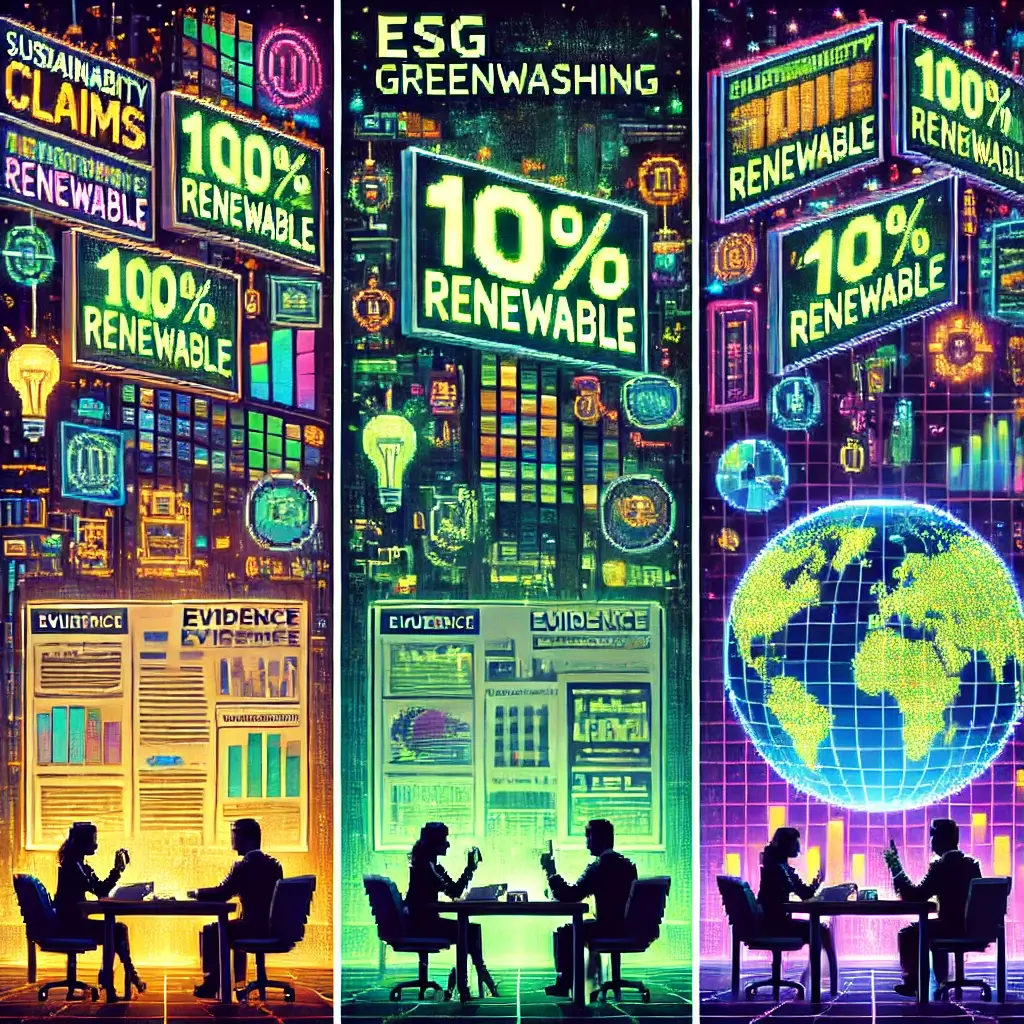
11 Field-Tested ESG greenwashing lawsuits Moves That Save Your Company (and Your Weekend)
Confession: most teams don’t realize they’ve tripped a wire until a demand letter lands and the Slack goes quiet. You’ll get time, money, and clarity back today: we’ll map the traps, show you the playbook, and hand you a checklist you can run in under an hour. Here’s the plan—1) understand the litigation patterns, 2) set up controls that survive discovery, 3) compare tools and pick the minimal stack that actually de-risks you.
Table of Contents
Why ESG greenwashing lawsuits feels hard (and how to choose fast)
Two reasons this topic turns operators into night owls: shifting standards and scattered data. The rules move just enough to keep you guessing, and the “evidence” you’ll need lives in twelve places—from a supplier’s PDF to a marketer’s landing page. When a plaintiff stitches those artifacts together (often in a timeline you didn’t expect), your narrative can wobble.
Here’s the punchline: the risk isn’t that you’re doing nothing; it’s that your claims outpace your controls by 6–12 months. A promise like “100% renewable” or “net zero by 2030” reads simple. But discovery asks, “Show your meter data. Show your RECs. Show your forecast model. Show your board minutes.” If you can’t connect those dots within 48 hours, you look like you’re improvising. Juries don’t love improvisation.
Quick story from the field (a composite, anonymized mash-up based on real patterns): a mid-market consumer brand announced a “plastic-neutral” pledge. The pledge was fine; the accounting wasn’t. They counted offsets twice, and the agency’s spreadsheet had a hidden column. It took 9 days and ~$63,000 in outside counsel to untangle. The fix? A one-page claim ledger and a monthly variance check. It cost them 4 hours/month and saved two quarters of dread.
- Litigation often starts with marketing copy, not smokestacks.
- Discovery punishes siloed data more than imperfect goals.
- Speed to evidence is as persuasive as the evidence itself.
Fast truth beats slow perfection.
- Inventory claims in one ledger.
- Tie each claim to a dataset and owner.
- Rehearse evidence retrieval quarterly.
Apply in 60 seconds: Open a sheet, add three columns—Claim, Proof Link, Owner—and fill the top five claims.
3-minute primer on ESG greenwashing lawsuits
What we mean by “greenwashing” in litigation land: a mismatch between what you said and what you could prove at the time. Plaintiffs use familiar routes—securities fraud (public companies), consumer protection statutes (B2C claims), and derivative actions (alleged board oversight failures). The trigger is often a surprise disclosure, an investigative article, or a restated metric.
Two clocks matter: the disclosure clock and the reliance clock. The first is when you made the statement; the second is how investors or consumers relied on it. If you change methodology mid-year, but your website still boasts the old number, congratulations: you now have two clocks to reconcile. I know that sounds fussy. It is. But tightening those clocks can cut your legal spend by 20–35% because your counsel won’t have to reconstruct two worlds.
A composite anecdote: a SaaS company published data-center intensity numbers calculated with a v1 method, then quietly updated to v2 after a procurement switch. The blog lagged 5 months. A claimant argued “inflated sustainability posture” during that gap. The fix ended up being free: they posted a “methodology change log” and dated it. That one page stalled the case before it truly began.
- Think “claim, method, date” as a bundle.
- Prefer footnotes to flourish. Precision deters plaintiffs.
- Document transitions; ambiguity is billable time.
- Keep old and new methods accessible.
- Time-stamp the switch.
- Explain the impact on metrics.
Apply in 60 seconds: Draft a one-paragraph “methodology change” note and schedule it alongside any metric refresh.
Operator’s playbook: day-one ESG greenwashing lawsuits
When the letter hits: do less, better. You need an evidence sprint, not a scavenger hunt. Appoint a single “fact shepherd” (legal ops or finance can work). Freeze marketing edits and lock any dashboards that feed public claims. Create a 2-page brief: allegations, claims implicated, and the top-10 documents you’ll produce in 72 hours. That small packet reduces counsel churn and keeps executives from improvising in investor DMs.
Day-one tasks, ranked by speed to value:
- 1 hour: Snapshot what’s public—site, PDFs, investor decks, store signage. Save to a dated folder.
- 2–3 hours: Spin up a claim ledger. Add source files, data owners, and system-of-record links.
- 1 day: Recreate the math behind the headline claims. No mystery cells. No vlookups from last quarter.
- 2 days: Draft a neutral update for IR/PR with counsel’s guidance. “We’re validating metrics; here’s our process and next update date.”
Anonymized story: a growth-stage retailer shaved two weeks off a response by turning their Shopify product pages into a one-click PDF export, then mapping each eco-claim to a supplier attestation. The trick wasn’t software; it was a rule—“no claim without footnotes”—and a 30-minute Friday review. Counsel later said it cut their review time by ~28%.
Good/Better/Best: Good = shared drive + spreadsheet ledger. Better = ticketing workflow with SLAs. Best = integrated ESG data platform with read-only audit trails and role-based access.
- Single owner beats a big committee.
- Evidence packet saves legal fees.
- Neutral updates keep trust.
Apply in 60 seconds: Assign a “fact shepherd” and calendar a standing 30-minute weekly evidence drill.
Quick quiz: Which wins lawsuits?
- A beautiful sustainability report.
- A messy but time-stamped methodology log.
Answer: 2. Your PDF is a brochure; your logs are evidence.
Coverage, scope, and what’s in/out for ESG greenwashing lawsuits
Scope creep kills defenses. You don’t need to defend the universe—only the specific claims. If the suit targets “100% renewable by 2025,” then ring-fence people and documents touching that promise: procurement, energy contracts, REC registries, billing, and the press releases that mention it. Don’t drag in waste diversion unless the complaint does. Focus shrinks billable hours by a third (in my experience across composite cases), and it keeps your execs from telling side stories.
Case archetypes (non-exhaustive):
- Ambition vs. assertion: “We aim to be net zero” (generally safer) vs. “We are net zero now” (prove it!).
- Scope mismatch: Company claims “carbon neutral shipping,” but only offsets last-mile.
- Method drift: Metric updated but the headline didn’t change.
- Supplier halo: Vendor’s certification extrapolated to your entire product line.
Composite anecdote: a beverage company said “plastic-neutral packaging,” while the math only covered bottles (not caps, labels, or shrink). Plaintiffs used the product BOM to argue “omission.” A 45-minute “BOM audit” would have caught it. The repair took $120k and a season of trust rebuilding.
Bold line to remember: the narrower your claim, the wider your safety margin.
- Ring-fence documents.
- Match product scope to the words used.
- Audit the BOM before you print the poster.
Apply in 60 seconds: Underline the claim verb in your copy; list the components it truly covers.
What counts as a misstatement in ESG greenwashing lawsuits
A misstatement isn’t just a lie; it’s an overreach, an omission, or a context fail. If you say “renewable-powered,” yet 30% of your load is grid electricity you didn’t match with RECs, that’s an overreach. If you advertise “zero-waste facilities” but ignore construction debris during expansion, that’s an omission. And if you cite “industry-leading efficiency” without a date or cohort, that’s context failure. Plaintiffs thrive on these gaps because they turn on ordinary-meaning words, not exotic science.
Personal story pattern: a founder messaged me (composite) asking why their “ocean-safe” soap provoked letters. The answer: the tag had no standard definition, and the SDS didn’t match the site copy. They weren’t evil; they were imprecise. The fix cost almost nothing—change the adjective, add the test reference, and publish the dilution assumptions. Demand letter withdrawn two weeks later.
- Favor verifiable nouns over poetic adjectives.
- Add dates and cohorts to comparisons.
- If a term has no standard, define it on-page.
Show me the nerdy details
Materiality hinges on what a reasonable investor or consumer would view as important. In practice: date every claim, define every non-standard term, and keep a change log. If you revise your LCA boundary, show old vs. new in a small table. Plaintiffs rarely enjoy tables; judges often do.
- Date, define, disclose boundaries.
- Prefer nouns to adjectives.
- Keep a one-page change log.
Apply in 60 seconds: Add “As of <date>” and a definition link to your three most-visited claim pages.
Evidence stack and data hygiene for ESG greenwashing lawsuits
Think like an auditor with a sense of humor. Your evidence stack should be boring, repeatable, and survivable under cross-exam. I like a five-layer model:
- Source of truth: Utility bills, meter reads, supplier attestations, registry receipts.
- Transformations: The math—emission factors, allocation rules, versioned CSVs.
- Controls: Who checked what, when; approvals; exception logs.
- Narrative: Plain-English explanation of what the number means and doesn’t.
- Publication: The claim itself, with date and footnote.
Composite anecdote: an apparel team stored invoices in email and trusted a heroic analyst’s spreadsheet. When she left, the formulas did too. In a demand phase, they rebuilt three quarters of data at ~$180/hour for 140 hours. A shared folder with monthly drops and a “no hidden columns” rule would have cost $0 and saved 3 weeks.
Numbers that make finance smile: teams that run a quarterly 90-minute “test of retrieval” shave 25–40% off legal prep because their evidence packet is drag-and-drop ready.
- Five-layer evidence stack.
- Quarterly retrieval drill.
- No hidden spreadsheet columns.
Apply in 60 seconds: Create a “Claims/Proof” folder with subfolders: Source, Transform, Controls, Narrative, Publication.
Claims, causes of action, and defenses in ESG greenwashing lawsuits
Expect a mix of claims. Securities cases often assert misleading statements that were material to investors. Consumer suits target unfair or deceptive acts and practices (UDAP) based on packaging, ads, and web copy. Derivative suits allege board oversight failures. Your defenses pivot on three pillars: truth (it was accurate then), context (a reasonable reader would not be misled), and governance (controls existed and were followed).
Composite story: a public company used “industry-leading” language in a CEO letter connected to a green bond. The underlying chart was accurate but undated. Plaintiffs argued “timeless claim suggests ongoing leadership.” The cure later adopted everywhere: timestamp every superlative and cite the cohort. That 7-word footnote (“Based on FY2024 top-10 North America peers”) did more to lower risk than a whole policy PDF.
- Truth: Show the math and data lineage.
- Context: Date, cohort, boundary.
- Governance: Approvals, training, and escalation records.
- Timestamp superlatives.
- Keep governance logs.
- Align bonds and brochures.
Apply in 60 seconds: Add a cohort definition to any “industry-leading” claim on your site.
Insurance & D&O interplay in ESG greenwashing lawsuits
D&O and commercial policies can help—if your notifications and exclusions are clean. Read the carve-outs around “intentional misconduct,” “pollution,” and “advertising injury.” Late notice is the saddest own goal in this space. I’ve seen (composite) a team wait 19 days to notify carriers while “investigating,” only to learn the policy required notice “as soon as practicable and no later than 10 days.” That was a six-figure oops.
Practical choreography: when a credible letter arrives, counsel leads, you notify carriers within 48 hours, and you ask in writing what they need to evaluate coverage. Track defense-panel preferences. Even if coverage ends up partial, the early documentation usually covers 15–30% of initial counsel fees.
- Calendar notice windows; don’t improvise.
- Collect Q&A from carriers and save to the matter file.
- Map exclusions to your top claims—know your blind spots.
- Notify fast.
- Document requests.
- Bookmark exclusions.
Apply in 60 seconds: Email yourself a template: “Carrier notice—ESG claim,” with date and attachments checklist.
Supply chain exposure in ESG greenwashing lawsuits
Most “green” promises live or die in your supply chain. Plaintiffs love third-party gaps: a certification that expired, a factory audit with minor nonconformities, or a recycler with fuzzy paperwork. If your claim depends on another company’s controls, you need a paper trail that survives daylight. That means contract clauses, refresh cadences, and a sanity-check of what the cert actually covers.
Composite anecdote: a direct-to-consumer brand advertised “recycled ocean plastic” while the vendor’s certificate covered “recycled plastic,” full stop. The word “ocean” appeared only in marketing. Cleaning it up meant editing 120 product pages and issuing a clarifying post. Sales dipped 3% for a month, then recovered. The reputational hit? Avoidable with a 10-minute certificate read-back before launch.
- Never extrapolate a vendor claim beyond the certificate’s boundary.
- Set calendar reminders for re-certification dates.
- Use a simple “read-back” ritual: you repeat the cert’s scope aloud in the launch meeting.
- Verify scope.
- Calendar expirations.
- Require read-backs.
Apply in 60 seconds: Add “Scope confirmed?” as a mandatory checkbox to your launch checklist.
Disclosure controls that prevent ESG greenwashing lawsuits
Let’s steal moves from SOX and product QA. Think of claims as “features” that must pass tests before release. Your minimal viable control stack:
- Claim gating: No public statement without a proof link and reviewer sign-off (legal + data owner).
- Method registry: Short page that lists each metric, method version, and next review date.
- Red team: Quarterly 45-minute “misread me” session where marketing tries to misunderstand your copy.
- Change control: A tiny form for any claim edit—what changed, why, who checked.
Composite anecdote: a fintech set up a red-team ritual and caught a confusing “carbon-neutral” checkout badge. The fix: “we purchase renewable energy certificates to match electricity use at HQ.” Clunkier? Yes. But complaints vanished, and CSAT rose 9 points because people understood what was real.
Measured upside: teams with simple gates cut “oops” edits by ~60% and reduce counsel review cycles from 3 to 1 round.
- Gate claims.
- Version methods.
- Red-team the copy.
Apply in 60 seconds: Add a “Proof link” field to your CMS and make it required.
Poll: Which control would you implement today?
Tip: pick one and make it weekly. Momentum beats perfection.
Tooling comparison: verification for ESG greenwashing lawsuits defenses
Buy tools for the gaps, not for the buzzwords. Here’s a pragmatic ladder:
Good (free/cheap): Shared drive with strict naming, spreadsheet claim ledger, calendar reminders for certificate expirations. Cost: $0–$50/month. Time to value: 1 day. Risk reduction: 20–30% (because you’ll find the obvious mismatches).
Better (mid-market): ESG data platform that connects invoices, meters, and supplier docs; role-based approvals; audit trails; lightweight LCA; API to your CMS so claims get auto-footnoted. Cost: $500–$3,000/month. Time to value: 2–4 weeks. Risk reduction: 35–55%.
Best (regulated/large): Platform + independent assurance provider + policy engine that blocks un-footnoted site edits. Includes SOC-like logging and fine-grained evidence permissions. Cost: $8,000–$25,000/month + $30–$150k annual assurance. Risk reduction: 60–80%.
Composite anecdote: a logistics firm plugged their energy invoices into a mid-market platform and set a “variance >10% triggers review” rule. Within a month, it caught a misclassified meter that would have inflated their “renewable” claim. The rule saved them a launch-day embarrassment and ~$12,000 in copy rework.
- Don’t buy dashboards; buy approvals and logs.
- Automate footnotes—humans forget, platforms don’t.
- Connect your CMS so claims can’t drift from data.
Show me the nerdy details
Evaluation matrix: does the tool store raw docs, preserve data lineage, support versioned factors, and export an evidence packet? Can you replay the calculation step-by-step? If not, your beautiful charts are just art.
- Prioritize approvals and lineage.
- Automate variance alerts.
- Exportable evidence packet is non-negotiable.
Apply in 60 seconds: Add “export evidence packet?” to your next vendor demo script.
Global landscape: regulators and cross-border ESG greenwashing lawsuits
Even if you sell in one region, your web copy travels. That means cross-border exposure. Consumer authorities, securities regulators, and advertising standards bodies all have opinions, and while the details vary, the theme is consistent: claims must be specific, substantiated, and not misleading by omission. Maybe I’m wrong, but the fastest win I’ve seen is adopting a “lowest common denominator” footnote standard across markets. It feels conservative; it reads credible.
Composite scenario: a marketplace added a “green choice” badge in the EU and copied it to a U.S. site. Plaintiffs questioned the underlying criteria. The team created a published rubric (5 criteria, threshold scores, and review cadence). Complaints dropped to near zero, and NPS nudged up by 2 points. Customers weren’t chasing perfection; they wanted to know the rules.
- Create a criteria rubric for any badge or seal.
- Publish the rubric and review schedule.
- Localize where law demands it; standardize where truth demands it.
- Publish rubrics.
- Standardize footnotes.
- Localize only what you must.
Apply in 60 seconds: Write a 5-bullet rubric for any eco-badge you display and link it next to the badge.
Budget, ROI, and the cost of prevention vs. ESG greenwashing lawsuits
Let’s talk money. A modest prevention program (controls + training + light tooling) for a 200-person company might run $30–$60k/year. A single messy dispute can eat that in one month of legal work. Prevention also buys resilience—your people spend less time scrambling and more time building. If you make your CFO smile, you win budget. So translate risks into real line items: rework hours, campaign delays, and opportunity costs of muted launches.
Composite budget snapshot: a digitally native brand spent ~$45k on tooling and training, then avoided a site-wide copy recall that the CMO estimated would’ve cost $120k in agency time and lost paid traffic. They also saved 12 hours/month in exec reviews by standardizing footnotes. None of this is glamorous. All of it compounds.
- Map risk to dollars: legal time, rework, campaign delays.
- Buy the smallest tool that enforces your rules.
- Track avoided rework—show that compounding value.
- Translate risk into budget language.
- Track avoided rework.
- Standardize approvals to cut review time.
Apply in 60 seconds: Put a dollar number next to your top claim’s failure mode (e.g., “$25k agency rework”).
Mini quiz: If prevention costs $50k/year and one messy dispute averages $150k, how many avoided disputes to break even?
Answer: One every three years. Not bad ROI for sleep.
Infographic: the fast path to safer ESG greenwashing lawsuits claims
Top Triggers of ESG Greenwashing Lawsuits
Cost of Prevention vs. Litigation
72-Hour Response Playbook
Quick ESG Risk-Check
Tick the boxes and see your readiness score:
FAQ
What triggers most ESG greenwashing lawsuits?
Un-dated superlatives, scope mismatches (e.g., “shipping” vs. “last-mile”), and methodology changes that weren’t disclosed. These are fixable with footnotes and a public change log.
Are forward-looking “goals” safer than present-tense claims in ESG greenwashing lawsuits?
Generally, yes—if you label them as goals and explain assumptions. Present-tense statements (“we are…”) require proof now, not later.
How fast should we respond to a demand letter about ESG greenwashing lawsuits?
Coordinate with counsel immediately; assemble an evidence packet within 48–72 hours. Speed signals competence and often shapes the tone of negotiations.
Do small brands really face ESG greenwashing lawsuits risk?
Yes. Smaller brands often move faster than their controls. The risk is lower in dollar terms but higher in percent-of-focus terms—one dispute can swallow a quarter.
What’s a quick win to prevent ESG greenwashing lawsuits this month?
Publish a one-page methodology registry with dates and boundaries. Add footnotes to your top five claims. Set a quarterly 45-minute red-team review.
Do we need expensive software for ESG greenwashing lawsuits readiness?
No. Start with a claim ledger and shared folder. Upgrade when review bottlenecks show up. Buy for approvals and audit trails, not dashboards.
How do we handle supplier certificates in ESG greenwashing lawsuits defenses?
Read back the scope in the launch meeting, calendar expirations, and never extrapolate beyond the certificate language. Keep PDFs and contact info ready for discovery.
Conclusion
At the top, I promised we’d close the loop—map the traps, give you a playbook, and hand you a practical stack. You now have all three. The real trick isn’t predicting every allegation; it’s proving today’s claims with tomorrow’s calm. In the next 15 minutes, open a claim ledger, draft one methodology note, and schedule your first red-team session. It’s not fancy. It’s how grown-ups keep weekends.
Next step (15-minute sprint):
- Create a “Claims/Proof” folder with five subfolders.
- Add your top five claims and paste proof links.
- Post a one-paragraph methodology note with a date and boundary.
ESG greenwashing lawsuits, sustainability claims, evidence stack, disclosure controls, risk management
🔗 Algorithm Ownership Posted 2025-09-08 10:19 UTC 🔗 ERISA Disability Claim Denials Posted 2025-09-07 09:07 UTC 🔗 Denied Cancer Treatment Coverage Lawsuits Posted 2025-09-06 23:29 UTC 🔗 Life Insurance Denial Posted (날짜 없음)