
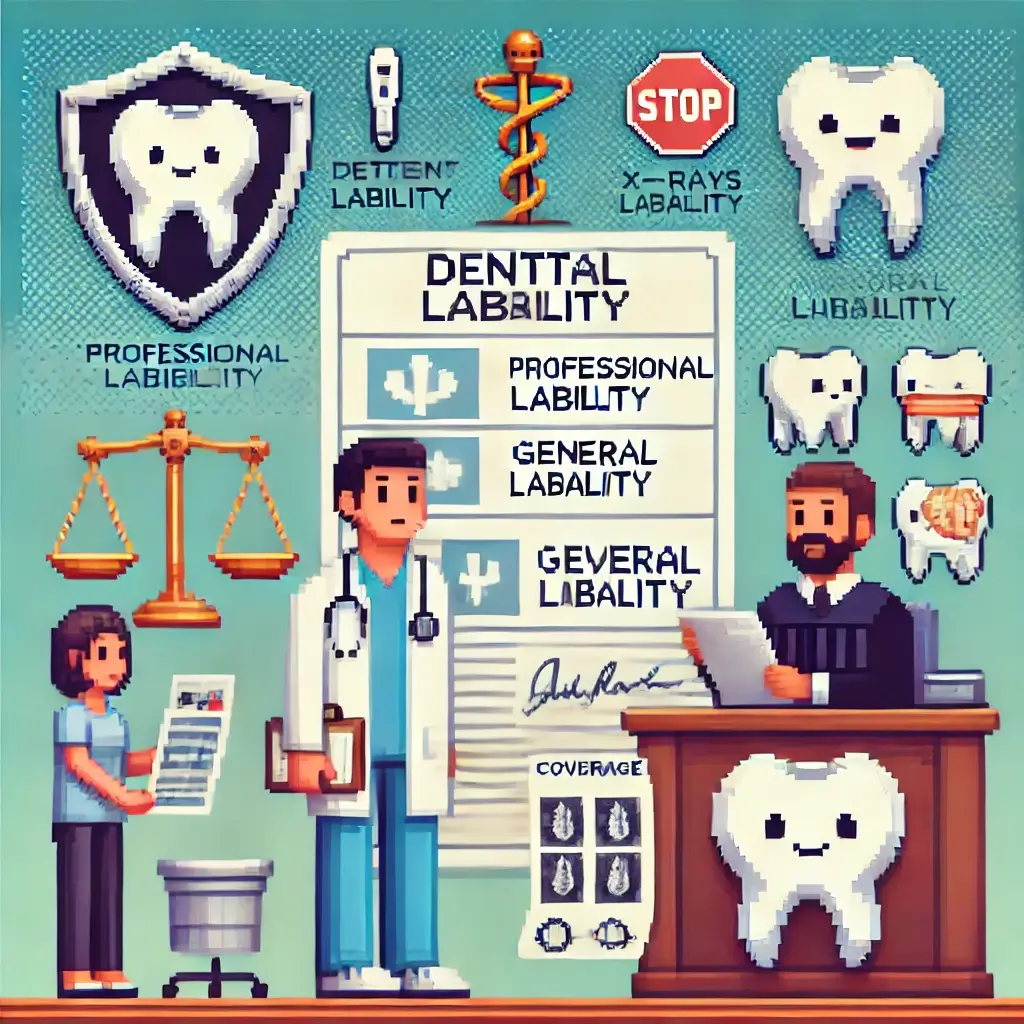
Dental Malpractice Lawsuits: 27 Messy Truths About What Insurance Really Covers
Table of Contents
Dental Malpractice Lawsuits: What Insurance Really Covers — A Midnight Coffee Confession
I am writing this with a mug that tastes like it was brewed yesterday and microwaved into the future.
My inbox is a polite mess, my notes look like a dentist charted emotions instead of molar numbers, and yet I love this topic more than I should admit in public.
Because dental malpractice is one of those things nobody wants to discuss until it’s the only thing anyone can discuss.
It is the awkward dinner guest we pretend isn’t sitting at the table, tapping a spoon against a ceramic crown.
And the question everyone eventually asks is painfully specific and weirdly universal.
What does insurance actually cover when dental malpractice lawsuits explode like a dropped tray of instruments.
Short answer.
More than you think in some areas, and much less than your stressed brain hopes in others.
Long answer.
Grab a napkin, because we are going to spill a little truth while we diagram the money flows and the human feelings colliding behind them.
Dental Malpractice Lawsuits: What Insurance Really Covers — The Big Picture Map
Imagine two buckets sitting in a sterile operatories corner like shyer cousins of the suction line and the curing light.
Bucket one is professional liability insurance, also called malpractice insurance, and it is supposed to cover claims that a dentist’s professional services fell below the standard of care and caused injury.
Bucket two is general liability insurance, which covers things like someone slipping in the waiting room or bumping a knee into a coffee table that was designed by a dentist who moonlights as a minimalist.
Then there are extra buckets that look optional until the internet crashes your day, including cyber liability for data breaches, employment practices liability for workplace complaints, and sometimes a patient compensation fund if your state runs one like a safety net stitched out of bureaucracy and hope.
These buckets do not always talk to each other, and when they do, they sometimes argue like siblings in the back seat on a long drive to a dental conference.
So when a mistake happens and a patient is injured, we ask which bucket is responsible, whether the bucket was active at the right time, and whether the policy language is smiling or frowning that week.
Dental Malpractice Lawsuits: What Insurance Really Covers — Beginner Layer
Pretend you are explaining this to your favorite aunt who thinks floss is a conspiracy invented by mint farmers.
Dental malpractice lawsuit means a patient is saying the dentist made a professional mistake that caused harm, like a nerve injury during an extraction or a crown that was seated with more enthusiasm than precision.
Insurance for malpractice is like a raincoat for storms that happen while you are doing dentistry, not while you are hosting a birthday in the waiting room.
General liability is for the birthday party, the puddle, the slippery floor, and the coffee that jumped instead of poured.
There is usually a limit that looks like a math problem with two numbers, such as a per claim limit and an annual aggregate limit, and the insurance pays up to those limits for the kinds of losses it promised to cover.
Insurance typically covers attorney fees, expert witnesses, settlement amounts, and sometimes the cost to fix a mistake if fixing it prevents a bigger claim, though that last part is a slippery banana peel of policy wording.
Insurance does not usually cover everything you could dream of, like reputational damage that lives forever on the internet or punitive damages in some jurisdictions, and it will not cover intentional harm because that would be like paying someone to sabotage their own brakes.
Most policies are either claims made or occurrence, which sounds like two identical twins until you discover one cares when the event happened and the other cares when the claim was made.
If you only remember one thing, remember this.
Read the policy as if it is a recipe where salt and sugar look similar but they can make dessert turn into sadness if you confuse them.
Dental Malpractice Lawsuits: What Insurance Really Covers — Intermediate Layer
This is where you start taking photos of everything like a foodie with a brand new phone who just discovered macro mode.
Patients should ask for their records politely and persistently, because your records are not a rumor, they are a timeline in ink and pixels.
Dentists should chart with the assumption that a stranger will someday read every line with an eyebrow raised, so write like your future self is whispering “thank you” while holding a coffee the size of a molar.
If there is a complication, call the insurer early, because the earlier you call, the more options you have to resolve things before they grow teeth and a personality.
Insurers will often assign a claim number, appoint a defense attorney, and sometimes fund a peer review or an independent exam, and none of that is a confession, it is just chess.
Photographs, consent forms, treatment plans, post operative instructions, referrals, and documented phone calls are the puzzle pieces that either make a calming landscape or a chaotic abstract where everyone blames the painter.
Money does not fly out of the insurer the day you call, because there is an investigation, a dance of letters, and sometimes a mediation, and the check arrives at the end of a road trip with toll booths made of paperwork.
Dental Malpractice Lawsuits: What Insurance Really Covers — Expert Layer
Now we are decoding policy language like it is a contract written by a poet who loves exclusions more than sunsets.
Watch for definitions of professional services, because some policies say dentistry and related services, while others list procedures so narrowly that you can feel the air getting thin at altitude.
Pay attention to exclusions for prior knowledge, because if you knew or reasonably should have known about a potential claim before coverage started, that knowledge can turn your shiny policy into a decorative napkin.
Look for hammer clauses in consent to settle provisions, because some policies reduce coverage if you refuse to settle against the advice of the insurer, which is a little like ignoring your GPS, then asking why the car is in a river.
Check whether defense costs are inside or outside the limits, because a million dollars sounds like a mountain until attorney fees are climbing that mountain with heavy backpacks.
Learn how sublimits and endorsements live in the margins like polite gremlins that move numbers when you are not looking.
Confirm whether disciplinary proceedings are covered, since a board complaint is not the same as a negligence claim, and some policies treat them like different species who only nod at each other.
Dental Malpractice Lawsuits: What Insurance Really Covers — Claims-Made vs Occurrence
Claims made policies care about when the claim is reported, and they usually require continuous coverage with a retroactive date that functions like the bottom of the swimming pool.
Occurrence policies care about when the incident happened, and if you had occurrence coverage then, you can sleep a little better even if you switched insurers later and now own a houseplant instead of a policy.
Claims made policies are common in healthcare because they can be priced to today’s risk, which accountants love, but they require your attention at renewal like a cat who insists all doors must be open simultaneously.
Occurrence policies are simpler on paper but sometimes rarer in practice, and if you find one at a good price, it can feel like discovering an extra storage drawer in your kitchen you swear you have never seen before.
Dental Malpractice Lawsuits & Insurance Coverage — Visual Breakdown
What Insurance Usually Covers
Defense Costs: ~60%
Settlements/Judgments: ~25%
Other (court fees, corrective fixes): ~15%
Claim Journey: From Incident to Resolution
A dental procedure results in injury or unexpected harm.
Dentist notifies insurer, claim file is opened.
Attorneys, experts, and medical records reviewed.
Case ends in settlement, defense verdict, or judgment payout.
Covered vs Not Covered
- Defense Attorney Fees
- Settlements & Judgments
- Expert Witness Costs
- Corrective Treatments (sometimes)
- Intentional Harm or Fraud
- Punitive Damages (in most states)
- Criminal Acts
- Known Prior Claims
Dental Malpractice Lawsuits: What Insurance Really Covers — Tail Coverage Explained
Tail coverage, also known as extended reporting period coverage, is what you buy when you stop practicing, switch insurers, or change entities, because claims made policies do not follow you like a loyal golden retriever without this tail attached.
Tails can be free if you meet certain retirement or disability conditions, or they can cost a percentage of your last premium that makes you say a word your hygienist would not approve of.
The reason Tuesday matters is because claims have birthdays, and if a demand letter arrives the day after your policy expires and you did not buy a tail, the party is happening without you and the cake is sadness flavored.
Dental Malpractice Lawsuits: What Insurance Really Covers — Covered vs Not Covered
Covered often includes defense costs, settlements, and judgments for negligence in professional services, plus some additional payments like court costs and appeal bonds that sound fancy until you need them at 7 p.m. on a Friday.
Some policies will pay for a corrective procedure to mitigate damages, because fixing a problem can be cheaper than fighting it, though that calculation is less math and more art when feelings are involved.
Not covered usually includes intentional harm, criminal acts, sexual misconduct, fraud, and guarantees of results that promise perfect smiles under the light of twelve moons.
Not covered can also include known claims you forgot to mention on your application, which is why honesty is cheaper than optimism when you are filling out forms.
Cosmetic disputes without injury may sit in a gray area where negotiation lives, and sometimes goodwill corrections are the soft power that saves everyone time and therapy sessions.
Dental Malpractice Lawsuits: What Insurance Really Covers — Common Procedure Triggers
Extractions can lead to nerve injuries where the lower lip feels like it unplugged itself and went on vacation without a forwarding address.
Implants can fail when biology shrugs, bone density whispers no, or biomechanics turn a tiny screw into a tiny antagonist with big energy.
Endodontic procedures can wander beyond the apex, because physics never signed a consent form and canals are twisty little mazes of emotion.
Orthodontics can invite temporomandibular joint complaints when bites move like couches in a narrow hallway, where you discover geometry does not negotiate with ligaments.
Pediatrics involves behavior management and consent that must be crystal clear, because tiny humans are blunt and their parents own three ring binders.
Dental Malpractice Lawsuits: What Insurance Really Covers — Informed Consent and Standard of Care
Informed consent is not a spell you cast once with a single signature, it is a conversation that evolves as reality evolves, and the documentation is the footprint of that conversation.
Standard of care is not the best care imaginable, it is the care a reasonable professional would deliver under similar circumstances, which is less exciting but far more useful in court.
Consent forms should say risks, benefits, and alternatives in human language that makes sense even when the Wi Fi goes out and nobody can Google a word like paresthesia.
Declined alternatives should be written down, because your memory will betray you at the exact moment an attorney asks a question while making eye contact that feels like a drill skipping.
Dental Malpractice Lawsuits: What Insurance Really Covers — Claim Timeline
It begins with a complaint, a bad outcome, or a phone call where someone sounds angrier than your smoke alarm during toast time.
Then comes notice to the insurer, assignment of counsel, and a request for the full chart with radiographs, consent forms, and the emoji free version of your thoughts.
An expert reviews the care to answer whether the standard of care was breached and whether that breach caused the harm, which are the two pillars holding up the legal bridge between sadness and money.
There may be demands, counter offers, mediation, and a settlement, or there may be motions, discovery, depositions, and a trial where everyone wears suits and pretends to like sitting for seven hours.
At the end there is either a defense verdict, a settlement, or a judgment, and the insurer writes checks until the limits stop the ink.
Dental Malpractice Lawsuits: What Insurance Really Covers — Damages and Dollars
Economic damages are the numbers that have receipts, like medical bills, corrective treatment costs, and lost income, and these are the bills that stare without blinking.
Non economic damages are pain, suffering, and the fact that eating ice cream feels like a haunted house now, and different jurisdictions limit these numbers in different ways that make spreadsheets cry.
Punitive damages punish conduct that is beyond negligent, and not every policy touches them because some insurers view punishment as a job for courts not checkbooks.
Defense costs add up like popcorn calories, because each small handful feels harmless until the bucket is empty and you are still hungry.
Dental Malpractice Lawsuits: What Insurance Really Covers — Records and Evidence
Write as if every line could someday be projected onto a screen the size of a garage door while twelve strangers judge your handwriting.
Chart phone calls with dates and times the way hikers mark trailheads, because when you find your way back, you will thank your past self for the breadcrumbs.
Store radiographs in a way that future software can still open them, because obsolescence is not a legal defense, it is a headache with a subscription model.
Take photos pre op and post op, because images communicate with juries faster than adjectives do, and lighting is a witness even when it does not hold a license.
Dental Malpractice Lawsuits: What Insurance Really Covers — States and Deadlines
Every jurisdiction has its own clock for when you must file a claim, and some clocks pause for minors or for injuries discovered late like a plot twist with enamel.
Patients and dentists alike should consult local counsel for exact deadlines, because missing a date is like locking your keys in a car that is politely driving away.
Some places require a notice of intent or an expert affidavit early, and failing to bring that paper to the party can end the party before the first snack.
Dental Malpractice Lawsuits: What Insurance Really Covers — Patient Action Plan
Request your complete records in writing with a calm tone that would not scare a cat, and include the date range, radiographs, photos, and chart notes.
Get a second opinion for diagnosis and treatment planning, because clarity is both healing and strategic when money and mouths are in the same sentence.
Keep a symptom diary that reads like a lab notebook, because daily details will help doctors treat and lawyers organize.
Consider negotiation before litigation if the dentist is responsive, because sometimes a timely fix saves months of churn and a pile of attorney invoices that feel like gravity.
Speak with an attorney when necessary, especially if injuries are significant or time is running in shoes that squeak.
Dental Malpractice Lawsuits: What Insurance Really Covers — Dentist Risk-Management Playbook
Train your team to document like champions, because a superb assistant note can be the unsung hero of an entire case.
Use plain language handouts for risks and post op instructions, and make them beautiful enough that patients keep them on the fridge instead of under a tire.
Photograph prosthetics and implants before seating, and annotate images with arrows like you are directing a tiny movie where the antagonist is uncertainty.
Refer early to specialists when you feel the edges of your comfort zone, and write the referral as if a future self will need to decode your kindness into chronology.
Call the insurer for risk advice before a situation hardens, because early calls can lead to friendly resolutions that do not require formal claims.
Dental Malpractice Lawsuits: What Insurance Really Covers — Talking to Insurers
Report early and factually, because insurers appreciate timelines more than adjectives.
Stick to the facts and avoid speculation, because theories are entertaining in podcasts not in claim files.
Do not alter records after the fact, because revision is a confession wearing a trench coat, and metadata is a loud truth teller.
Ask what is covered for remediation, because sometimes a funded fix is the bridge to peace and a review that simply says resolved.
Dental Malpractice Lawsuits: What Insurance Really Covers — Mediation, Arbitration, Trials
Mediation is a structured conversation where a neutral tries to turn conflict into agreement, and it often works when both sides are tired of staring at calendars.
Arbitration is private court with different rules and less public theater, and some consent forms require it like a VIP line that still takes time.
Trials are marathons with suits, and they end when a verdict arrives like a weather report nobody can change afterward.
Dental Malpractice Lawsuits: What Insurance Really Covers — Trends and Premiums
Premiums rise and fall with claim frequency, severity, and the economy’s mood swings, which means history lessons are useful but not prophetic.
Procedures that are biologically complex can spike claim severity, and reimbursement pressures can make everyone hurry like a sitcom montage with actual consequences.
Cyber risk is climbing because data likes to wander and criminals like teeth as much as bankers do when the teeth belong to identities.
Employment and regulatory risks broaden the map, so bundles and endorsements are the modern raincoats you did not know you needed until last Thursday.
Dental Malpractice Lawsuits: What Insurance Really Covers — Infographic
Here is a simple HTML only diagram you can paste anywhere without breaking your layout or your patience.
Clinical complication or alleged negligence.
Injury and cost appear on the horizon.
Dentist notifies insurer promptly.
Claim number and counsel assigned.
Professional liability vs general liability.
Claims made vs occurrence and retro date.
Records, experts, and strategy.
Defense costs inside or outside limits.
Remediation, settlement, or trial.
Indemnity paid up to policy limits.
Intentional acts, fraud, off policy promises.
Known prior claims or expired reporting.
Use the diagram as a quick briefing before calls with your insurer or your counsel, and let it sit on your practice dashboard like a friendly map.
Dental Malpractice Lawsuits: What Insurance Really Covers — Trusted External Resources
These are big friendly buttons, and yes they open in new tabs, because I do not trust the back button when feelings are high.
📘 NAIC Consumer Guides on Insurance
🗂️ HHS HIPAA Right of Access to Records
⚖️ Cornell Law: Medical Malpractice Overview
Dental Malpractice Lawsuits: What Insurance Really Covers — Sponsored Pause
Because blogs run on coffee and servers, here is a helpful ad unit taking five polite seconds of your day.
If you saw something relevant, great, and if not, we continue our scheduled programming with a smile that contains exactly zero cavities.
Quick Self-Check: Are You Protected?
Tap each box to mark your progress — don’t just read, take action.
FAQ
Q: Is every bad outcome a basis for dental malpractice lawsuits.
A bad outcome is not automatically negligence, because even perfect technique can meet biology on a day when biology says no, and the legal question is whether the standard of care was breached and caused the harm.
Q: Will the insurer pay for my corrective treatment if I am the patient.
Insurers typically pay indemnity to resolve the legal claim rather than cutting checks for piecemeal procedures, but settlements often contemplate the cost of corrective care negotiated as part of the agreement.
Q: Do dentists have to admit fault to use their insurance.
No admissions are required and are usually discouraged, and reporting a claim is not a confession but a contract duty that opens the door to defense and negotiation.
Q: What if the dentist has claims made coverage and switched insurers last year.
Coverage depends on the retroactive date and whether a tail was purchased, so timing can decide everything like musical chairs played with calendars and signatures.
Q: Can reviews and social posts be part of damages.
Reputation harm is usually not covered as a standalone loss, but online narratives influence negotiation dynamics because people are people even when they are doing math.
Q: Are punitive damages covered in dental malpractice lawsuits.
Sometimes they are excluded by statute or policy language, and when covered they may be limited or subject to state specific rules that turn simple answers into choose your own adventure.
Q: How fast should I request records after a complication.
As soon as possible with a courteous written request that includes dates and formats, because delays rarely improve truth, memory, or negotiation posture.
Dental Malpractice Lawsuits: What Insurance Really Covers — Conclusion
If you are a patient reading this at two in the morning with an ice pack and a heart that feels like a rattle, I am not there but I am with you anyway, and I am rooting for clarity and repair.
If you are a dentist scanning this between appointments with gloved hands and a mind that never clocks out, I see the thousand quiet victories nobody posts about, and I also see the lonely weight of one complication that refuses to stop replaying.
Insurance is not magic, but it is a tool, a bridge, and sometimes a parachute that opens late but still opens, and the point of everything we just walked through is to give you handles when the walls go slick.
Maybe I am wrong about your exact circumstances, but I am right that calm documentation, early reporting, and patient centered communication save time, money, and a few pieces of your soul you would prefer to keep.
So take the map, make the calls, and choose the next small honest step in front of you, because small honest steps are how we build better outcomes and kinder stories under fluorescent lights.
Watch: Dental Malpractice Insurance Explained
Keywords:
Dental malpractice insurance, malpractice lawsuit coverage, informed consent dentistry, claims made vs occurrence dental, tail coverage dentistry
🔗 Podcast Advertising Posted 2025-08-22 04:19 UTC 🔗 ER Malpractice Lawsuits Triggers Posted 2025-08-23 10:40 UTC 🔗 AI Misdiagnosis Lawsuit 2025 Posted 2025-08-24 09:05 UTC 🔗 Medical Device Recall Lawsuits Qualify Posted 2025-08-25 23:37 UTC 🔗 9/11 Mesothelioma Claims Posted (No Date Provided)