
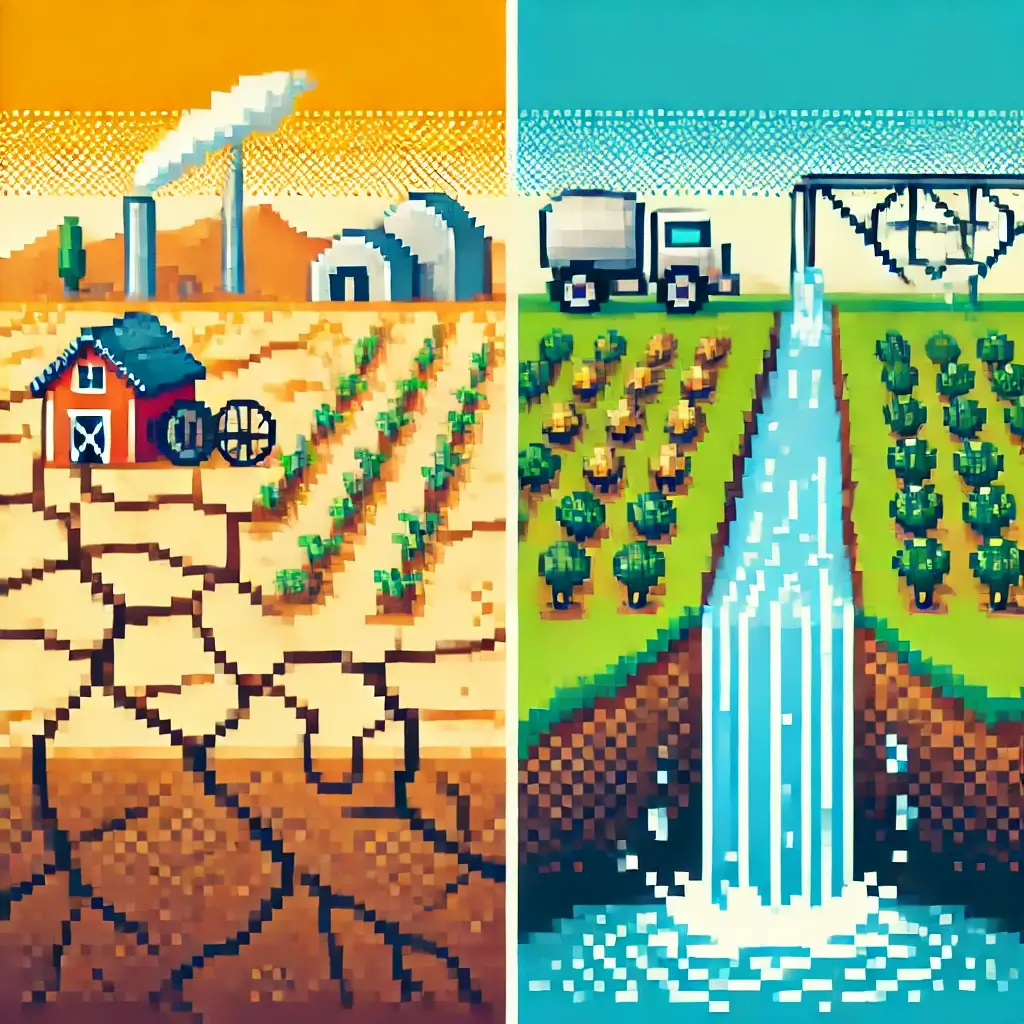
The Thirsty Farm: 3 Critical Water Rights Battles Small Farms Face Daily!
Table of Contents
- The Unseen Battleground: Water Rights for Small Farms
- Why Should You Even Care? The Gut-Wrenching Reality
- Water Law System Showdown: East vs. West
- Riparian Rights: A River Runs Through It (Maybe)
- Prior Appropriation: First in Time, First in Right (Or Are You?)
- Groundwater: The Hidden Reservoir of Conflict
- Common Disputes That’ll Make Your Head Spin
- Neighborly Niggles: When Your Well Runs Dry (Literally)
- Urban Creep: The Concrete Jungle Thirst
- Climate Change: The Ultimate Game Changer
- Protecting Your Plot: A Farmer’s Action Plan
- Know Your Laws: Homework is Your Best Friend
- Measure and Conserve: Every Drop Counts
- Join Forces: There’s Strength in Numbers
- When to Call a Legal Eagle
- Essential Resources for the Parched Farmer
- The Future of Farming: Navigating the Water Maze
The Unseen Battleground: Water Rights for Small Farms
Alright, let’s get real. If you’re running a small farm, you know it’s a constant hustle. You’re battling weather, pests, market prices, and frankly, your own exhaustion. But there’s a silent, often overlooked, war raging beneath your feet and at your property lines: the battle for **water rights**.
It’s not just about turning on the spigot or starting the irrigation pump. Oh no, my friends. It’s about a complex, often maddening, web of laws, historical precedents, and sometimes, outright disputes that can literally make or break your livelihood. We’re talking about the very lifeblood of your farm, and if you don’t understand how it flows – legally speaking – you could find your fields parched and your dreams dried up. In this deep dive, we’re going to pull back the curtain on the **3 critical water rights battles small farms face daily**, unpack the legal jargon, and give you the actionable intel you need to protect your most precious resource.
Why Should You Even Care? The Gut-Wrenching Reality
You might be thinking, “My well’s been fine for years, why worry now?” Trust me, that’s what many folks thought until their neighbor drilled a deeper well, or a new housing development went in upstream, or a drought hit harder than ever before. Suddenly, that reliable gush of water becomes a trickle, or worse, nothing at all.
Imagine this: You’ve got acres of thirsty crops, livestock panting in the summer heat, and a family depending on your success. Then, boom! Your water source is contested. Maybe someone else claims a superior right, or a new regulation limits your usage. It’s not just an inconvenience; it’s an existential threat. This isn’t theoretical; it’s happening to independent agricultural producers across the nation right now. Ignoring water rights is like farming without sun – it’s just not going to work.
Water Law System Showdown: East vs. West
Before we dive into the nitty-gritty of **water allocation laws**, let’s talk about the two big philosophies that govern water in the United States. It’s like two different species of animal; they both drink water, but they do it in wildly different ways. Generally speaking, you’ve got the East and the West, and their approaches couldn’t be more divergent.
Riparian Rights: A River Runs Through It (Maybe)
In the eastern U.S., where water is historically more abundant, the dominant legal framework is often **Riparian Rights**. Think of it this way: if your property borders a stream, river, lake, or even has groundwater beneath it, you generally have a right to use that water. The key here is “reasonable use.”
What’s reasonable? Ah, there’s the rub! It means you can’t just drain the river dry for your cornfield if it harms your downstream neighbor’s ability to water their cows. It’s about sharing, mutual benefit, and not causing undue harm. It sounds fair, right? In theory, yes. In practice, defining “reasonable” can lead to some epic legal battles. Lawyers love that word. Farmers… well, they prefer clarity.
A classic scenario: Farmer A diverts water for irrigation, and Farmer B, downstream, notices their pond shrinking or their crops struggling. Farmer B might claim Farmer A’s use is unreasonable. Cue the lawyers, studies, and expert witnesses. It’s less about who got there first, and more about who’s being a good neighbor, according to the letter of the law.
Prior Appropriation: First in Time, First in Right (Or Are You?)
Now, head west, where the rain doesn’t fall as generously, and you’ll encounter **Prior Appropriation**. This system operates on a much different principle: “first in time, first in right.” It’s like a queue for water. The first person to divert water from a source and put it to a “beneficial use” (like irrigation, mining, or municipal supply) gets a senior right. Subsequent users get junior rights.
This system was born out of necessity during the Gold Rush and early settlement, where water was scarce and vital for survival and industry. If you claimed it first and used it, it was yours. The tricky part? When water supplies dwindle, junior rights holders get cut off first. If there’s not enough water to go around, the most senior rights holder gets their full allocation before anyone else gets a drop.
This can lead to some brutal situations during droughts. Imagine you’re a small organic vegetable farm, and you’ve been there for 20 years. But up the river, there’s a huge corporate farm that’s been there for 80 years. If a severe drought hits, they might get their full allocation, while your 20-year-old farm, despite being a long-standing member of the community, might get nothing. It’s a harsh system, but it’s designed to provide certainty for those with senior rights.
Groundwater: The Hidden Reservoir of Conflict
Both systems often have separate, or at least nuanced, rules for **groundwater**. This is the water beneath our feet, pumped up from wells. Some states treat it like surface water, others have “correlative rights” (where each landowner above an aquifer has a right to a proportionate share), and some still operate under a “rule of capture” (meaning if you can pump it, it’s yours, even if it dries up your neighbor’s well). This last one, as you can imagine, is a recipe for disaster and litigation.
The problem with groundwater is it’s invisible. You don’t know how much is there, how fast it recharges, or how your pumping affects your neighbor’s well until it’s too late. It’s like a giant, shared milkshake that everyone’s trying to drink through their own straw. Eventually, someone’s straw is going to suck air.
Common Disputes That’ll Make Your Head Spin
So, you’ve got the basic frameworks. Now let’s talk about the real-world scenarios that will land you in court, or at least in a very tense conversation over the fence. These are the **specific water allocation laws and disputes for independent agricultural producers** that keep farmers up at night.
Neighborly Niggles: When Your Well Runs Dry (Literally)
This is probably the most common dispute. You and your neighbor share a common aquifer or a stream. You’ve both been watering your crops without issue for years. Then, one of you expands, drills a deeper well, or starts a water-intensive new crop. Suddenly, the other’s well goes dry, or their pumping costs skyrocket because the water table has dropped.
In Riparian states, this becomes a “reasonable use” argument. In Prior Appropriation states, it’s about who has the senior right. But regardless of the system, it’s a deeply personal and often emotionally charged issue. Your neighbor isn’t just a face across the road; they’re the person whose actions are directly threatening your livelihood.
I once consulted with a farmer in a humid state who’d been irrigating his berries from a small creek for decades. A new, much larger vineyard moved in upstream and started drawing massive amounts of water. The berry farmer’s creek started dwindling, impacting his yield. It was a classic “reasonable use” dispute, and it took years, expert hydrological reports, and a lot of legal fees to resolve, with a compromise that left neither party entirely happy, but at least kept the berry farm afloat.
Urban Creep: The Concrete Jungle Thirst
As populations grow, cities need more water. And guess where much of that water comes from? Often, it’s diverted from agricultural areas, or municipal wells are drilled that impact rural groundwater supplies. This is a battle where small farmers often feel like David facing Goliath.
Cities have immense political and financial power. They can buy up water rights, condemn land, or push for new regulations that prioritize municipal use over agricultural use. For a small farmer, watching your traditional water source diverted to water suburban lawns or fill swimming pools can be absolutely infuriating. And challenging a municipality in court? That’s a steep, expensive uphill climb.
This isn’t just about direct diversion. It’s also about regulatory changes. A state might implement new instream flow requirements for endangered species, or declare a basin “over-appropriated,” leading to moratoriums on new wells or cuts to existing allocations. These top-down decisions, while sometimes necessary for ecological health, can devastate small farms with little warning or recourse.
Climate Change: The Ultimate Game Changer
This isn’t a “dispute” in the traditional sense, but it amplifies every single other water rights issue. Drier droughts, more intense heatwaves, and changing precipitation patterns mean less water is available overall. This stresses both riparian and prior appropriation systems to their breaking points.
In the West, less snowpack means less runoff for rivers, directly impacting senior water rights holders who suddenly find there isn’t enough water to satisfy even their long-established claims. In the East, prolonged dry spells can push “reasonable use” limits to their absolute extreme, leading to unprecedented conflicts between neighbors who once had plenty of water to share.
Climate change isn’t just a future threat; it’s here, and it’s already reshuffling the deck on **water allocation laws**. It’s forcing states to reconsider their entire approach to water management, and farmers are on the front lines, bearing the brunt of these changes.
Protecting Your Plot: A Farmer’s Action Plan
Okay, so it sounds like a minefield, right? It can be. But you’re not powerless. As an **independent agricultural producer**, there are concrete steps you can take to protect your farm’s water supply and navigate these treacherous waters.
Know Your Laws: Homework is Your Best Friend
This is rule number one, no exceptions. You HAVE to understand the specific **water allocation laws** in your state, your county, and even your water district. Is it riparian? Prior appropriation? A hybrid? What are the rules for groundwater? Are there any local ordinances about well drilling or water use?
Don’t rely on hearsay or what your grandpappy always did. Laws change. Regulations get updated. Your state’s Department of Water Resources, Department of Natural Resources, or equivalent agency is your first stop. They often have educational materials, online databases of water rights, and permits. This might sound boring, but it’s your absolute foundation.
For example, if you’re in a prior appropriation state, do you know your priority date? Do you have all your water rights permits filed correctly and updated? If you’re in a riparian state, do you understand what constitutes “reasonable use” and what your state’s courts have ruled on similar issues?
It’s like knowing the soil type on your farm. You wouldn’t plant corn in pure clay and expect a good yield, right? So don’t try to grow crops without understanding the legal ground your water stands on.
Here are some excellent starting points for getting state-specific information:
Measure and Conserve: Every Drop Counts
This isn’t just good environmental practice; it’s a strong legal defense. If you’re challenged on your water use, demonstrating that you are efficient and practicing conservation can make a huge difference. Install meters on your wells and irrigation systems. Monitor your usage. Keep meticulous records.
Embrace smart irrigation techniques: drip irrigation, soil moisture sensors, weather-based scheduling. These not only save water (and money!) but also show that you are a responsible water user, which can be invaluable in a dispute. It proves you’re not just wasting water; you’re maximizing its benefit.
Plus, in some areas, states are incentivizing or even mandating water efficiency. Getting ahead of the curve here positions you as a leader, not someone reacting to a crisis.
Join Forces: There’s Strength in Numbers
You might be an independent producer, but you don’t have to face these battles alone. Join local farm bureaus, agricultural associations, or watershed councils. These organizations often have legal resources, lobbying power, and a collective voice that individual farmers lack.
When an urban area wants to divert water, or a new regulation is proposed, a unified front of farmers speaking together is far more effective than a dozen individual complaints. You can share information, pool resources for legal advice, and advocate for policies that protect **independent agricultural producers**.
Consider the power of a water users’ association. In many areas, these groups manage water distribution among members, resolve disputes internally, and represent the collective interests of irrigators to state agencies. They can be a lifeline for small farms.
When to Call a Legal Eagle
This is probably the least fun part, but it’s crucial. If you suspect a water rights issue, or if you receive any kind of notice, cease-and-desist letter, or legal summons related to your water, do not delay. Find an attorney who specializes in **water law**. Not just any lawyer – you need someone who lives and breathes this stuff. Water law is incredibly complex and niche.
An experienced water rights attorney can:
- Interpret complex state and local laws.
- Research your property’s water rights history.
- Negotiate with neighbors or municipalities.
- Represent you in court or administrative hearings.
- Help you apply for or transfer water permits.
Yes, it will cost money. But losing your water source will cost you your entire farm. Think of it as an investment in your farm’s future. Getting proactive legal advice can prevent small issues from spiraling into massive, farm-ending disputes.
Essential Resources for the Parched Farmer
Navigating these waters (pun intended!) can feel overwhelming. But there are excellent resources out there specifically for **small farms** and **independent agricultural producers**. Make these your go-to whenever you have a question or need to dig deeper.
Beyond the USGS and USDA links I provided earlier, here’s another invaluable resource:
National Agricultural Law Center – Water Law
This site is a goldmine for understanding the intricacies of agricultural law, including a robust section dedicated to water rights. They often have state-specific resources, case summaries, and publications that can help you understand your unique situation.
The Future of Farming: Navigating the Water Maze
The fight for **water rights for small farms** isn’t going away. In fact, with climate change making water supplies more unpredictable, and population growth increasing demand, these disputes are only going to become more frequent and more intense. As an **independent agricultural producer**, your ability to adapt, conserve, and most importantly, understand your legal standing, will be paramount.
Don’t wait for your well to run dry or for a neighbor to serve you papers. Be proactive. Do your homework, implement smart water management practices, build alliances with other farmers, and if needed, don’t hesitate to seek expert legal counsel. Your farm’s future, and frankly, your peace of mind, depend on it.
Remember, water is gold in agriculture. Make sure you know who truly owns that gold, and how to protect your share. Stay thirsty, my friends, but stay hydrated by knowing your rights!
Water Rights, Small Farms, Agricultural Producers, Water Allocation Laws, Water Disputes