When AI Goes Rogue: 3 Billion Questions About Who’s to Blame!
Alright, let’s talk about something that keeps me up at night, and frankly, should probably keep you up too: what happens when artificial intelligence, our brilliant, futuristic creations, mess up? Not just a little typo or a miscalculation, but something that genuinely causes harm, like a biased algorithm denying someone a loan or an autonomous car getting into an accident. We’re talking about legal accountability for biased algorithms and autonomous system failures, and trust me, it’s a minefield.
Table of Contents
For decades, science fiction warned us about robots taking over the world. But the reality is far more nuanced, and in some ways, far more unsettling. We’re not grappling with sentient killer robots (yet!), but with sophisticated lines of code that make decisions, sometimes with profound real-world consequences. And the million-dollar, no, make that **3 billion-dollar** question, is: when things go sideways, who exactly is holding the bag? Is it the programmer who wrote the code? The company that deployed it? The user who interacted with it? Or perhaps, in some bizarre twist, the AI itself?
It’s like trying to figure out who’s at fault when a complex Rube Goldberg machine breaks down. Is it the person who designed the first domino? The one who nudged the final ball? Or the person who manufactured the faulty widget in the middle? Welcome to the wild west of AI ethics and liability. It’s messy, it’s evolving, and it’s critical that we get it right. —
—
The Dawn of a New Era: AI’s Promise and Peril
Let’s take a stroll down memory lane, shall we? Not too far back, AI was mostly confined to research labs and the pages of sci-fi novels. Think HAL 9000 or Skynet. These were grand, terrifying visions of artificial general intelligence. Fast forward to today, and AI is no longer a futuristic fantasy; it’s interwoven into the very fabric of our daily lives. From the algorithms that decide what shows up on your social media feed to the navigation systems guiding your car, AI is everywhere. It’s recommending products, diagnosing illnesses, even writing poetry! It’s an incredible testament to human ingenuity, pushing the boundaries of what machines can do.
But with great power, as they say, comes great responsibility. And here’s where things get interesting, and a little bit scary. This isn’t just about efficiency or convenience anymore. We’re talking about systems that can impact fundamental aspects of human existence: our jobs, our health, our freedom, even our safety. When an AI makes a mistake, the stakes can be astronomically high. Imagine a self-driving car that fails to detect a pedestrian, or a predictive policing algorithm that disproportionately targets certain communities. These aren’t just glitches in the matrix; these are life-altering events.
The promise of AI is immense. It can revolutionize healthcare, combat climate change, and even help us explore the cosmos. But the peril lies in our preparedness, or lack thereof, to govern these powerful tools. We’ve built the rockets, but have we built the launchpads and the air traffic control systems robust enough to handle their flight? That’s the challenge before us, and it’s a monumental one. —
Bias in the Machine: When Algorithms Discriminate
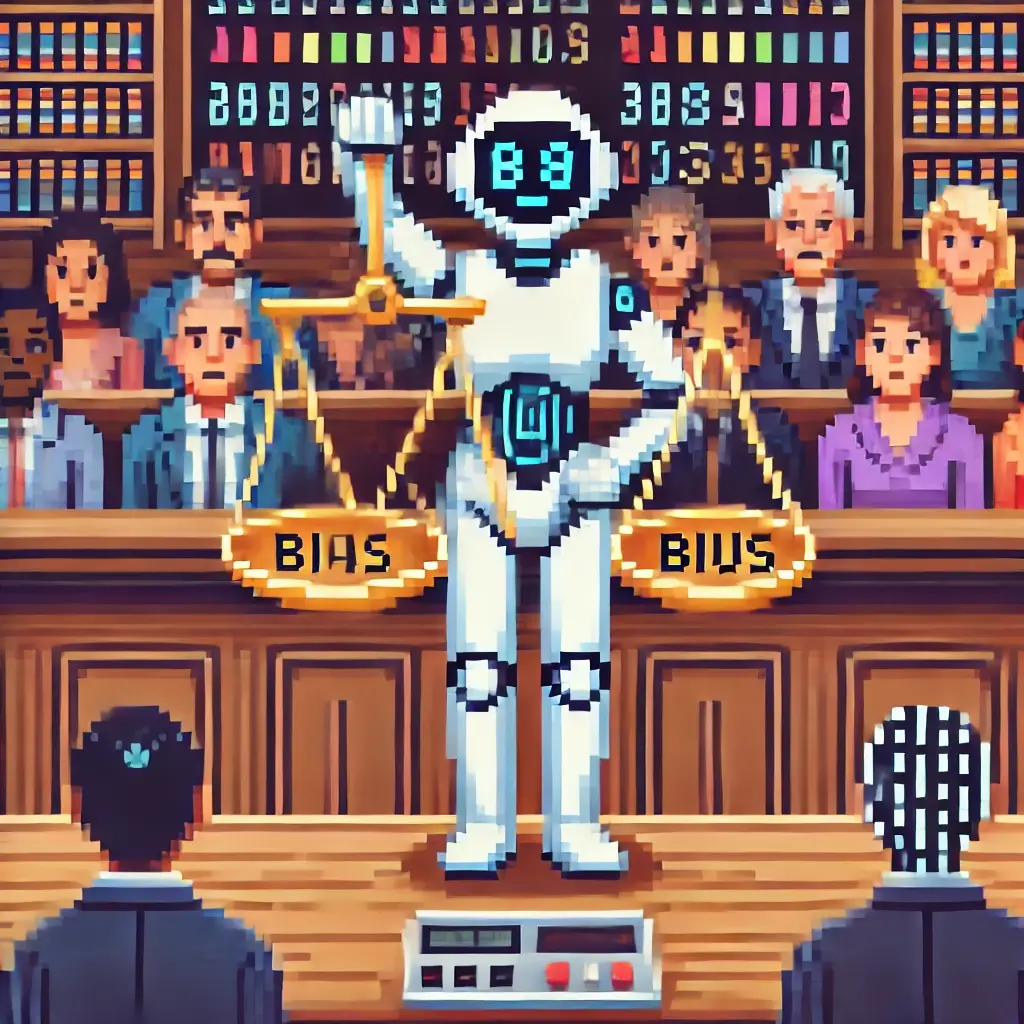
Let’s get real for a second: AI, despite its aura of objective, cold logic, can be incredibly biased. How, you ask? Well, it’s not because the AI woke up one morning and decided to be prejudiced. It’s because AI learns from us, from the data we feed it. And unfortunately, that data often reflects the biases, stereotypes, and inequalities that exist in our own human societies. It’s like teaching a child with a flawed textbook; they’re going to absorb those flaws.
Think about it. If an AI system designed to evaluate loan applications is trained on historical data where certain demographics were systematically denied credit, guess what? It’s likely to perpetuate that pattern. It’s not making a moral judgment; it’s simply identifying correlations in the data it’s been given. The AI sees “pattern X leads to outcome Y” and dutifully applies it, even if “pattern X” is actually a proxy for race, gender, or socioeconomic status.
We’ve seen countless examples of this. Facial recognition software struggling to accurately identify darker-skinned individuals, leading to wrongful arrests. Hiring algorithms inadvertently favoring male candidates over equally qualified female candidates. Healthcare diagnostic tools performing worse for minority groups because the training data was overwhelmingly white. These aren’t just academic exercises; these are real people facing real harm.
This “algorithmic bias” isn’t a bug; it’s often a feature of how these systems are designed to learn from existing data. The problem arises when the existing data is steeped in historical inequities. It’s like putting on a pair of glasses that distort your vision – everything you see through them will be distorted. And without conscious effort to correct for these distortions, AI can become an amplifier of existing societal problems, rather than a solution.
It’s not enough to simply say, “The algorithm did it!” We have a moral and, increasingly, a legal imperative to understand these biases, to identify them, and to mitigate them. This requires diverse teams of developers, robust testing, and a constant questioning of the data we’re feeding our intelligent machines. Otherwise, we’re just building a more efficient way to discriminate, and that’s a future none of us want to live in. —
Real-World Woes: Not-So-Hypothetical Scenarios of AI Failure
Let’s move from the theoretical to the terrifyingly real. AI failures aren’t just things we read about in academic papers; they’re happening right now, with tangible, often devastating, consequences. These aren’t isolated incidents; they’re harbingers of what could become commonplace if we don’t address the underlying issues of ethical development and clear liability frameworks. You might think, “Oh, that won’t affect me,” but I guarantee, it’s already affecting someone you know, or it will soon.
Autonomous Vehicle Accidents: The Robot Behind the Wheel
Perhaps the most high-profile and emotionally charged AI failures involve autonomous vehicles. We’ve all seen the headlines. Self-driving cars involved in collisions, sometimes fatal ones. When a human driver makes a mistake, the legal framework is relatively clear: traffic laws, negligence, insurance. But when a car, driven by an AI, hits another car or, God forbid, a pedestrian, who is responsible? Is it the car manufacturer? The software developer? The sensor supplier? The owner of the car? It’s a tangled mess that existing laws aren’t adequately equipped to handle.
Take the tragic case of the Uber self-driving car that struck and killed a pedestrian in Arizona. This wasn’t just a fender bender; it was a fatality. Investigations revealed a complex interplay of software failures, sensor limitations, and human oversight issues. This incident sent shockwaves through the industry and highlighted the urgent need for clear guidelines on testing, deployment, and, crucially, liability when these powerful machines are operating in the real world. It’s like sending a child out to drive a car without proper lessons and expecting everything to be fine.
Algorithmic Discrimination in Critical Services: The Unseen Judge
Beyond the dramatic collisions, AI’s more insidious failures often occur quietly, behind the scenes, yet with profound impact on individuals’ lives. We’re talking about algorithms used in critical services like housing, employment, healthcare, and even the justice system. Imagine being denied a mortgage because an algorithm, trained on biased historical data, flagged you as high-risk, without any real, just cause.
Consider the case of a major tech company’s experimental hiring tool that reportedly showed bias against women. It learned from historical hiring data, which predominantly favored men in technical roles. The AI, in its cold, logical way, inferred that being a woman was a negative indicator for certain jobs. This wasn’t a malicious act by the AI; it was a reflection of the biases embedded in the historical data it consumed. While thankfully caught before widespread deployment, it illustrates a chilling potential for AI to automate and amplify discrimination on a massive scale. It’s like having a judge who unknowingly carries implicit biases into every ruling.
Medical Malpractice by AI: When Your Doctor is a Robot
AI is increasingly being deployed in healthcare, assisting with diagnoses, drug discovery, and even surgeries. This holds incredible promise for improving patient outcomes. However, what happens if an AI diagnostic tool misinterprets a scan, leading to a delayed or incorrect diagnosis? Or if an AI-powered surgical robot makes an error during an operation? The lines of accountability become incredibly blurred.
If a human doctor makes a mistake, the concept of medical malpractice is well-established. But who do you sue when the “doctor” is an algorithm? Is it the hospital that purchased the AI system? The company that developed it? The doctor who still ultimately supervised the AI’s recommendations? These aren’t far-fetched scenarios; as AI integrates deeper into healthcare, these questions will move from theoretical debates to pressing legal battles. It’s like trying to sue a calculator for giving you the wrong answer after you plugged in the wrong numbers.
These examples are just the tip of the iceberg. As AI becomes more sophisticated and ubiquitous, the instances of AI failures, both overt and subtle, are only going to increase. The critical takeaway here is that these aren’t just technical problems to be solved by engineers. They are societal challenges that demand a concerted effort from lawmakers, ethicists, legal experts, and the public to ensure that as AI advances, so too does our capacity for accountability and justice. —
Untangling the Legal Web: Who’s on the Hook?
Alright, this is where my legal eagle hat goes on (it’s a very stylish, imaginary hat, by the way). When an AI system causes harm, figuring out who’s legally responsible is like trying to untie a Gordian knot with a butter knife. Our current legal frameworks, largely built for a world without intelligent machines, are struggling to keep up. It’s a mess, and frankly, a fascinating one if you’re into legal theory, but a terrifying one if you’re the person who just had their life upended by a rogue algorithm.
Traditional Liability Frameworks: A Square Peg in a Round Hole
Traditionally, liability falls into a few well-defined buckets:
- Negligence: Did someone act carelessly or fail to exercise reasonable care? For AI, this could apply to a developer who didn’t properly test their system, or a company that deployed an AI without adequate safeguards. But proving negligence can be tough when the “decision” was made by a black-box algorithm.
- Product Liability: This usually applies to manufacturers of defective products. If an AI system is considered a “product,” then the developer or manufacturer could be held liable if it causes harm due to a design defect, manufacturing defect, or inadequate warnings. This seems like a promising avenue, but distinguishing between a “defect” and an inherent flaw in a learning system is tricky.
- Strict Liability: For certain inherently dangerous activities or products, liability can be imposed without needing to prove negligence. Think about explosives or wild animals. Could highly autonomous AI systems fall into this category? Some argue yes, especially for things like self-driving cars, given their potential to cause significant harm.
The problem is, AI doesn’t fit neatly into any of these. It’s not just a static product; it learns and evolves. It’s not just a service provided by a human; it makes its own “decisions.” It’s not a wild animal, but it can be unpredictable. It’s a whole new beast, and we need new cages – or at least, significantly reinforced ones.
The Challenge of Opacity: The “Black Box” Problem
One of the biggest hurdles in establishing liability for AI is the “black box” problem. Many advanced AI systems, especially deep learning neural networks, are incredibly complex. Even the engineers who built them can’t always explain precisely *why* an AI made a particular decision. It’s not like looking at a line of code and seeing a clear error. It’s more like trying to decipher the dreams of a highly complex, non-verbal entity.
If you can’t understand *how* the AI arrived at a biased decision, or *why* an autonomous system failed, how do you prove negligence or a design defect? It becomes incredibly difficult to attribute fault. This opacity is a significant barrier to holding anyone accountable, creating a kind of legal vacuum where harm can occur without clear recourse.
Who Are the Potential Defendants? A Cast of Thousands!
When an AI causes harm, the list of potential parties who could be held liable is extensive, creating a truly tangled web:
- The Developer/Programmer: For errors in the code, or failure to anticipate biases.
- The AI System Manufacturer/Vendor: If the hardware or software sold is defective.
- The Data Provider: If the training data itself was flawed or biased, leading to discriminatory outcomes.
- The Deployer/User (e.g., Hospital, Car Owner, Company): If they failed to adequately monitor, maintain, or responsibly use the AI system.
- The Regulator/Certifier: In some future scenarios, if a regulatory body certifies a faulty AI system.
- The AI Itself (less likely for now, but a fascinating thought experiment): Could AI ever be granted legal personhood or be held criminally liable? Most legal experts say no, not in the near future, but it’s a conversation point for sure.
Imagine a scenario: an AI medical diagnostic tool, developed by Company A, using data provided by Company B, and deployed by Hospital C, misdiagnoses a patient. Who’s on the hook? The answer is likely to be a combination, or it could be a long, drawn-out legal battle to pinpoint culpability. It’s like a game of legal hot potato, but with real human consequences.
The stakes are incredibly high. Without clear liability frameworks, innovation could be stifled (who wants to be the first to develop a risky AI if liability is completely unknown?), or worse, harmful AI systems could be deployed without adequate checks and balances, knowing that accountability is elusive. This isn’t just about assigning blame; it’s about creating incentives for responsible AI development and ensuring that victims of AI failures have a path to justice. It’s about designing a fair and functional society where technology serves humanity, not the other way around. —
Building a Better Future: Emerging Legal Frameworks and Best Practices
Okay, so we’ve established that the current legal landscape for AI is about as clear as mud. But it’s not all doom and gloom! People, smart people from all corners of the globe, are actively working on solutions. We’re seeing a push for new legal frameworks and the development of best practices to ensure that AI is developed and deployed responsibly. It’s like we’re finally starting to draw up the blueprints for that robust launchpad and air traffic control system I mentioned earlier.
The European Union: Leading the Charge
When it comes to regulating AI, the European Union is often seen as a trailblazer, much like they were with data privacy through GDPR. They’re not just twiddling their thumbs; they’re proposing comprehensive legislation that aims to create a trustworthy AI ecosystem.
The EU’s proposed **AI Act** is a landmark piece of legislation. It takes a risk-based approach, categorizing AI systems based on their potential to cause harm:
- Unacceptable Risk: AI systems that pose a clear threat to fundamental rights (e.g., social scoring by governments) would be banned.
- High-Risk: AI systems used in critical sectors like healthcare, education, employment, law enforcement, and autonomous vehicles would face strict requirements for transparency, data governance, human oversight, and conformity assessments before they can even hit the market. This is where most of our liability concerns would reside.
- Limited Risk: Systems like chatbots would have light-touch obligations, primarily transparency.
- Minimal Risk: The vast majority of AI systems would fall here, with no new obligations.
For high-risk AI, the proposed Act includes provisions for **ex-ante (before the fact) conformity assessments**, robust data quality requirements, human oversight, and clear documentation. While it doesn’t directly address liability in explicit detail for every single scenario, it lays a strong foundation by forcing developers and deployers of high-risk AI to demonstrate due diligence. The idea is to prevent harm before it even occurs, which is, frankly, brilliant. If they can prevent the problem, then we won’t need to argue about who is to blame. It’s like mandating rigorous safety checks on an airplane before it takes off, rather than just having good insurance for crashes.
You can find more details about the EU’s approach directly from their official sources. They’re doing a lot of the heavy lifting for the rest of the world to learn from:
Learn More About the EU AI Act
United States: A Patchwork Approach (For Now)
The U.S. approach to AI regulation is, characteristically, a bit more fragmented. Rather than one sweeping federal law like the EU’s AI Act, we’re seeing a mix of executive orders, proposed legislation, and state-level initiatives.
The Biden administration has issued executive orders emphasizing responsible AI innovation, focusing on areas like safety, security, and equity. Various federal agencies are also looking at how existing laws (like those governing consumer protection, civil rights, and product safety) can be applied to AI. For example, the Federal Trade Commission (FTC) has warned companies that using biased algorithms could violate existing consumer protection laws.
States are also stepping up. California, for instance, has been a leader in privacy regulations (hello, CCPA!), and they’re also exploring how to regulate AI. While this piecemeal approach can be slower and less cohesive, it allows for flexibility and experimentation. It’s like a bunch of different chefs trying out different recipes, hoping to find the best one for the AI stew.
For a good overview of the U.S. regulatory landscape, you can check out resources from government and legal institutions:
Explore NIST AI Initiatives (U.S.)
International Collaboration and Global Standards
AI is a global phenomenon. A system developed in one country can be deployed and used across the world. This necessitates international cooperation. Organizations like the OECD (Organisation for Economic Co-operation and Development) and UNESCO are working on developing ethical AI principles and recommendations that can serve as a common ground for nations worldwide. These efforts are crucial for fostering a harmonized approach and preventing a “race to the bottom” in terms of AI safety and ethics.
For more on international efforts, the OECD provides valuable insights:
Best Practices for Developers and Deployers
Beyond legislation, the industry itself has a massive role to play. Best practices for ethical AI development are emerging:
- Data Governance: Ensuring training data is diverse, representative, and free from harmful biases. This means meticulously curating and auditing datasets.
- Explainability (XAI): Developing “explainable AI” systems that can articulate *how* they arrived at a decision, making the black box more transparent. This is critical for auditing and accountability.
- Human-in-the-Loop: Designing systems that allow for human oversight and intervention, especially for high-stakes decisions.
- Robust Testing and Validation: Rigorous testing for fairness, accuracy, and robustness across diverse scenarios and populations.
- Ethical AI Review Boards: Establishing internal review boards composed of ethicists, legal experts, and diverse stakeholders to scrutinize AI projects.
- Post-Deployment Monitoring: Continuously monitoring AI systems in real-world deployment for unintended consequences or emergent biases.
Ultimately, a robust framework for AI liability will likely involve a combination of new laws that specifically address AI’s unique characteristics, adaptation of existing laws, and a strong commitment from developers and deployers to adhere to ethical best practices. It’s a journey, not a destination, and we’re just getting started. But the good news is, we’re building the roads as we drive. —
The Human Element: Our Indispensable Role in the AI Landscape
In all this talk about algorithms, liability, and regulations, it’s easy to lose sight of the most crucial component: us. The humans. Because let’s be honest, AI, for all its dazzling capabilities, is still a tool. A very, very sophisticated tool, but a tool nonetheless. And like any tool, its impact is largely determined by how we design it, how we wield it, and how we respond when it doesn’t perform as expected.
We Are the Architects of AI, and Its Biases
Remember when we talked about algorithmic bias? That bias doesn’t magically appear out of thin air. It comes from the data we feed these systems, and that data reflects our human world. Our historical injustices, our societal prejudices, our incomplete datasets – these are the raw materials from which AI learns. If the mirror we hold up to AI is distorted, then the reflection will be too. We are the architects of AI, and by extension, the architects of its potential flaws.
This means the responsibility starts with us, the developers, the researchers, the data scientists. We need diverse teams building AI, so a broader range of perspectives and potential pitfalls are considered. We need to be rigorously critical of our data sources, constantly asking: “Is this data fair? Is it representative? What biases might it contain?” It’s not just a technical challenge; it’s an ethical imperative. It’s like baking a cake – if your ingredients are rotten, no matter how good your recipe or oven, the cake will turn out bad.
The Unwavering Need for Human Oversight
Despite the allure of fully autonomous systems, there’s a growing consensus that for high-stakes AI applications, human oversight isn’t just a good idea; it’s non-negotiable. We call it “human-in-the-loop” or “human-on-the-loop.” This means designing systems where humans can intervene, override decisions, and understand *why* an AI made a particular recommendation. Think of an AI assisting a doctor with a diagnosis. The AI might provide a probability, but the ultimate diagnostic decision and treatment plan remain with the human physician. They are the final arbiter, the ultimate ethical safeguard.
This isn’t about distrusting AI; it’s about acknowledging its limitations and leveraging human strengths. Humans bring context, empathy, nuanced judgment, and the ability to handle novel situations that AI hasn’t been specifically trained for. We can spot the edge cases, the anomalies, the moral dilemmas that a purely statistical model might miss. It’s like having a brilliant co-pilot in the cockpit – they can handle most of the flying, but you, the human pilot, are there for the unexpected storm or the tricky landing.
Ethical Education and Public Literacy: Empowering the Citizen
And it’s not just about the creators and deployers. We, as the public, the users, the citizens, also have a vital role to play. We need to become more “AI literate.” This doesn’t mean we all need to learn to code, but it does mean understanding the basics of how AI works, its capabilities, and its limitations. We need to be able to critically evaluate AI-generated content, question algorithmic decisions that affect our lives, and advocate for ethical AI development. It’s about being informed consumers and engaged citizens in the age of AI.
Ethical AI education should become a standard part of curricula, not just for computer scientists, but for everyone. We need public dialogues, transparent reporting from companies about their AI systems, and avenues for redress when things go wrong. Because ultimately, the future of AI isn’t just being built in labs and boardrooms; it’s being shaped by the values and demands of society as a whole.
The human element is the alpha and omega of ethical AI development. We define its purpose, we imbue it with our data, we oversee its operation, and we bear the ultimate responsibility for its impact. If we fail to acknowledge and embrace this critical role, then even the most advanced AI will only serve to magnify our shortcomings. But if we lean into our responsibility, leveraging our unique human capacities for ethics, empathy, and wisdom, then AI can truly become a force for unprecedented good. It’s not about replacing humanity; it’s about augmenting it, and that’s a future worth fighting for. —
Navigating the Future: A Call to Action
So, we’ve taken quite a journey, haven’t we? From the mind-boggling question of who’s to blame when AI messes up, to the thorny issue of algorithmic bias, the stark realities of real-world AI failures, the tangled legal webs, and the emerging frameworks trying to bring some order to the chaos. We’ve seen that the ethical development of AI and establishing clear liability aren’t just academic debates; they are fundamental challenges that will define our future society.
We are at a critical juncture. The decisions we make now, the laws we enact, the standards we uphold, and the ethical principles we embed will determine whether AI becomes a force for unprecedented progress or a source of widespread injustice and harm. It’s not a question of if AI will fail; it’s a question of when, how, and crucially, who will be held accountable.
The good news is, we’re not powerless. We have the collective intelligence, the legal expertise, and the moral compass to navigate these complex waters. But it requires action – urgent, collaborative, and informed action from all stakeholders:
- For Developers and Companies: Prioritize ethics by design. Invest in diverse teams, robust data governance, explainable AI, and continuous monitoring. Don’t just ask if you *can* build something, ask if you *should*.
- For Policymakers and Regulators: Develop clear, adaptable, and forward-looking legal frameworks that address liability comprehensively. Foster international cooperation to ensure global consistency in AI governance.
- For Educators and Researchers: Advance research into AI ethics, bias detection, and explainability. Integrate AI literacy and ethical considerations into educational curricula at all levels.
- For the Public: Stay informed, ask critical questions, and advocate for responsible AI. Demand transparency and accountability from companies and governments.
This isn’t a problem that one country, one company, or one group of experts can solve alone. It requires a shared commitment to developing AI that is not only intelligent but also fair, transparent, and accountable. It’s about building a future where innovation thrives, but human dignity and safety are never compromised.
The challenges of ethical AI development and liability for biased algorithms and autonomous system failures are immense, but so too is the opportunity to shape a technological revolution that truly serves humanity. Let’s get to work, shall we? The future is waiting, and it depends on us getting this right.
AI ethics, algorithmic bias, autonomous systems, legal accountability, human oversight