
Unlocking 3 Tiny House Dreams: Your Essential Guide to Zoning, Codes, and Legal Structures!
Hey there, fellow adventurers and dreamers!
Are you, like me, utterly captivated by the allure of tiny living?
That feeling of shedding the shackles of oversized mortgages and embracing a simpler, more intentional existence?
It’s exhilarating, isn’t it?
For years, I’ve been immersed in the tiny house movement, not just as an observer but as someone who’s rolled up their sleeves, navigated the red tape, and even helped others realize their tiny home aspirations.
Let me tell you, there’s a lot of talk out there about the freedom of tiny living, and it’s all true!
But here’s the kicker: that freedom often comes with a side of regulatory hoops.
And when we start talking about building an entire tiny house community or village?
Well, that’s where things get really interesting – and sometimes, a little daunting.
But don’t you worry!
That’s precisely why I’m here.
Think of me as your seasoned guide, ready to walk you through the labyrinthine world of tiny house community regulations.
We’re going to break down the big three: **zoning, building codes, and legal structures.**
Trust me, understanding these pillars isn’t just about avoiding headaches; it’s about laying a rock-solid foundation for your tiny house dreams to flourish.
So, grab a cup of your favorite brew, settle in, and let’s demystify this together.
By the end of this, you’ll feel empowered, informed, and ready to take those crucial next steps toward creating or joining a thriving tiny house village. —
Table of Contents
—
The Tiny House Revolution: Why Now?
Before we dive into the nitty-gritty, let’s just take a moment to appreciate the sheer momentum of the tiny house movement.
It’s not just a fad, folks; it’s a legitimate cultural shift.
People are yearning for financial freedom, a smaller environmental footprint, and a deeper connection to their communities.
I’ve heard countless stories of people trading in their sprawling, expensive homes for a life that’s richer in experiences, not possessions.
The desire for community, for like-minded individuals to gather and support one another, is a huge driving force behind the push for tiny house villages.
But this beautiful vision often bumps up against outdated regulations that were simply not designed with tiny homes in mind.
That’s where our journey begins. —
Zoning Laws: The Unsung Heroes (and Villains) of Tiny Living
Zoning laws.
Just saying the words can send shivers down a tiny home enthusiast’s spine.
But don’t let the legal jargon intimidate you!
Think of zoning as the city or county’s rulebook for what can be built where.
It dictates minimum lot sizes, setbacks, and, critically for us, the types of dwellings allowed in a particular area.
For decades, these laws have favored large, single-family homes on sizable plots, making it tricky for tiny houses to find their legal footing.
But things are changing, albeit slowly.
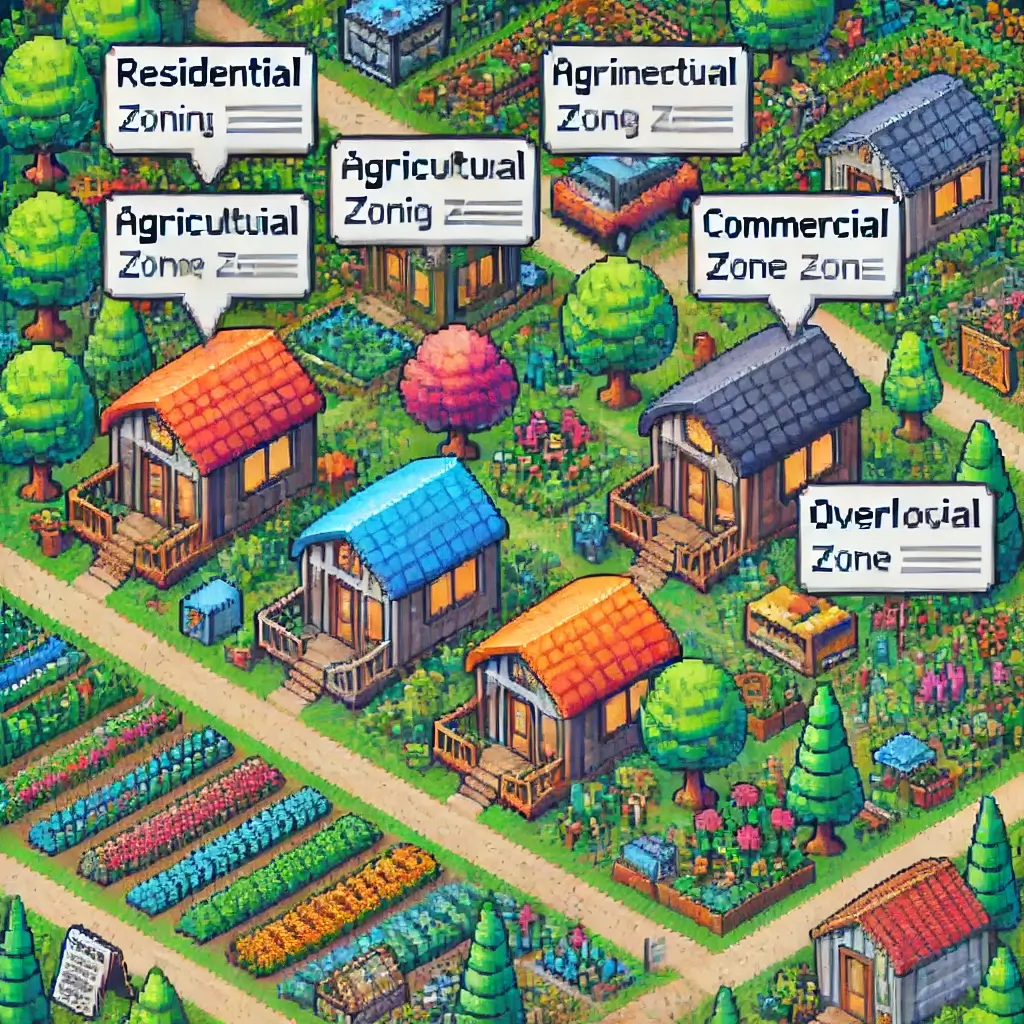
Residential Zoning: The Usual Suspects
Most of us automatically think of residential zones when we imagine living somewhere.
These are typically categorized as R-1 (single-family residential), R-2 (two-family, duplexes), or R-3 (multi-family, apartments).
The challenge? Many R-1 zones have minimum square footage requirements that instantly rule out tiny homes.
They also often define what constitutes a “dwelling” in a way that excludes structures on wheels or those below a certain size.
It’s like trying to fit a square peg (your tiny house) into a round hole (traditional zoning).
However, some progressive municipalities are starting to amend their residential zoning to allow for accessory dwelling units (ADUs) or even “tiny house overlays” within existing residential areas.
This is a major win!
Agricultural Zoning: A Rural Haven?
Ah, the appeal of wide-open spaces and self-sufficiency!
Agricultural zoning often seems like a natural fit for tiny homes, particularly if you envision a more off-grid or rural lifestyle.
These zones typically have larger minimum lot sizes but can be more flexible regarding the types of structures allowed, especially if they’re considered “farmhand housing” or similar.
However, don’t just assume it’s a free-for-all.
Some agricultural zones still have minimum dwelling size requirements, or they might restrict the density of housing, which could complicate a tiny house community plan.
It’s always best to check the specific county ordinances.
Commercial and Industrial Zoning: Unlikely Allies?
This might sound counterintuitive, right?
Who wants to live next to a factory?
But hear me out.
Sometimes, commercial or light industrial zones can be surprisingly accommodating for tiny house communities, especially if they’re part of a mixed-use development or if the tiny homes are considered temporary or mobile structures.
Think of it like an RV park, but for tiny houses.
Some jurisdictions have even repurposed old industrial sites into vibrant, mixed-use communities that include residential elements.
It’s certainly not for everyone, but it’s an avenue worth exploring in some urban areas.
Overlay Zones and Special Districts: Customizing the Map
This is where things get exciting for tiny house advocates!
An overlay zone is like an additional layer of zoning that sits on top of an existing base zone.
It can introduce specific regulations or allowances for certain types of development, like tiny house villages, without completely overhauling the underlying zoning.
Special districts, on the other hand, are areas with unique planning goals and regulations, often created for specific purposes like sustainable communities or affordable housing initiatives.
If a city is truly forward-thinking, they might create a tiny house-specific overlay or a special district designed to welcome these compact dwellings.
These are the golden tickets!
Advocacy and Action: Changing the Zoning Landscape
Here’s a dose of reality: many successful tiny house communities exist because passionate individuals and groups actively worked to change their local zoning laws.
It’s not always easy, and it takes patience and persistence, but it IS possible.
Attend city council meetings, educate your local representatives, and join forces with other tiny house advocates.
Data on the benefits of tiny homes – affordability, sustainability, community building – can be powerful tools.
Remember, “no” today doesn’t necessarily mean “no” forever.
It might just mean “not yet, but keep pushing!”
Want to see how some communities are tackling zoning head-on?
Check out this resource from the American Planning Association:
Explore APA’s Zoning Resources —
Building Codes: The Blueprint for Safety and Durability
Building codes.
If zoning tells you where you can build, building codes tell you how you can build.
These are the minimum standards for safety, structural integrity, fire resistance, plumbing, electrical, and energy efficiency.
They exist to protect occupants, and that’s a good thing!
However, traditional building codes were developed for conventional stick-built homes, which often means they’re ill-suited for the unique dimensions and construction methods of tiny houses.
This is where things get a bit nuanced.
RVIA Certification: The Mobile Solution
Many tiny homes on wheels are built to the standards set by the Recreation Vehicle Industry Association (RVIA).
If your tiny house is RVIA certified, it’s legally recognized as a recreational vehicle.
This is often the easiest path for mobility and placement in RV parks or campgrounds.
However, RVIA certification doesn’t make your tiny house a permanent dwelling in the eyes of most zoning ordinances.
It means it’s built to RV standards, which are different from residential building codes.
If you’re planning a tiny house *village* where homes are permanently placed, relying solely on RVIA certification might limit your options for utility hookups and long-term occupancy.
It’s crucial to understand this distinction.
Appendix Q: A Tiny Step Forward in the IRC
This is a game-changer for tiny homes on foundations!
In 2018, the International Residential Code (IRC) – the most widely adopted residential building code in the U.S. – added **Appendix Q: Tiny Houses**.
This appendix provides specific code requirements for tiny houses that are 400 square feet or less in floor area and are built on a foundation.
It addresses things like ceiling heights, emergency escape and rescue openings, and ladders/stairways, which are often different in tiny homes compared to larger houses.
It’s not perfect, but it’s a huge leap forward because it gives local building officials a clear framework for regulating tiny homes as permanent dwellings.
If your local jurisdiction has adopted Appendix Q (or is considering it), you’re in a much better position to build a legal, foundation-based tiny house community.
Modular and Manufactured Home Codes: Factory-Built Precision
Some tiny homes are built in a factory setting and qualify as modular homes or manufactured homes.
Modular homes are built to the same local building codes as site-built homes but are constructed in sections off-site and then assembled on a permanent foundation.
Manufactured homes (formerly known as mobile homes) are built to a federal standard (the HUD Code) regardless of where they’re placed.
Both modular and manufactured homes can be excellent options for tiny house communities, as they come with inherent code compliance.
The challenge here is often finding manufacturers who build “tiny” sized modular or manufactured homes, as many still adhere to larger dimensions.
Local Amendments and Innovations: Tailoring the Rules
Just like with zoning, many localities are creating their own custom amendments to building codes to accommodate tiny homes.
Some are adopting Appendix Q, while others are developing unique ordinances.
For example, some areas might allow tiny homes as ADUs with specific size limitations, or they might create a special permit process for tiny house villages.
It’s a patchwork, I know, but it shows progress!
This is why local research is paramount.
Don’t assume; always verify with your local planning and building departments.
Navigating Inspections: Your Partner in Progress
Building inspectors aren’t the enemy!
They’re there to ensure your home is safe.
If you’re building a tiny house to a specific code (like IRC with Appendix Q), establish a good rapport with your local building department early on.
Bring them your plans, ask questions, and be transparent.
They can often provide invaluable guidance and help you navigate the process smoothly.
Think of them as partners in making your tiny home dream a safe reality.
Curious about Appendix Q and the IRC?
Dive deeper into the details here:
Learn More About IRC Appendix Q —
Legal Structures: How to Own and Operate a Tiny House Village
Legal structures.
This is where the rubber meets the road when it comes to organizing and managing a tiny house community.
It’s not just about where the homes sit; it’s about how the land is owned, how decisions are made, and how the community functions legally and financially.
Getting this right from the outset is crucial for the long-term success and harmony of your tiny village.
Believe me, I’ve seen great community visions falter because the legal framework wasn’t robust enough.
HOAs and Co-ops: Community Powerhouses
These are two of the most common models for shared living communities, and they can work beautifully for tiny house villages.
A **Homeowners Association (HOA)** is typically set up when individual lots within the community are sold (like a tiny house subdivision).
Each homeowner owns their lot and their tiny house, and the HOA manages common areas (roads, utilities, shared amenities) and enforces community rules (like design guidelines or parking regulations).
Think of it as structured communal living.
A **Cooperative (Co-op)** model is different: the entire property (the land and common facilities) is owned by a single entity (the co-op corporation), and residents purchase shares in that corporation, which grants them the right to occupy a specific tiny house lot.
Members typically have more direct say in the management and operations.
Both models require clear bylaws, strong leadership, and active participation from residents to thrive.
Land Lease Agreements: Renting Your Slice of Heaven
In a land lease model, a single entity (an individual, a developer, or an organization) owns the land, and tiny house owners lease or rent a specific lot for their home.
This is common in RV parks, mobile home parks, and increasingly, in dedicated tiny house communities.
The tiny house itself is owned by the resident, but the land is not.
This can be a more affordable entry point for tiny house dwellers, as they avoid the cost of land purchase.
For the land owner, it provides a steady stream of income.
The key here is a comprehensive, fair, and transparent lease agreement that clearly outlines terms, responsibilities, fees, and what happens if a resident decides to move their tiny home.
Subdivisions and PUDs: Traditional Paths, Tiny Twists
If you’re looking to create a community where residents truly own their land, a traditional subdivision or a Planned Unit Development (PUD) might be the way to go.
A **subdivision** involves dividing a larger parcel of land into individual, legally distinct lots that can be sold to tiny house owners.
This would typically involve extensive infrastructure development (roads, utilities) and adherence to local subdivision regulations.
A **PUD** offers more flexibility in design and layout compared to a standard subdivision.
It allows for a mix of housing types, shared open spaces, and sometimes even commercial elements within a single development plan.
PUDs are often used for innovative community designs that might not fit conventional zoning.
Both of these options are generally more complex and require significant upfront investment and regulatory approval, but they offer the highest level of individual land ownership.
Non-Profit Models: Mission-Driven Tiny Villages
Some tiny house communities are established under a non-profit organization structure, often with a mission to provide affordable housing, support for specific populations (like veterans or the homeless), or to promote sustainable living.
In these models, the non-profit typically owns the land and may lease out lots or provide tiny homes to residents, sometimes with income-based rental structures.
Funding can come from grants, donations, and modest rents.
This model prioritizes social impact over profit and can be incredibly rewarding, but it comes with its own set of legal and fundraising complexities.
Due Diligence and Legal Counsel: Your Best Allies
No matter which legal structure you consider, hear this loud and clear: **Do your due diligence, and get qualified legal counsel!**
This is not the time for DIY lawyering.
Engage attorneys who specialize in real estate, land use, and community development.
They can help you draft bylaws, create lease agreements, navigate property transfers, and ensure your chosen structure is legally sound and protects all parties involved.
A small investment in legal advice upfront can save you massive headaches (and costs!) down the road.
Looking for more insights into the legal aspects of community development?
The Community Land Trust model is another fascinating approach:
Discover Community Land Trusts —
Real-World Examples: Success Stories and Lessons Learned
It’s one thing to talk about theories and regulations; it’s another to see them in action.
There are incredible tiny house communities across North America that have successfully navigated these challenges.
Take, for instance, **Sprout Tiny Homes** in La Junta, Colorado, which developed a tiny home-friendly zoning ordinance and created a tiny home village that includes both owned and leased lots.
Or **Cottage Grove, Oregon**, a pioneer in allowing tiny homes as permanent dwellings.
Then there’s **Opportunity Village in Eugene, Oregon**, a non-profit run, low-cost micro-housing community for people experiencing homelessness, proving that tiny homes can address critical social needs.
These communities didn’t just appear overnight; they were the result of years of advocacy, collaboration with local governments, and careful planning regarding legal structures and adherence to evolving codes.
Their stories are a testament to what’s possible when passion meets perseverance. —
Your Blueprint for Tiny Community Success: 5 Practical Tips
Alright, you’ve absorbed a lot of information, and that’s fantastic!
Now, let’s distill it into some actionable advice, the kind I wish I’d had when I first started exploring this path.
1. Start Local, Go Hyper-Local:
Forget what you read about another state or even a county away.
The first step – and I can’t stress this enough – is to engage with your specific city or county’s planning and zoning department.
Schedule a meeting, be polite, and come prepared with your questions.
Ask about their definitions of “dwelling,” minimum square footage, ADU policies, and whether they’ve adopted Appendix Q.
They are your primary source of truth.
2. Find Your Allies:
You don’t have to do this alone.
Seek out local tiny house groups, housing advocates, or even sympathetic developers.
Strength in numbers makes a difference when advocating for regulatory change.
A united front of informed citizens is far more powerful than a lone voice.
3. Education is Your Superpower:
Many elected officials and planning department staff simply don’t understand tiny homes.
They might envision makeshift shanties when you say “tiny house.”
Educate them!
Share success stories, data on affordability and sustainability, and examples of beautifully designed tiny homes.
Help them see the vision.
4. Embrace Flexibility (and Patience):
The regulatory landscape is still evolving.
You might need to be creative with your approach.
Perhaps starting with ADUs is the stepping stone to a full village.
Maybe a land lease model works better than outright ownership in your desired area.
And yes, you’ll need a healthy dose of patience.
Change, especially governmental change, rarely happens overnight.
5. Get Your Paperwork in Order (Legally Speaking):
Once you’ve navigated the zoning and building code hurdles, ensure your community’s legal structure is ironclad.
Work with qualified attorneys to draft clear bylaws, covenants, and agreements.
This protects everyone involved and provides a framework for harmonious living.
Don’t skip this step! —
The Future is Tiny: What’s Next for Tiny House Communities?
The journey to establish tiny house communities isn’t always a straight line; it’s more like a winding mountain path, full of twists and turns, but leading to an incredibly rewarding destination.
From where I stand, having seen the growth and passion in this movement, I’m genuinely optimistic about the future.
More and more municipalities are recognizing the value that tiny homes bring – from addressing affordable housing crises to promoting sustainable living and fostering vibrant communities.
As the need for diverse housing options continues to grow, so too will the push for more flexible and inclusive regulations.
We’re seeing a steady increase in cities adopting Appendix Q, creating specific tiny home ordinances, and even developing programs to support tiny house construction.
The conversation is shifting from “Are tiny houses legal?” to “How can we make tiny houses work here?”
And that, my friends, is a powerful shift.
So, if you’re dreaming of a tiny house village, don’t be deterred by the complexities.
Instead, arm yourself with knowledge, connect with others, and be a part of the solution.
The dream of community, sustainability, and financial freedom, wrapped up in a perfectly tiny package, is absolutely within reach.
Let’s build this tiny future, together!
Want to stay up-to-date on the latest tiny house news and regulations?
The Tiny House Association is a fantastic resource:
Visit The Tiny House Association
Tiny house, Zoning, Building codes, Community, Legal structures